- The trends worth paying attention to are the ones a 2025 sofa buyer would still be happy with in 2035.
- Curved silhouettes, earthy palettes and natural-fibre fabrics have moved from “trend” to “default” in the premium segment.
- Technology-in-sofa features have largely faded. The durable wins are material honesty, reparability and considered scale.
- The questions to ask a Cape Town buyer now are less about colour and more about frame longevity, seat depth, and fabric durability.
Sofa trend lists are mostly written for the following season. The ones that matter are written for the following decade. Looking back at what was called “new” in 2025, a year on, a few of those calls have graduated from trend to default — and a few have quietly disappeared. For a buyer spending R35,000 or more on a piece they intend to own for fifteen years, the useful question is not what is trending, but what is sticking.
What has stuck
1. Curved silhouettes, with restraint
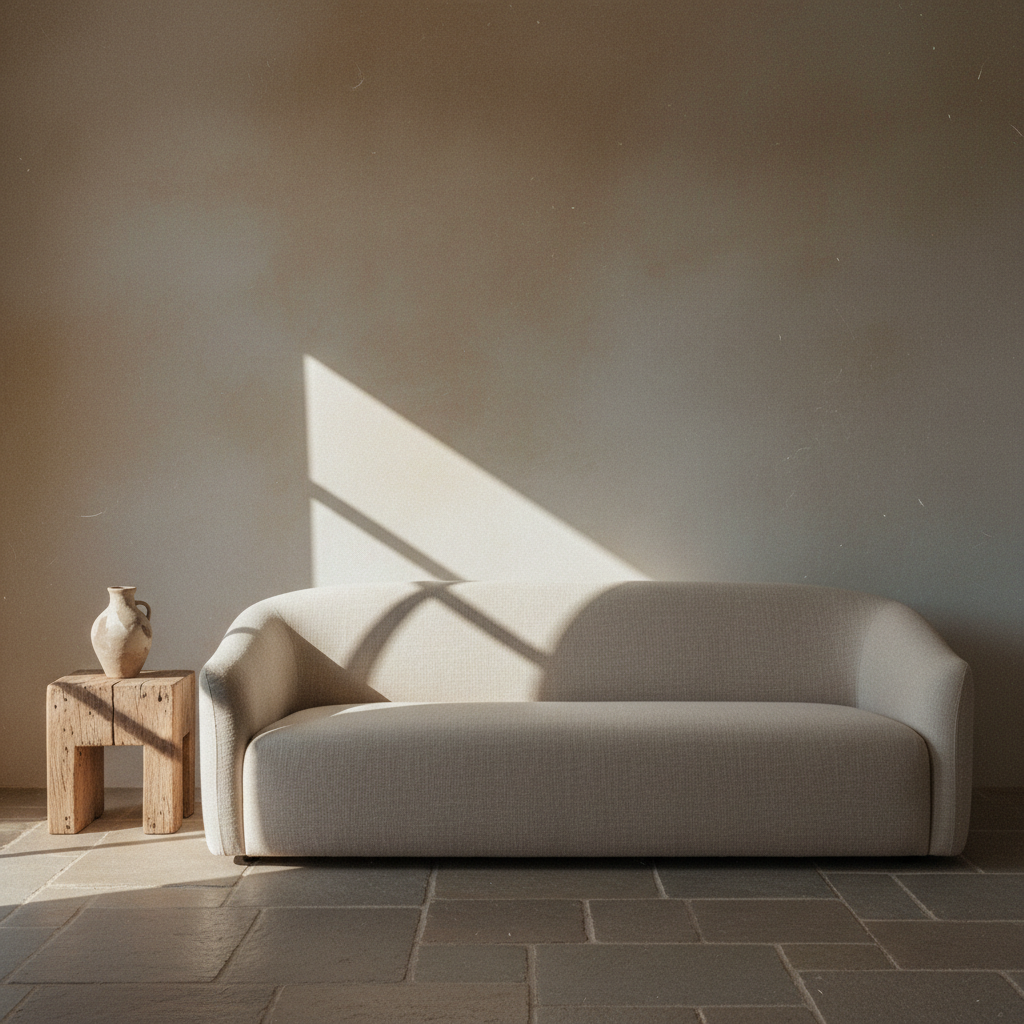
Curves were everywhere in 2025 and, twelve months on, the softer curves — the ones that feel architectural rather than theatrical — have become a premium default. The louder versions (full conversation pits, exaggerated cloud-like forms) have aged faster. The win is a gentle curve through the back of a sofa or the corner of a sectional. It breaks the rigidity of an open-plan Cape Town apartment without announcing itself.
2. Earthy, grounded palettes
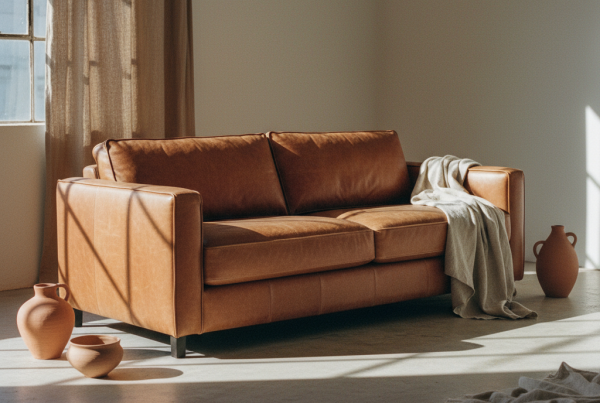
Terracotta, clay, warm olive, soft mushroom, ink-browns: the palette that emerged in 2025 has anchored itself in 2026 premium interiors. It flatters Cape Town’s natural light, which is warmer and more directional than it is given credit for. Blue-heavy and cool-grey palettes that dominated the decade before have receded.
3. Natural and tactile fabrics
Linen, bouclé and high-quality velvet are the dominant premium fabric categories in 2026. Synthetic performance fabrics have a role in short-term rentals and family homes with pets, but on the hero piece in the main room, natural fibre has re-taken the lead. Bouclé in particular has moved from trend to default, with softer, more structured weaves now outperforming the original fluffy iteration.
4. Considered, not compact
The “compact urban sofa” trend of 2025 has nuanced. Compact for the sake of it has faded; “appropriately scaled to the room” has endured. A Cape Town apartment does not automatically need a small sofa — it needs a sofa that has been proportioned for its room. This is where bespoke wins.
“The sofa that aged best in 2026 was the one that wasn’t trying to. Quiet materials, honest scale, a frame that will survive two rounds of re-upholstery.”
What has quietly faded
Technology in the sofa
Built-in USB charging ports, hidden compartments with smart features, and sofas marketed for their electronics have not aged well in the premium segment. Premium buyers in 2026 want their technology elsewhere — the sofa is the analogue piece in the room.
Overly-modular systems
Modular still has its place — particularly in larger family rooms where a configuration might evolve — but the entirely-modular approach has receded in favour of cleaner silhouettes that sit on their own. The premium buyer is increasingly buying a sofa that looks like a sofa, not a kit.
Heavy pattern
Patterned upholstery has lost ground to plain natural fabrics. Patterns still appear on scatter cushions and throws, but the hero piece is being specified plain — trusted to carry the room through its shape, scale and material rather than its surface graphic.
Artisanal craftsmanship: the underlying shift
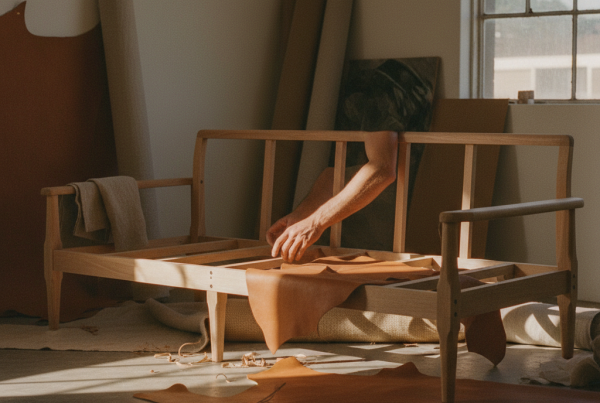
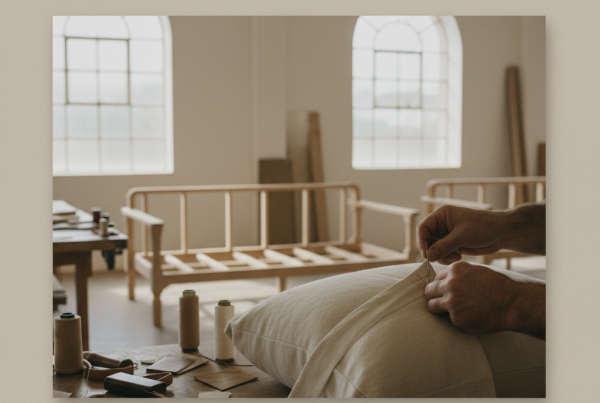
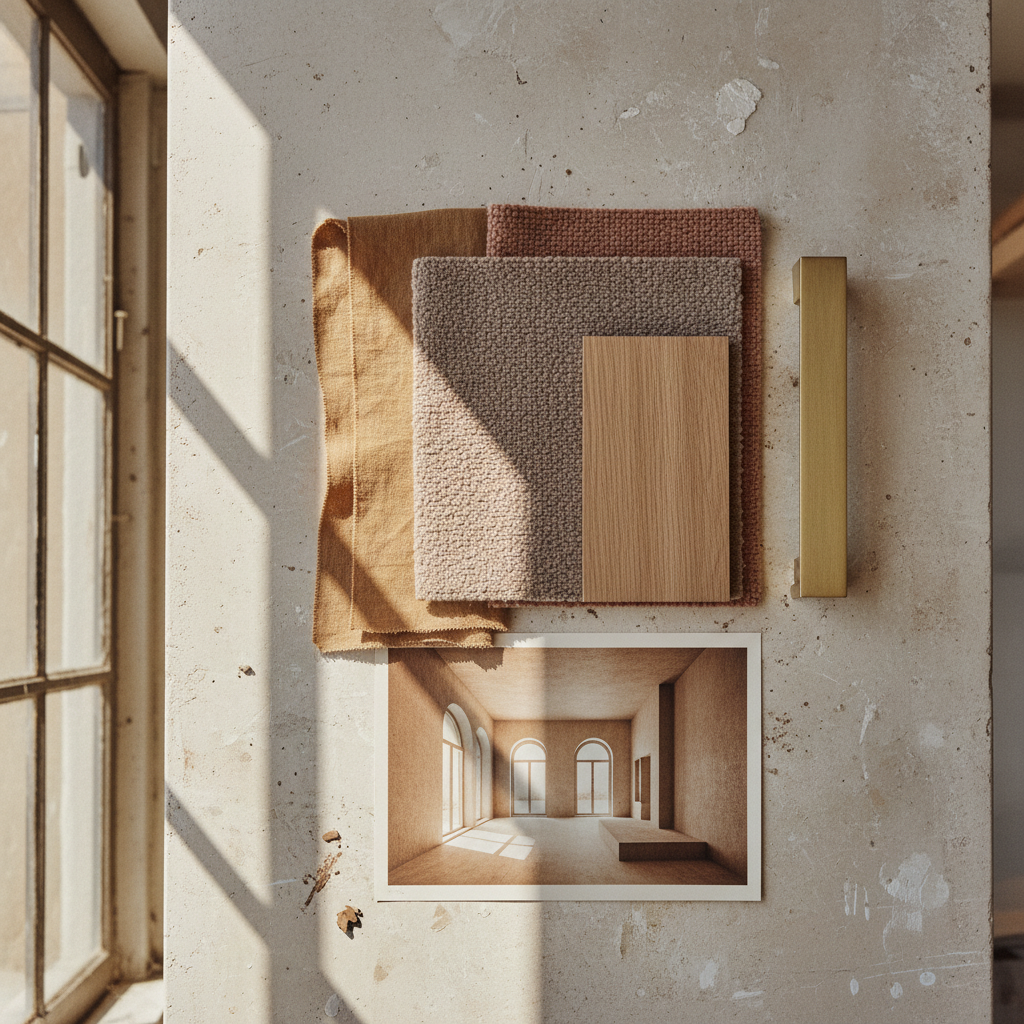
Across every category of premium furniture in South Africa, the 2025–2026 period has consolidated an underlying shift toward artisanal craft. Handwoven accents, hand-stitched seams, custom detailing and the story of who made it and where are now a genuine purchasing driver rather than a nice-to-have.
For a sofa this shows up as: visible stitch detail, hand-finished leather piping, cushions built rather than assembled, and workshops willing to sign their work. Mass-market premium — well-made factory pieces with no specific origin story — has lost share to named workshops.
What to ask before buying a sofa in 2026
If you are buying now, the durable questions are not about colour and form. They are about what the piece will be doing in 2036.
- Frame: kiln-dried hardwood, corner-blocked, sprung. Ask to see construction photos.
- Cushion: high-density foam, foam-wrap, or feather/down blend. Each has a different ageing curve.
- Fabric: natural fibre for the hero piece, performance fabric for high-traffic family rooms. Understand the cleaning and abrasion ratings.
- Maker: can they re-upholster their own piece in a decade? If yes, your 2026 buy is a 2046 piece.
The 2026 premium sofa buyer is not chasing trends. They are buying one piece to live with for fifteen years and asking the hard questions upfront. The trend lists that will matter in 2030 will read like this one.
Explore the Loom & Hide sofa range to see what these directions look like in production.
Buy the one that ages well
Visit the Woodstock showroom to sit on the current range, compare cushion builds, and see how the trends that stuck look in natural fibre.
Frequently Asked Questions
Which 2025 sofa trends have endured into 2026?
Curved silhouettes (restrained versions), earthy and grounded palettes, natural-fibre fabrics (linen, bouclé, quality velvet), and considered scale. Trends that have faded: technology-in-sofa features, fully modular systems, and heavy pattern on the hero piece.
What fabric is best for a Cape Town living room sofa?
Natural-fibre fabrics — linen, bouclé and high-quality velvet — flatter Cape Town’s warm directional light and age well. For family rooms or short-term rentals with high traffic, consider performance-grade natural blends or a wool mix.
How do I choose the right sofa size for my living room?
Measure the space carefully, leave room for traffic paths, and specify seat depth deliberately. A deeper seat (up to 60 cm) suits lounging; a shallower one (50–55 cm) suits more upright conversation. A bespoke brief lets you match the sofa to the room rather than compromise either way.
Are bouclé and velvet sofas practical in SA homes?
Both are practical if specified correctly. Modern structured bouclés are more durable than the original fluffy weaves. Velvet is surprisingly resilient and hides marks well on darker colourways. For both, ask about abrasion rating (Martindale), cleaning method and whether the fabric is stain-treated.
Are sustainable, locally-made sofas more expensive?
Not usually when compared on like-for-like construction quality. Locally made sofas at R35,000–R85,000 typically out-price comparable European imports (R55,000–R120,000 landed) while offering repairability, shorter lead times, and the ability to re-upholster through the original maker.
What should I ask a sofa maker before buying in 2026?
Frame construction (kiln-dried hardwood, corner-blocked, sprung), cushion build (foam density, feather blend), fabric spec (fibre, abrasion rating, pattern repeat), lead time, and — critically — whether they re-upholster their own pieces a decade later. A yes on the last question tells you how they think about the long relationship.
- Industry interviews — Cape Town interior designers, 2025–2026
- Loom & Hide workshop order data, 2024–2025 (fabric and silhouette trends)