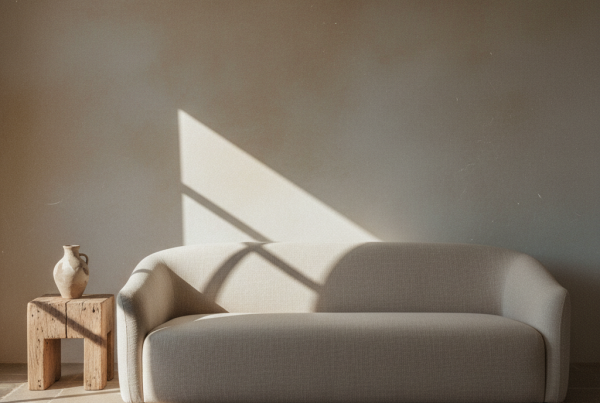
- The Jung is Loom & Hide’s signature three-seater — a deep-seated, low-armed sofa designed around comfort, not silhouette photography.
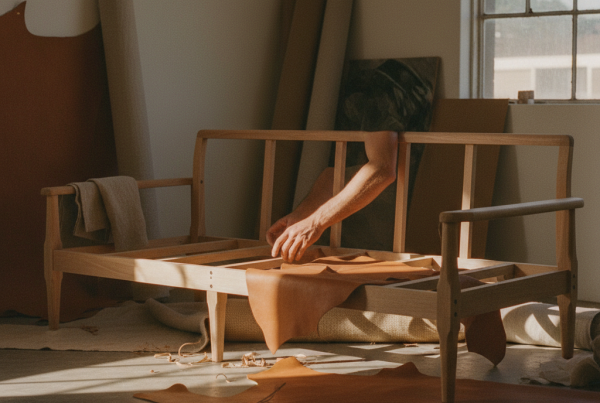
- Built on a kiln-dried hardwood frame with hand-tied spring base and a choice of feather-wrap or foam seat construction.
- Available in tan leather, linen, bouclé and velvet — or in a COM (Customer’s Own Material) brief through interior designers.
- Specified increasingly on Atlantic Seaboard and Southern Suburbs projects for its scale, its sit, and the fact that it can be re-upholstered back to new.
Every workshop has a piece that designers keep coming back to without quite being able to explain why. The Jung is ours. It is not the most dramatic sofa in the range. It is not the most architectural. It is the one that gets sat on, written about quietly in specification sheets, and remembered two years later when a client is ready to buy.
What follows is the long answer to the question designers rarely ask out loud: why does the Jung keep showing up?
What the Jung actually is
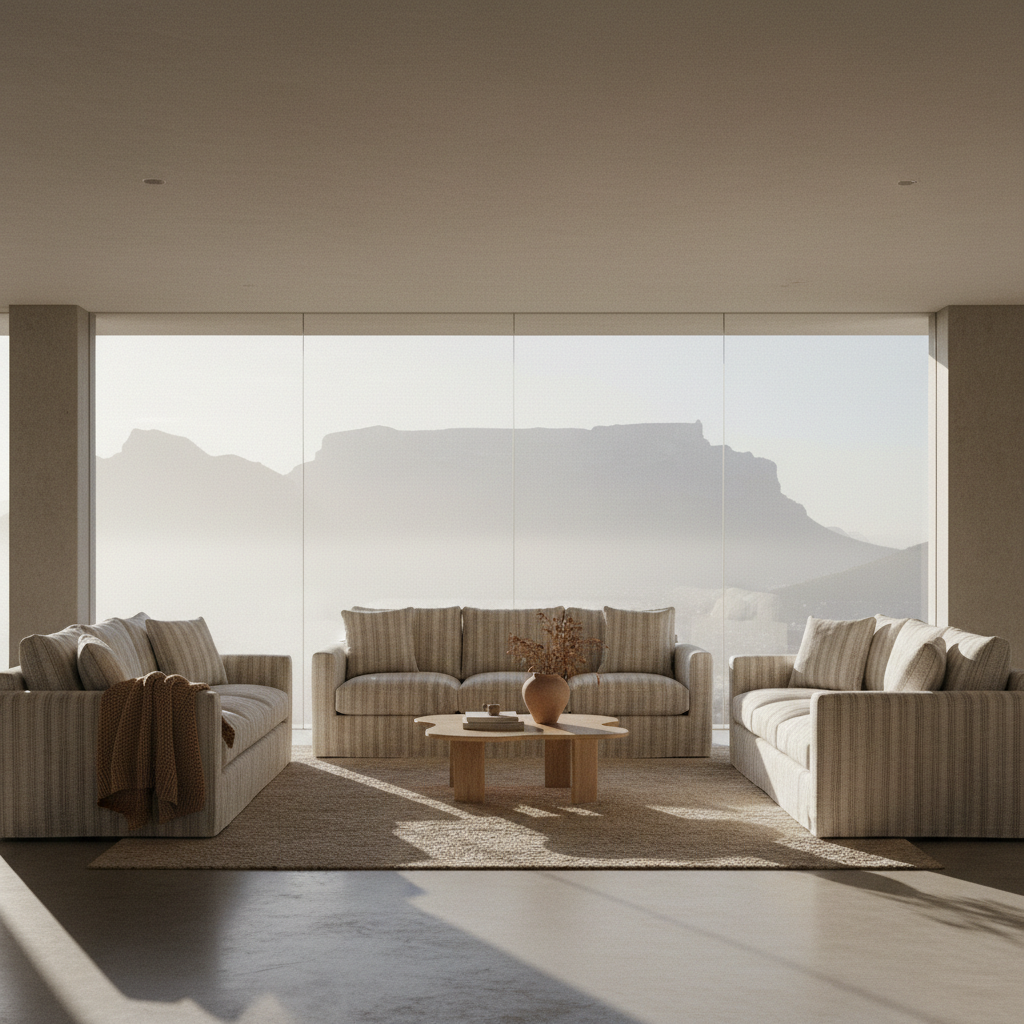
The Jung is a deep-seated, low-armed three-seater sofa with a generous back cushion stack and soft-edged cushions that flatten comfortably rather than posing stiffly. It sits low to the ground, on slim turned timber legs, and is intentionally sized for people to spend long evenings on rather than perch at the edge of.
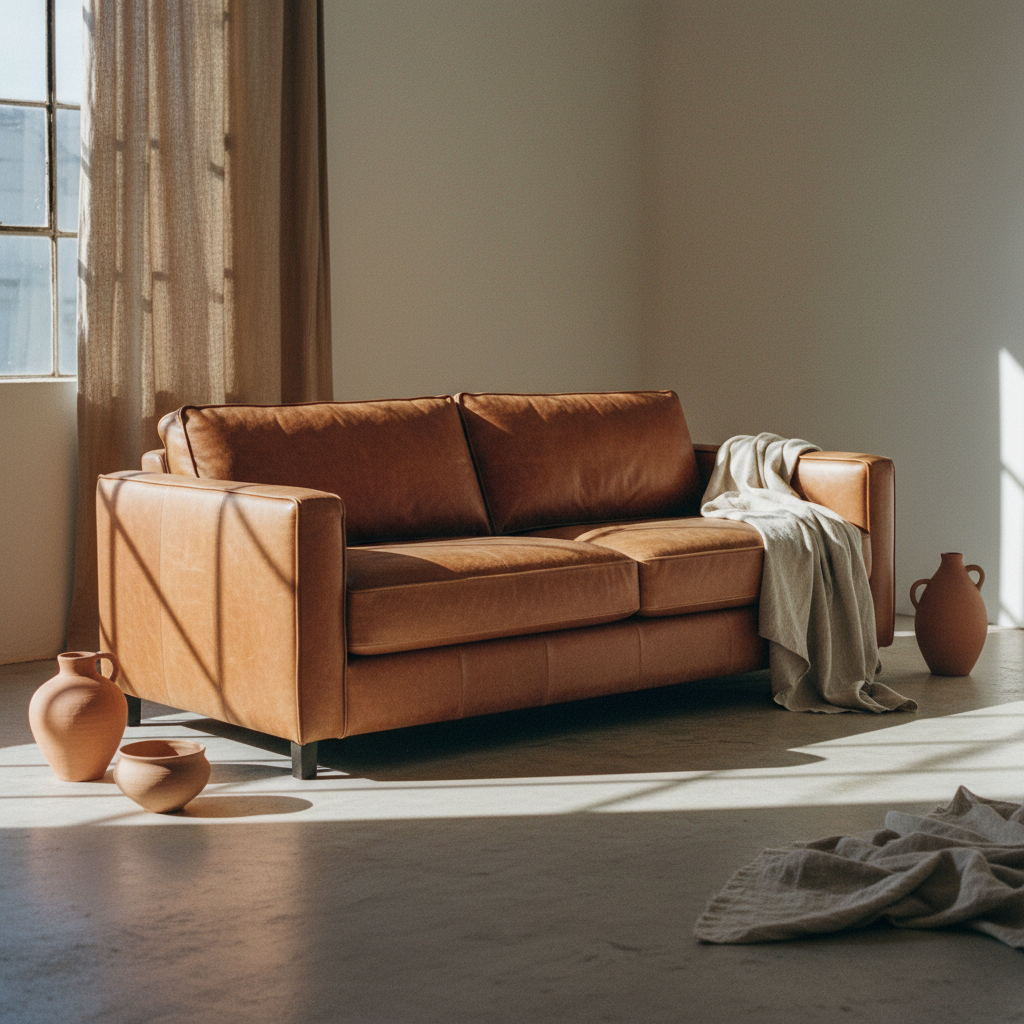
The defining design decision was scale. The Jung was developed to suit real Cape Town living rooms — Atlantic Seaboard apartments, Southern Suburbs family homes, Winelands farmhouses — rather than showroom floors. The seat depth sits between a traditional lounge depth and a day-bed, which is why it photographs deceptively modest but feels expansive to sit on.
How it is built
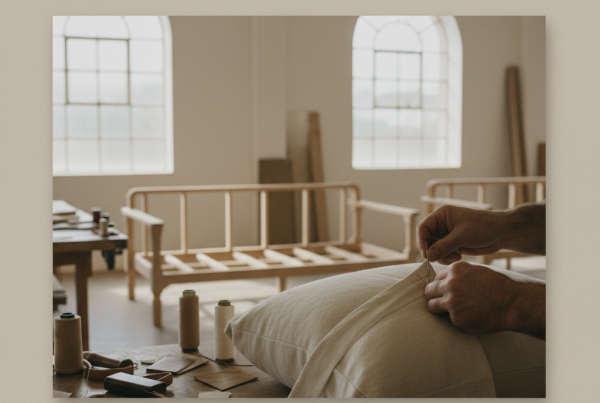
A Jung frame is made from kiln-dried hardwood, corner-blocked and glued, with a hand-tied spring base underneath a high-density foam or feather-wrapped seat (the brief chooses between firmer and softer sit). The back cushions are a blend of foam core and feather fill, trapped in a cambric casing so they hold their line over years rather than sagging.
None of this is visible to the person sitting on it — and that is the point. The hidden work is what lets the piece survive fifteen years of use without losing its shape.
“The Jung is the sofa the workshop would put in its own living room. That is the highest recommendation we know how to give a piece.”
How it is specified
The Jung is offered in four standard fabric categories — linen, bouclé, velvet, and premium leather — and is also available to designers on a COM (Customer’s Own Material) basis. Dimensions can be adjusted for bespoke briefs: overall width, seat depth, arm height, cushion firmness and leg finish are all flex points. Lead time on a stock fabric build is 6–8 weeks from order confirmation.
On the Atlantic Seaboard, the most-specified versions have been a deep-seat linen in oatmeal for family homes, and tan leather for men’s studies and Winelands guest suites. In bouclé, the latte and stone colourways have been the repeat orders.
Why it keeps getting specified
Three reasons, in order.
Scale. The Jung is the piece that works when the room is unusual — too deep, too narrow, or open-plan in a way that confuses most catalogue sofas. Because it is built to order, the dimensions can be brought into sympathy with the room rather than fought against it.
Sit. The seat depth and cushion blend produce a sit that does not force users to sit up formally. In a family room or a long-evening space, that is the difference between a sofa that gets used and one that gets admired.
Repairability. Every Jung can be re-upholstered, re-cushioned, and re-specified by the workshop that built it. A twelve-year-old Jung comes back to Woodstock, the frame is checked, the cushions are rebuilt, new fabric goes on, and the piece returns to service for another decade. This is the part import furniture cannot replicate.
If you want a sofa that does one thing — photograph beautifully for six months — there are better options. If you want a sofa that does everything else for twenty years, the Jung is hard to out-argue.
Sit on the Jung at The Palms
The best way to understand a piece is to spend fifteen minutes on it. The Woodstock showroom has the Jung in multiple fabrics on the floor.
Frequently Asked Questions
What is the lead time on the Jung sofa?
Six to eight weeks from order confirmation in a stock fabric. A COM brief or unusual customisation may stretch to ten weeks.
How much does a Jung sofa cost?
Pricing from approximately R35,000 for a three-seater in a stock fabric, scaling up with dimension changes, fabric selection (bouclé and velvet sit higher than linen, premium leather higher still) and configuration (loveseat, corner unit, chaise extension).
Can I specify my own fabric (COM) on the Jung?
Yes. Loom & Hide accepts Customer’s Own Material through the designer trade programme and on direct client briefs. The workshop will provide metre requirements, repeat-allowance guidance and a cutting plan before committing fabric.
Can the Jung be customised to my room dimensions?
Overall width, seat depth, arm height and leg finish are all flex points. Particularly useful for Atlantic Seaboard apartments where stair or lift access, unusual ceiling heights or non-standard room proportions create constraints.
How durable is the Jung frame?
The frame is kiln-dried hardwood, corner-blocked and glued, with hand-tied springs beneath the seat. With moderate care and periodic re-upholstery, a Jung frame is built to last decades — not years.
Can the Jung be re-upholstered later?
Yes. Loom & Hide services its own pieces. Jungs come back to the Woodstock workshop for re-upholstering, cushion replacement, frame repair and fabric changes. The artisans who built the piece know the frame.
- Loom & Hide workshop specification sheets
- Atlantic Seaboard interior design project briefs, 2024–2025 (anonymised)