- Cape Town luxury property (R10m+) grew roughly 8% in 2025, faster than most SA metros, driven by high-net-worth relocation from Johannesburg, London and Sydney.
- The Western Cape took 40% of all R10m+ residential sales in SA in 2024. Five Cape Town suburbs alone generated R3.6 billion in R20m+ sales.
- These buyers aren’t furnishing from scratch — they’re editing what they already own. The new purchase is a hero piece: usually a sofa that has to last fifteen years.
- Lead time, repairability and customisable dimensions matter more here than badge value. The import model solves for the wrong things.
Semigration — the steady relocation of affluent South African households to the Western Cape — has stopped being a trend story and become a structural feature of the country’s luxury property market. And where property moves, furniture follows. But not in the way the old playbook assumed.
The Cape Town buyer in 2026 is not starting from zero. They are arriving with a shipping container of their own things, a list of what they want to replace, and a sharper set of criteria than they had before. The centrepiece — usually a sofa — is the one piece they will buy locally, and the one they will live with longest. Understanding what they actually want is the difference between being specified and being scrolled past.
The buyer has changed — and so has the brief
Ten years ago, the prevailing Cape Town furniture story was about holiday homes: bright, light, a bit thrown-together, designed to be photographed well and replaced when the style moved on. That is not the brief any more.
The post-2020 semigration cohort are primary residents. They work in Cape Town. Their children go to school here. Their home is not a holiday set-piece — it is the backdrop to the rest of their lives. And because many are returning South Africans or ex-Johannesburg buyers who have already moved house two or three times, they have developed an unforgiving eye for the difference between furniture that survives a move and furniture that does not.
“The question isn’t whether the sofa looks good in the showroom. It’s whether it still looks good after the movers have handled it twice.”
What they bring with them
The typical semigration brief starts with an inventory, not a wishlist. Dining tables, beds, art and rugs are usually moved. Upholstered pieces — especially sofas — are the category most often left behind or sold on, because dimensions no longer suit, fabric has dated, or the cost of transporting them exceeds their replacement cost. That single category is where the Cape Town spend concentrates.
What they want to buy here
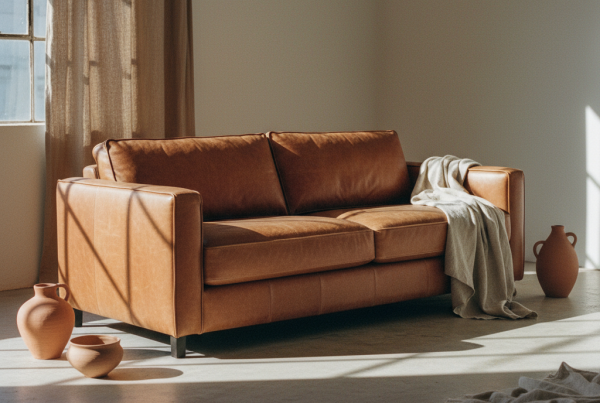
A piece that is unmistakably from Cape Town. Not kitsch, not themed — but something that carries a sense of place. Local provenance, honest materials, a name they can explain to a visitor. This is where the Barefoot Luxury conversation — comfort first, ornament last — starts landing.
Why premium imports are losing the argument
For the semigration buyer, imported European furniture has three problems that never used to matter: lead time, repairability, and rand exposure.
Lead time. Most European luxury imports carry 12 to 16 weeks from order to Cape Town doorstep, and that is before any delay in Durban or Cape Town harbour. A family moving into a new home in the Atlantic Seaboard is not waiting four months for a sofa. They want something liveable in six to eight weeks.
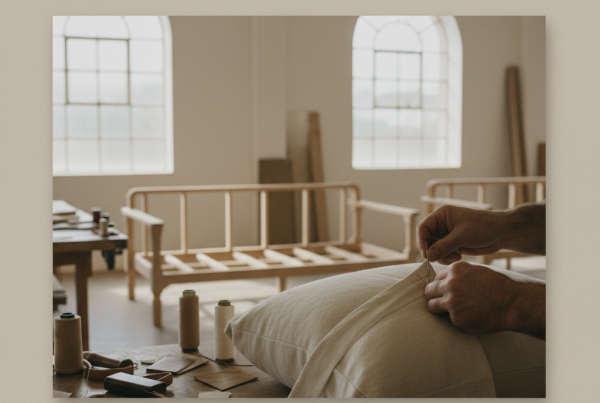
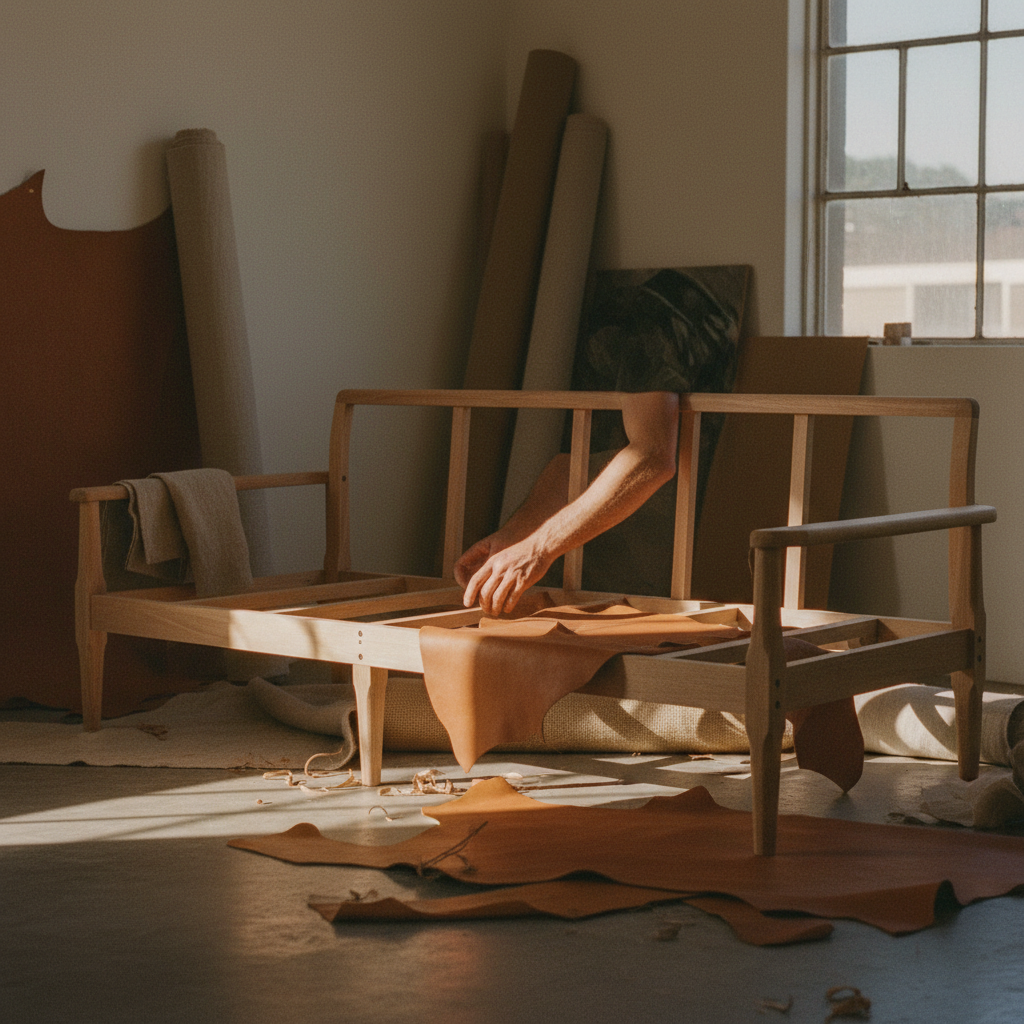
Repairability. A sofa is a ten-to-twenty-year piece. Imports cannot be meaningfully repaired once shipped — the spring system, the foam stack, the cushion construction are all proprietary and service is a different continent away. A locally-made sofa stays in a relationship with the workshop. It can be re-upholstered, re-cushioned, re-specified without ever leaving the Cape.
Rand exposure. The rand has weakened meaningfully against both the euro and the dollar over the last seven years. Pricing has not kept pace on the retail shelf because importers have absorbed some of the pain — but every successive shipment prices higher, and the buyer is increasingly aware of it.
The semigration buyer is not looking for a cheaper import. They are looking for a piece that justifies being the one item they spent real money on after moving 1,400 km. The justification is craft, provenance, and the fact that the workshop is fifteen minutes from their new front door.
What this means for specifiers
For interior designers and architects working with semigration clients, the sofa brief has become simultaneously higher-value and more technically demanding. Clients have opinions on seat depth, arm height, fabric weight and cushion density that they did not have five years ago. They have often lived with a piece they now know they got wrong.
Locally-made handcrafted work is particularly well-suited to this brief because the workshop can actually respond to it. Dimensions are adjustable. Fabric is COM-friendly. Silhouettes are not locked to a catalogue. The designer is working with a craftsman, not a sales rep.
The five-year view
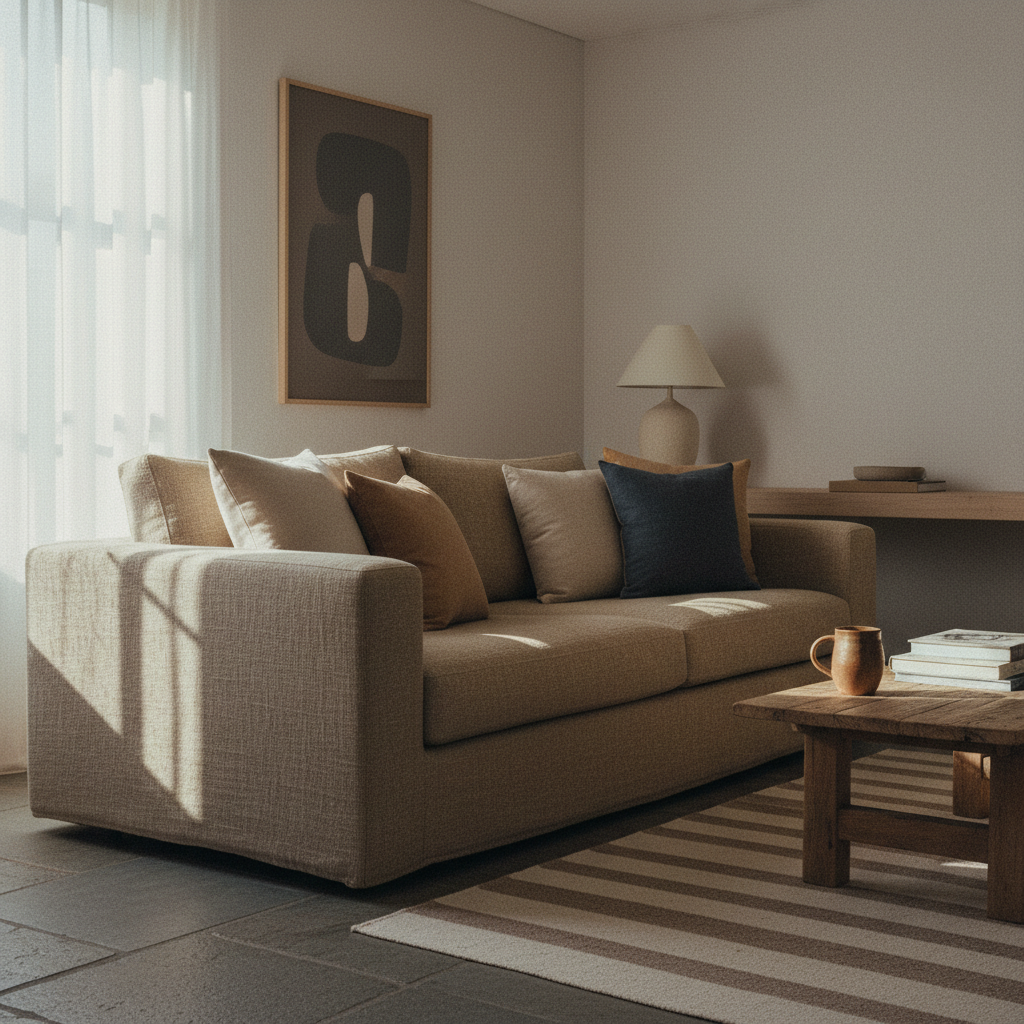
Semigration is not a two-year property cycle — the demographic drivers are longer-dated. As long as Cape Town maintains its relative economic and safety advantages within South Africa, the flow continues. The 2025–2030 window will see the Atlantic Seaboard, Southern Suburbs and the Winelands absorb another cohort of high-net-worth households, each buying the one sofa that defines the room they spend the most time in.
The brands that win that moment are the ones who understand that the sale is not about the sofa. It is about the move, the settle-in, the first year in a new city. The sofa is the proof the move was worth it.
Make the sofa the first right decision in the new house
Visit the Woodstock workshop and showroom. See what is on the floor, discuss a custom brief, and meet the team behind the craft.
Frequently Asked Questions
Why is semigration driving demand for locally-made sofas in Cape Town?
Semigrating buyers — especially those arriving from Johannesburg, London or Sydney — have usually left their old upholstered furniture behind and want a single statement sofa for the new home. Locally-made is easier to customise to unfamiliar room dimensions, faster to receive than an import, and repairable long-term. It also satisfies the “I bought this here” story that matters to most semigration buyers.
How much have Cape Town luxury property prices grown?
Cape Town’s luxury segment (R10m+) grew approximately 8% in 2025. In 2024, the Western Cape accounted for 40% of all R10m+ residential sales nationally, and five Cape Town suburbs alone produced R3.6 billion in R20m+ transactions.
What lead time should I plan for on a custom sofa in Cape Town?
For a locally handcrafted sofa, six to eight weeks from order confirmation is the realistic window. Complex custom orders or unusual fabric may stretch to ten. European imports typically run twelve to sixteen weeks, before any shipping delays.
Can I customise dimensions to fit an Atlantic Seaboard apartment?
Yes. Loom & Hide builds to order, which means seat depth, overall width, arm height and leg style can all be specified at brief stage. Particularly useful where stair access, lift dimensions and unusual proportions create real constraints.
Where is the Loom & Hide showroom in Cape Town?
Loom & Hide’s Cape Town showroom is at The Palms Décor Centre, 145 Sir Lowry Road, Woodstock — open Monday to Friday 9am to 5pm and Saturday 9am to 2pm. Parking is on-site.
What does a handcrafted Cape Town sofa cost?
Pricing at Loom & Hide starts from approximately R35,000 for a full-size handcrafted sofa, scaling up depending on dimensions, fabric (COM welcome) and configuration. This is meaningfully below the equivalent European import once duties, shipping and retail margins are stacked in.
- Property24 — Cape Town luxury property market 2025 review
- DG Properties / Cape Argus — Western Cape share of R10m+ residential sales, 2024
- Cape Argus — Five Cape Town suburbs producing R3.6bn in R20m+ sales, 2024
- Seeff, Pam Golding, Lew Geffen Sotheby’s — semigration commentary, 2024–2025