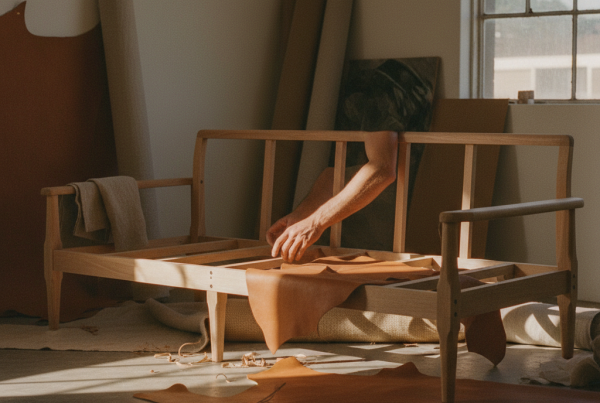
- Bespoke upholstery is a different discipline to retail furniture — the variables, stakes and client exposure are materially higher.
- Five evaluation criteria separate a reliable local maker from a risky one: tenure, frame construction, customisation range, COM policy, and after-sales commitment.
- Quoted lead times on imports are typically 12–16 weeks. Locally handcrafted: 6–8 weeks. Add two weeks of buffer in client communications either way.
- Trade pricing from established SA makers typically sits at 15–25% below retail on standard pieces, with priority scheduling and direct contact.
Specifying furniture for a high-end residential project in Cape Town is a different discipline to retail furniture purchasing. The variables are more complex, the stakes are higher, and the client relationship depends on getting it right. A wrong specification — wrong scale, wrong fabric weight, wrong lead time — is not just an aesthetic problem. It is a project management problem, a client satisfaction problem, and sometimes a cost problem that lands at the designer’s door.
Why bespoke, and why local
The case for bespoke locally-made upholstery is stronger in 2026 than it has ever been. Three factors converge: rand economics (imported equivalents have become materially more expensive), lead time advantage (6–8 weeks versus 12–16 for European imports), and the growing expectation among premium Cape Town clients for pieces that can’t be found anywhere else.
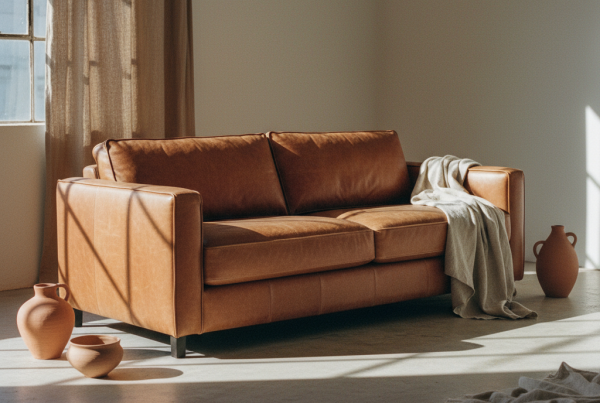
When a client walks into their completed Atlantic Seaboard apartment and sees a sofa that exists in exactly that configuration, fabric and dimension, and only in their home, that is the outcome that generates referrals. It is a result inventory furniture, however prestigious its provenance, cannot deliver.
“A client who calls three years after delivery needs a resolution. Makers who stand behind their work protect your relationship with that client long after the project closes.”
Evaluating a local upholstery manufacturer
Not all local makers are equal. Before adding a manufacturer to your specification list, evaluate them across five dimensions.
1. Craft tenure and production stability
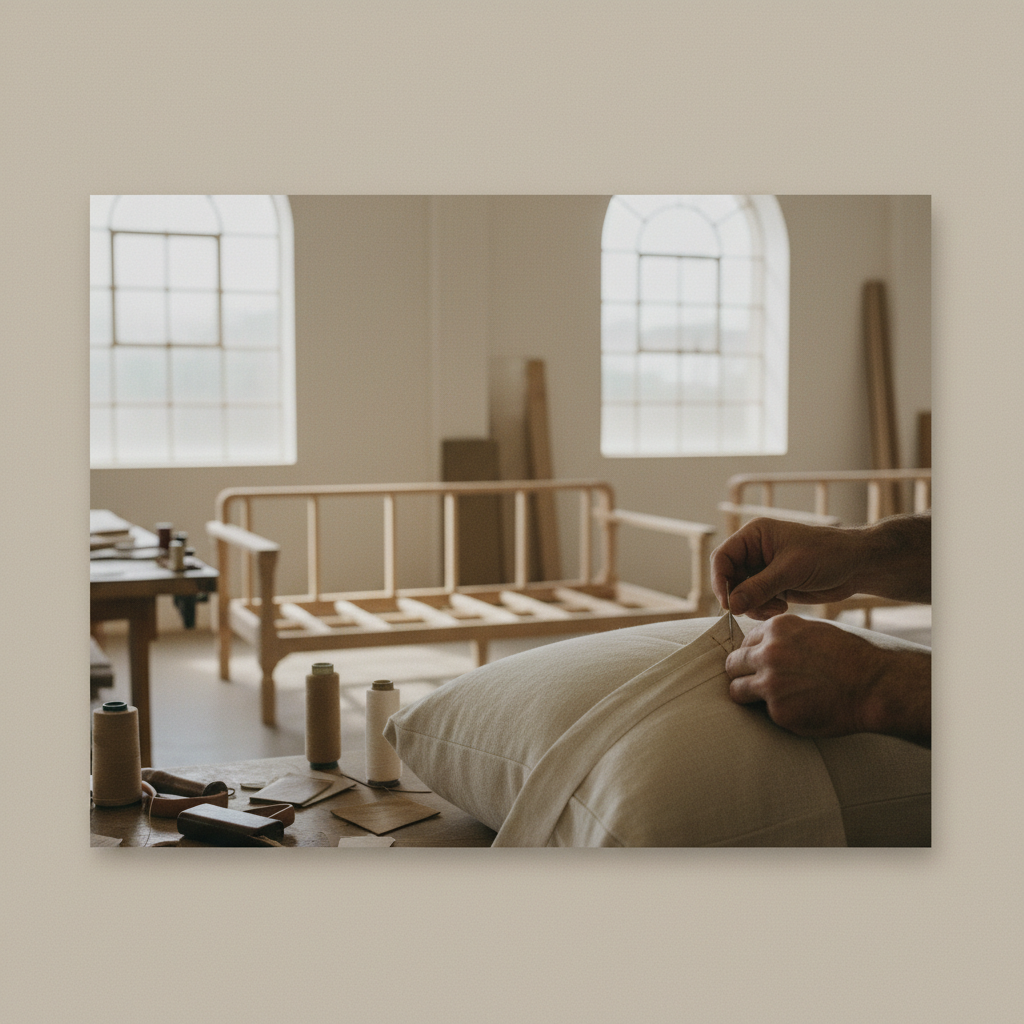
Longevity matters in upholstery manufacturing. A workshop with fifteen-to-thirty years of operation has survived multiple economic cycles, retained skilled artisans, and refined its production processes. Ask about production team tenure — the best local makers employ artisans who have been with them for a decade or more.
2. Frame construction standards
Request to inspect frame construction firsthand. Acceptable standards for high-end residential: kiln-dried hardwood (not green timber or softwood), corner-blocked and glued joints, no staple-only construction, and steel spring systems (eight-way hand-tied or sinuous spring) rather than pure foam bases. Webbing alone is not acceptable at the premium price point.
3. Customisation capability
Establish what the maker can customise: dimensions (depth, height, seat depth, arm height), frame silhouette, leg material and finish, spring tension, foam density, fabric specification, welt and border detail. Establish minimum order quantities — some require two pieces per order; others will do singles.
4. COM policy and fabric handling
Customer’s Own Material acceptance is essential for premium residential. Confirm the COM process: how fabric is specified (metres per piece, repeat allowance), how it is received and inspected, and who bears liability for cutting errors. Reputable makers provide a cutting guide and discuss layout before committing material.
5. After-sales and reupholstery commitment
Specify makers who commit to after-sales service. A client who calls three years after delivery with a broken leg or compressed cushion needs a resolution. Makers who stand behind their work protect your relationship with the client long after the project closes.
Writing the specification brief
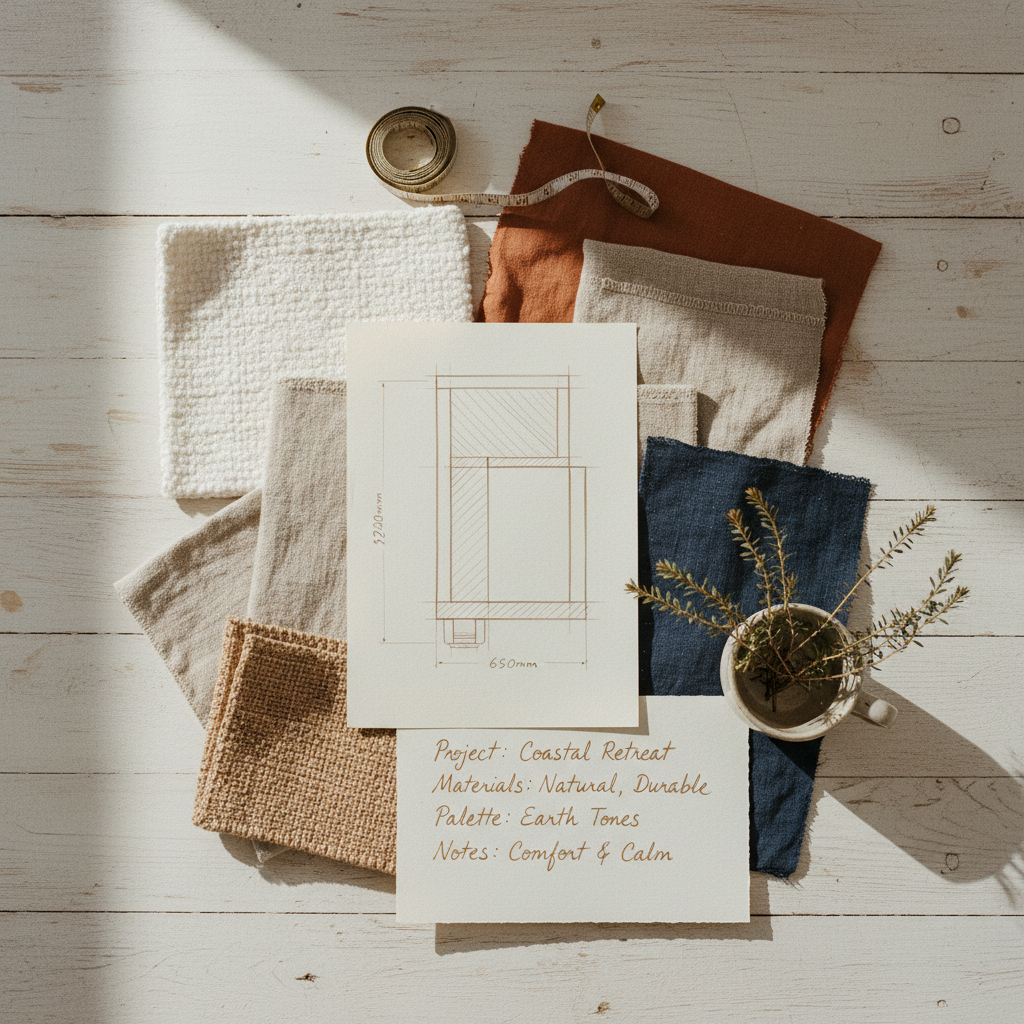
A clear brief is the most important protection in a custom upholstery order. It eliminates ambiguity, establishes the basis for any post-delivery dispute, and gives the manufacturer everything they need to produce correctly the first time.
A complete bespoke upholstery specification should include:
- Piece identification: room, position, quantity
- Overall dimensions: width × depth × height (overall and seat height separately)
- Seat depth and back height: especially critical for lounge versus conversation seating
- Arm style and height: track, rolled, flared, or none
- Frame finish: leg material, finish, leg height
- Cushion construction: seat density (kg/m³), back fill (fibre, foam-wrap, feather/down blend), reversible or fixed
- Fabric: name, colourway, width, horizontal/vertical placement, plain or pattern with repeat direction
- Welt, piping and border detail
- Delivery requirements: access constraints, floor protection, assembly on site
Managing client expectations on lead times
The single most common source of designer–client tension in furniture specification is lead time mismanagement. Clients routinely underestimate how long bespoke furniture takes and overestimate how much schedule flexibility exists in a construction project.
Best practice: add two weeks to any quoted lead time in client communications. Confirm the order the moment the floor plan and fabric are finalised, not when the renovation is “nearly done.” A locally-made sofa ordered eight weeks before completion will arrive on time. One ordered three weeks before will not.
For phased projects, specify the centrepiece sofa first and fill secondary pieces later. The hero piece, the one that defines the room, should be in production before the renovation reaches finishing trades.
The trade relationship: what to expect and ask for
Established local upholstery manufacturers actively court designer business and structure their trade relationships accordingly. From a quality trade partner you should expect:
- Trade pricing typically 15–25% below retail on standard pieces
- Priority scheduling during their production cycle
- Dedicated contact (not a general sales line) for project queries
- Site visit capability for complex briefs
- Photographic documentation of production milestones on request
Loom & Hide operates a trade programme for interior designers and architects working on Cape Town residential projects. The full sofa range is available to view at The Palms Décor Centre, 145 Sir Lowry Road, Woodstock, with all models available for inspection and fabric specification on site.
Protecting your project: a specification checklist
Before signing off a bespoke upholstery order, confirm:
- Written order confirmation with full specification attached
- Deposit receipt and balance due date confirmed
- Lead time confirmed in writing with milestone dates
- COM received by manufacturer and cutting approved
- Delivery date confirmed with installation instructions
- After-sales contact established
Bespoke upholstered furniture done well is the centrepiece of every great interior. Done poorly — wrong scale, rushed specification, compromised material — it is the thing clients remember. The difference, in almost every case, comes down to the quality of the brief and the quality of the maker.
Specify with confidence
Book a trade appointment at the Woodstock showroom to walk the frame-construction, fabric library and current production.
Frequently Asked Questions
What is a realistic lead time for custom upholstered sofas in Cape Town?
Plan for 6–8 weeks from order confirmation and fabric receipt on locally made pieces. Allow two weeks buffer in client communications. Complex pieces with unusual frame construction or multiple COM fabrics may require up to 10 weeks.
Do local Cape Town manufacturers accept COM (Customer’s Own Material)?
Most established local makers accept COM. Confirm the metres required per piece (usually stated per linear metre at 140cm width), pattern repeat allowance, and the manufacturer’s inspection process for received fabric before committing.
What trade discount do interior designers receive from local furniture makers?
15–25% below retail is typical for established designer relationships on volume orders. Some makers require trade registration; others work on a project-by-project basis.
What frame construction should I specify for high-end residential?
Kiln-dried hardwood (not green timber or softwood), corner-blocked and glued joints, no staple-only construction, and a sprung base — eight-way hand-tied or sinuous spring. Webbing alone is not acceptable at premium price points.
Can I change specification mid-production?
Small specification adjustments are usually possible until fabric cutting commences. After cutting, changes typically incur charges or a re-order. Lock the final specification before the cutting slot.
How do I protect my client relationship on a bespoke upholstery order?
Written specification, written lead time with milestone dates, confirmed delivery access constraints, and a named after-sales contact at the maker. A complete paper trail removes ambiguity when (not if) something needs adjustment.
- South African Institute of the Interior Design Profession (IID) — specification practice guidance
- SABS / SANS upholstered furniture standards
- Industry practice interviews — Cape Town interior designers, 2025