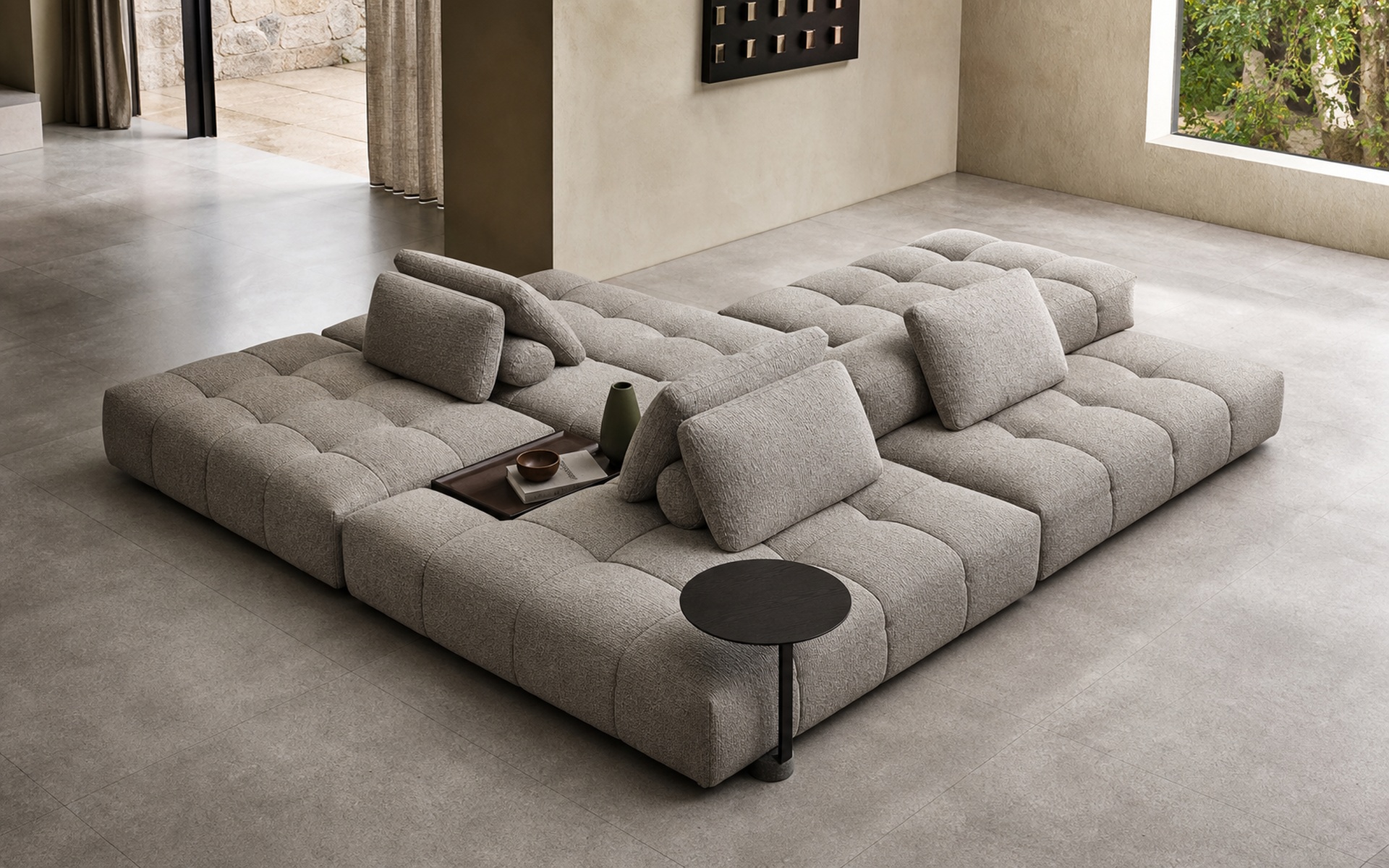
Patricia Urquiola took the two great ancestors of the sofa, the buttoned Chesterfield and the radical seventies modular, and persuaded them to have a child.
Every sofa in this archive so far was designed before 1974. The Tufty-Time is here to show what happens when someone reads the whole archive and answers it.
Patricia Urquiola was born in Oviedo, Spain, trained in Madrid and Milan, and studied under Achille Castiglioni, the great wit of Italian design, before running the design office of Piero Lissoni and finally opening her own Milan studio in 2001. By the mid 2000s she was the most closely watched designer in Italy, and in 2005, for B&B Italia, the company whose foam-moulding technology had powered the radical sofas of the late 1960s, she delivered the piece that made her a household name in design circles. The Tufty-Time is two histories zipped together. From the nineteenth century it takes capitonne, the deep-buttoned quilting of the Chesterfield and the gentleman’s club, softened here from taut formality into something pillowy and inviting. From the 1970s it takes the module: low, armless-or-armed square units, corner pieces, chaise ends, all recombinable at will, a direct descendant of the modular revolutions we have covered in the Camaleonda era. Club-chair skin, radical skeleton. Nobody had thought to marry them, and once she did it seemed obvious, which is the signature of a very good idea.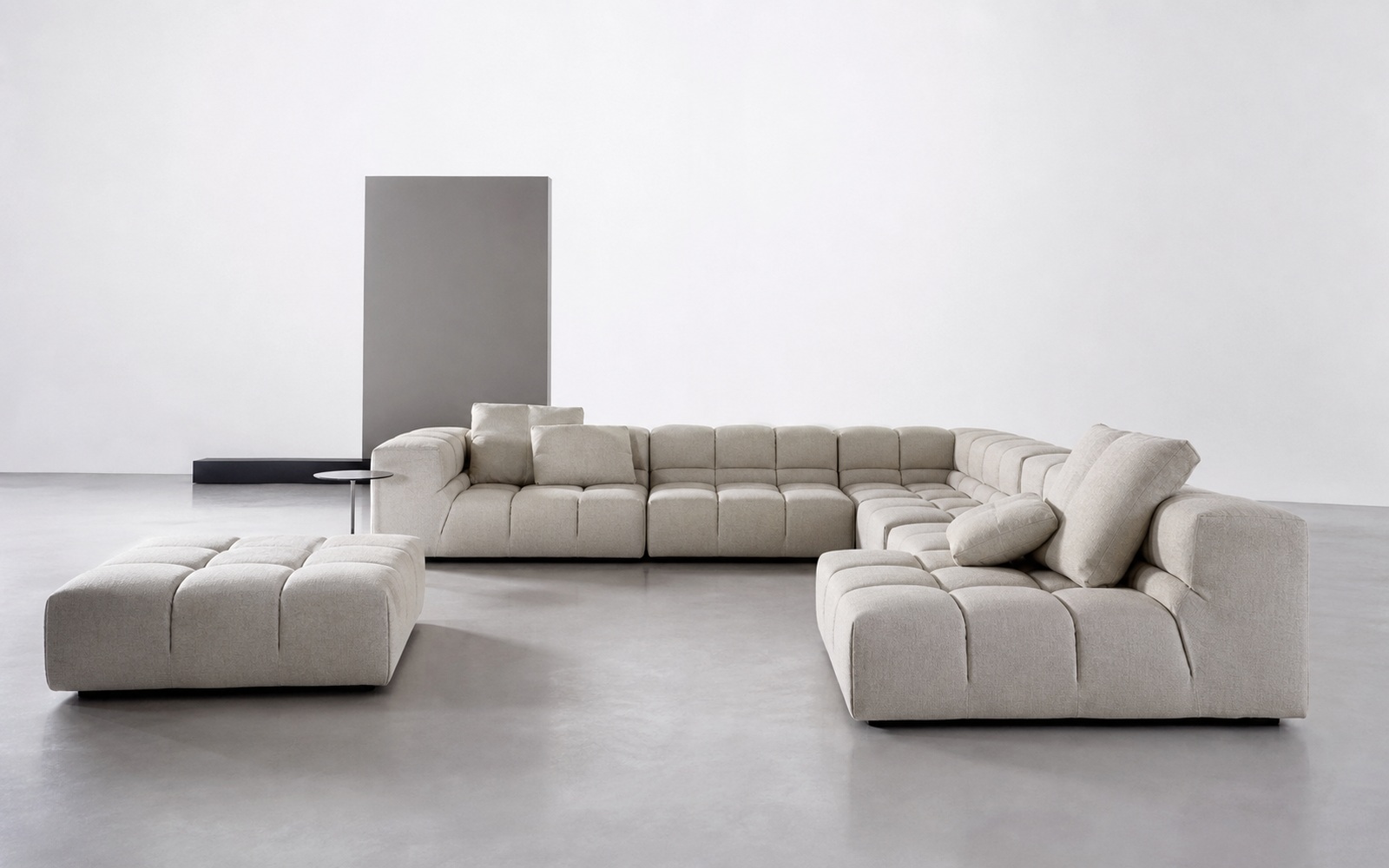
Nostalgia, engineered properly
What keeps the Tufty-Time from being pastiche is the discipline underneath. The buttoning is not decoration applied to a slab; the quilted panels wrap the units on every visible face, so however you recombine the modules, the sofa reads as finished from all angles, floating loose in a room like its seventies ancestors rather than backed against a wall like its Victorian one. The proportions are contemporary too: low seat, deep footprint, an invitation to sit cross-legged or lie flat that no true Chesterfield, with its upright dignity, ever extended. It arrived at the exact moment the market was ready to be nostalgic and informal at once, and it became one of the defining sofas of the 2000s, endlessly photographed, endlessly specified, and flattered by an industry of lookalikes within a few seasons.“Club-chair skin, radical skeleton. Nobody had thought to marry them.”

How to see it
The honest knock
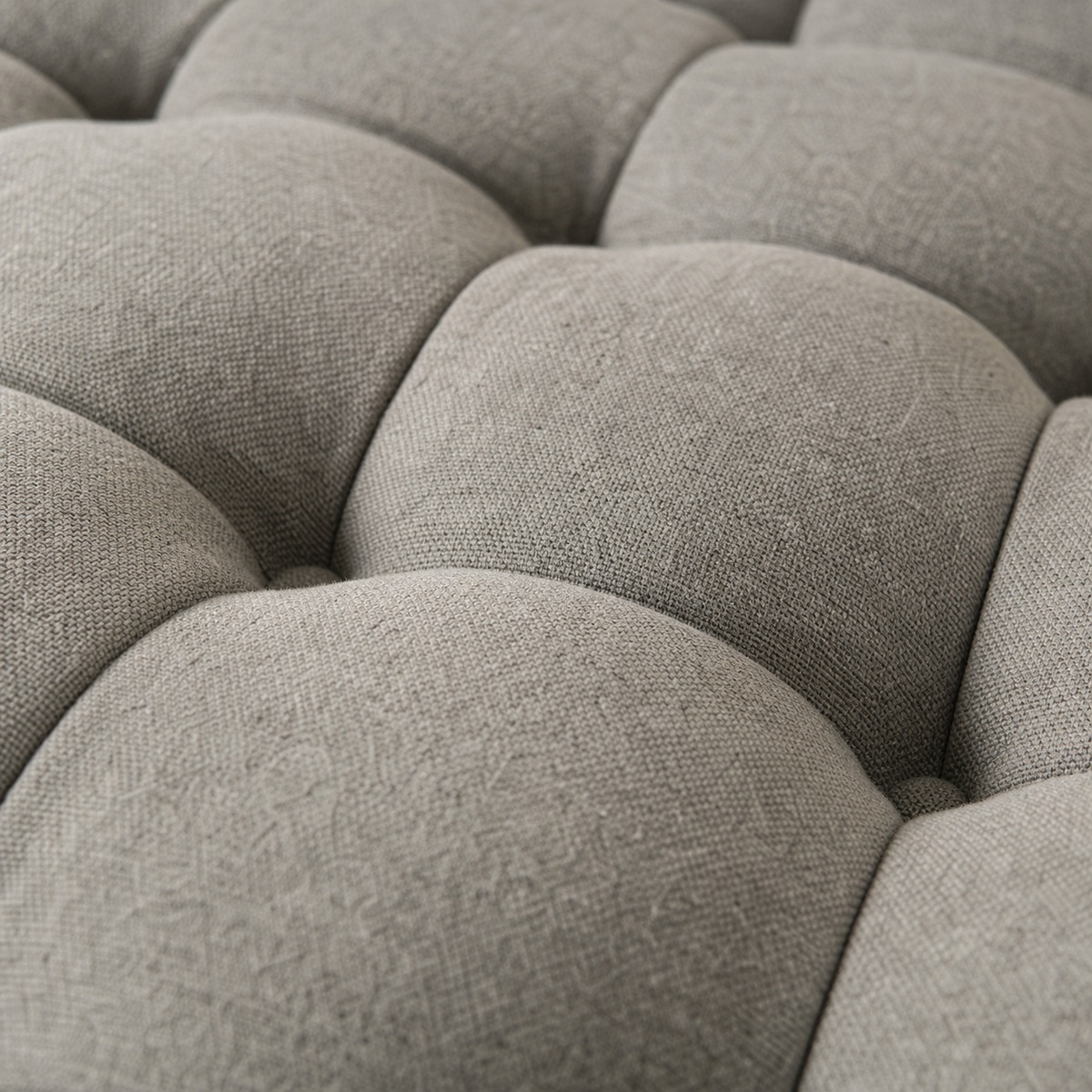
Fair criticisms, gladly conceded. All that quilting is a maintenance covenant: buttons work loose, the diamonds gather crumbs and pet hair, and cleaning it properly is slow work with a nozzle. The seat is low and deep enough that older knees file objections. It is expensive, and its ubiquity in the design press for two decades means it can read as “2000s boutique hotel” to a sharp eye, the fate of every defining piece. And purists on both flanks knock it happily: too soft to be a real Chesterfield, too dressed to be a real radical. That double refusal is, of course, exactly what it is for.Copies, and the tell
The knock-offs miss in the usual places, but here the buttons testify loudest. Copy tufting is shallow and irregular, buttons pulled by machine to whatever depth the foam allows, so the diamonds collapse into vague dimples within a year. Rear faces go flat and unquilted, betraying a sofa designed to hide against walls. Module footprints drift so recombinations never sit flush. And the foam architecture underneath, B&B Italia’s actual heritage, is replaced with bargain slab, so the pillowy surface sits on nothing and the whole piece exhales permanently by its second winter. The original is two centuries of upholstery knowledge in conversation. The copy is a mattress doing an impression of the conversation. Two decades in, the Tufty-Time has done what its ancestors did: become the reference. Somewhere right now a young designer is studying it, planning the sofa that will answer it. That is how this archive gets its future entries.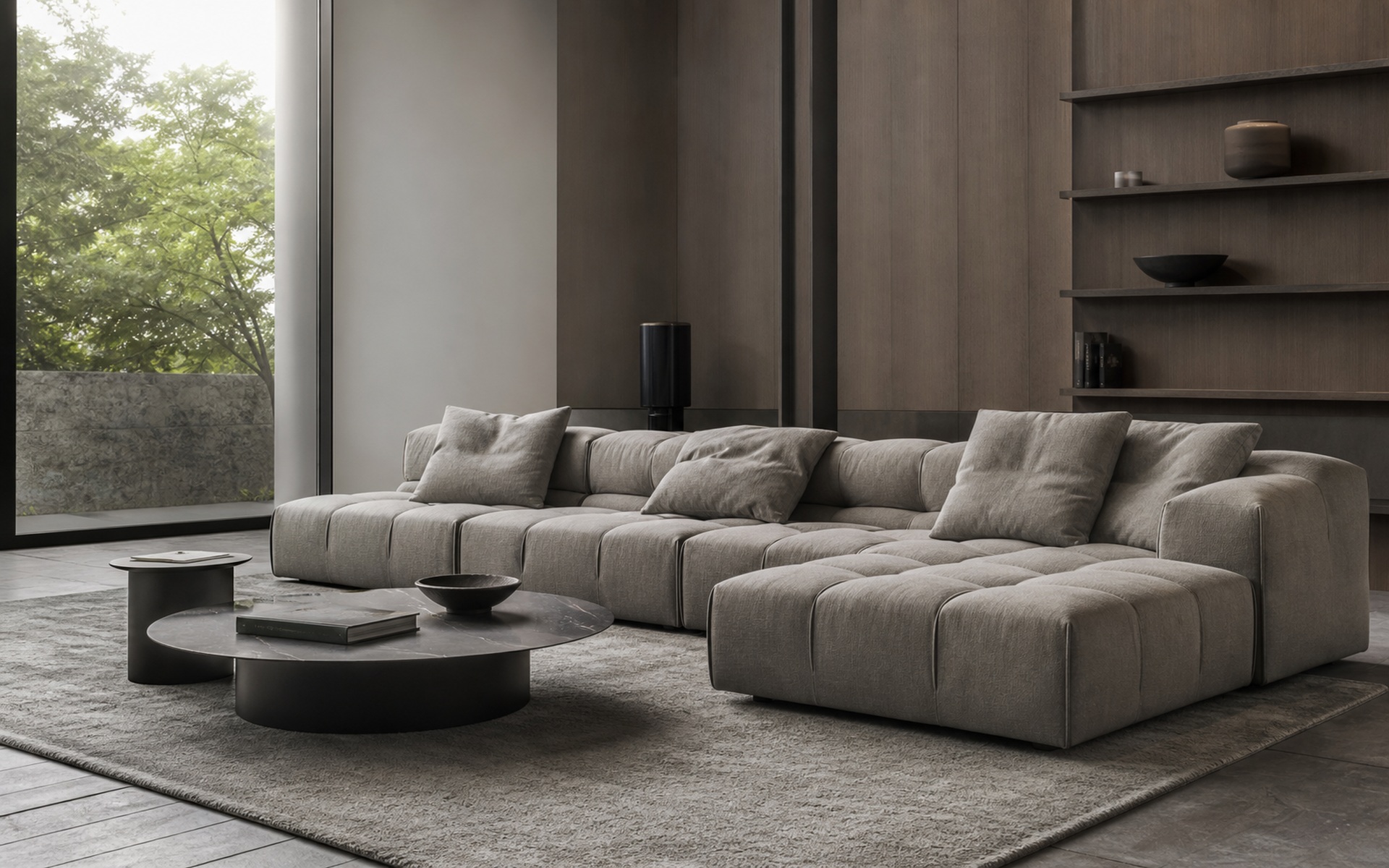
Sources
- Tufty-Time, Patricia Urquiola, 2005, design concept and production, B&B Italia. bebitalia.com
- Patricia Urquiola, biography, Castiglioni and Lissoni years, Milan studio from 2001. wikipedia.org
- B&B Italia foam-moulding heritage from the late 1960s. wikipedia.org

