Four Swiss designers, one zip fastener, and a sofa with no beginning and no end. The DS-600 is what happens when modularity stops being a feature and becomes a species.

The DS-600 does not have a length. It has a current length.
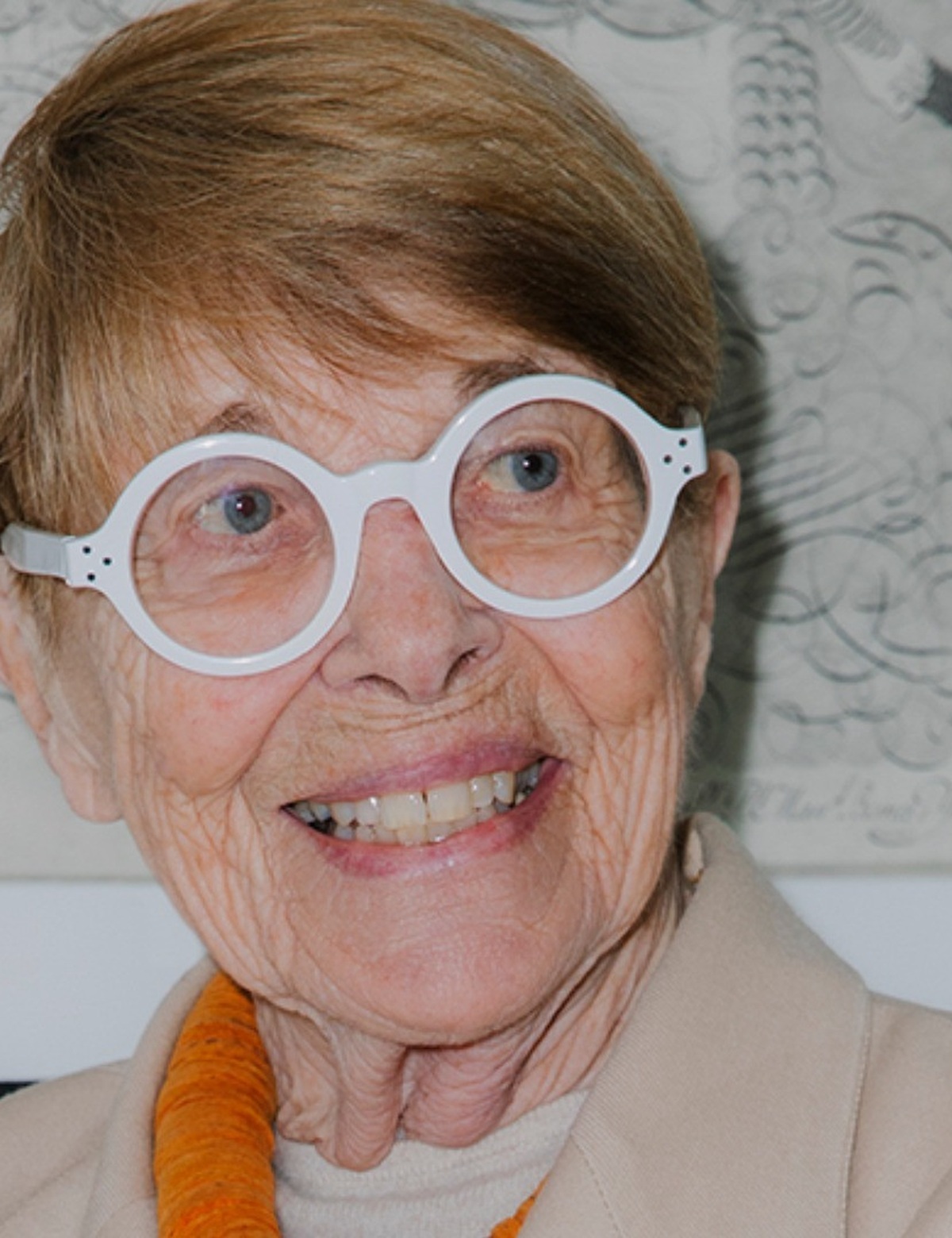
That is the entire concept, and it remains startling more than fifty years on. The sofa is a chain of slim, ribbed leather segments, each one a wedge of seat and back, zipped to its neighbours. Unzip, add, subtract, and the sofa grows, shrinks, or turns a corner. It can be an armchair. It can be a serpent circling a whole open-plan floor. In Switzerland they nicknamed it the Tatzelwurm, after the alpine folklore dragon, and de Sede itself calls it the non-stop sofa. Both names admit the same thing: this is less an object than an organism. It took four designers to make something this simple, which is the good joke of the DS-600. Ueli Berger, the artist of the group; Eleonore Peduzzi-Riva, the Italian architect; Heinz Ulrich and Klaus Vogt: a committee, in 1972, produced one of the least committee-like designs of the decade for the Swiss leather house de Sede, and the collective credit has held ever since, a rarity in a field that loves single heroes.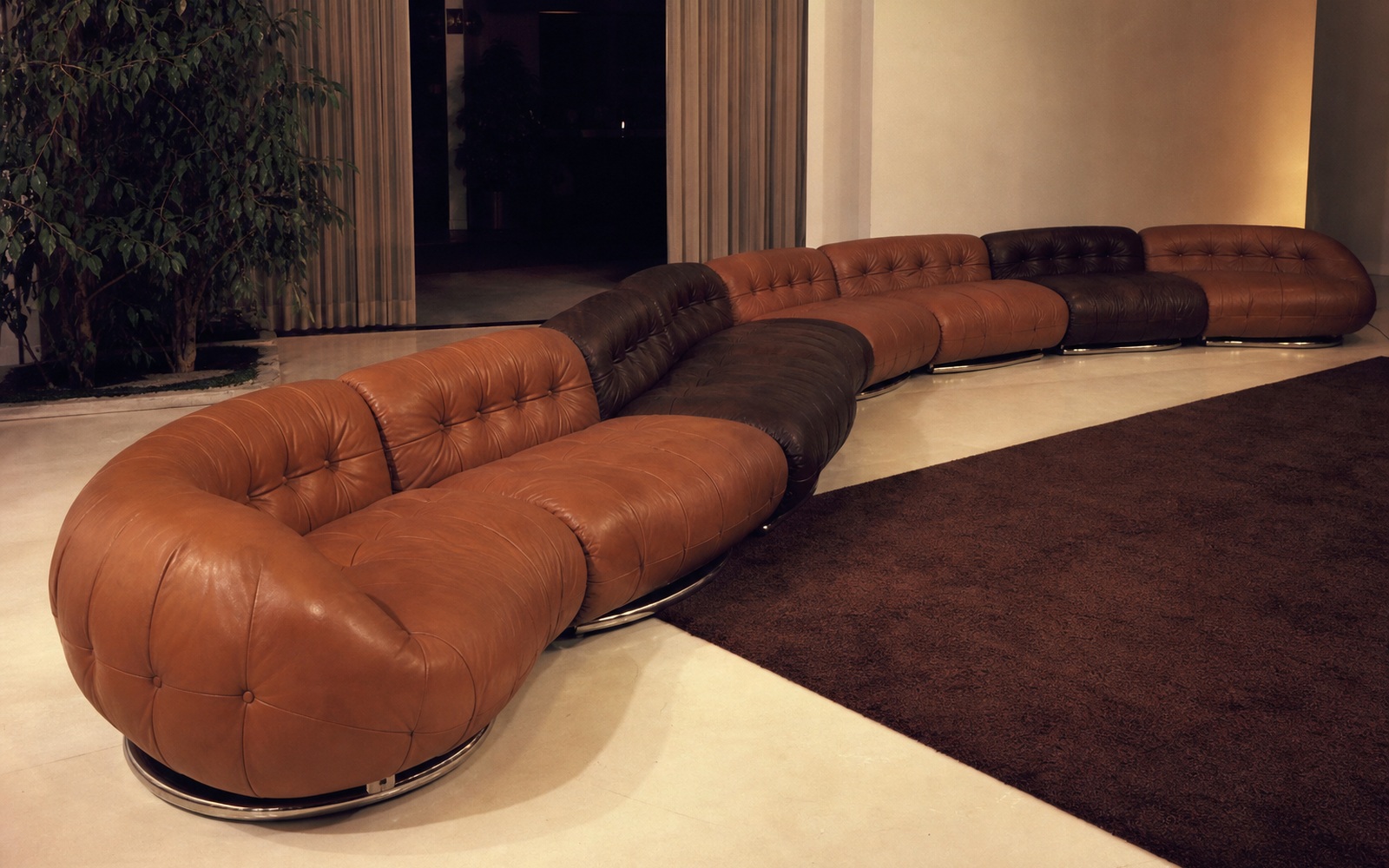
The zip as a philosophy
Modularity was the great obsession of the early 1970s, and the DS-600’s rivals took it seriously in different dialects. Italy’s Camaleonda, born the same years, made big soft blocks you could recombine like toy bricks; the conversation pit sank seating into architecture itself. The Swiss answer was the most radical precisely because it was the most granular. The Camaleonda’s module is a seat; the DS-600’s module is a slice. By shrinking the unit of furniture to a few centimetres of ribbed leather, the four designers made the sofa effectively continuous, a line you draw through a room rather than a thing you place in it, and the zip, that humble haberdashery hardware, became load-bearing philosophy.“This is less an object than an organism.”
How to see it
The honest knock
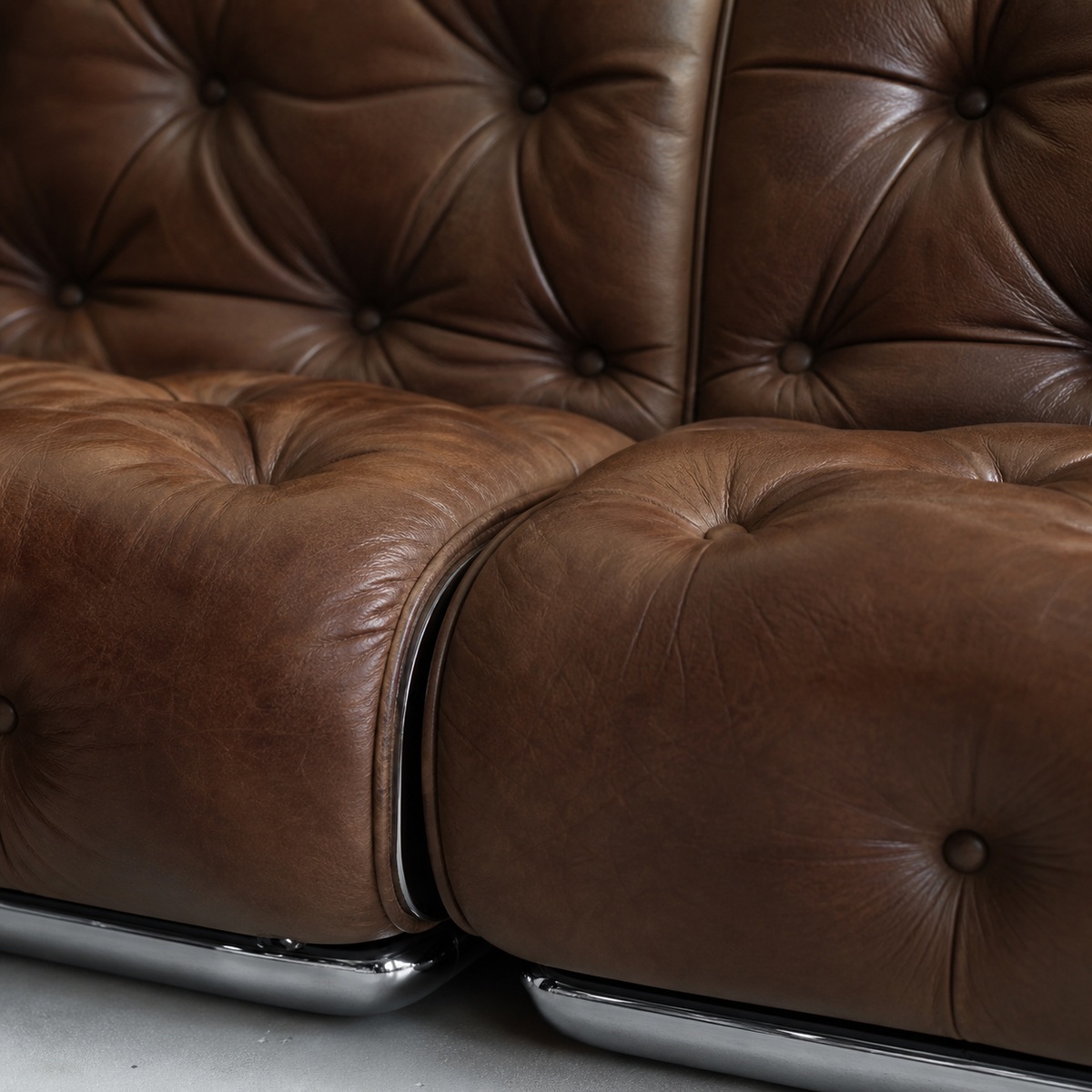
Concessions, honestly made. Segment by segment, the DS-600 is a firm, upright sitter; alpine dragons do not cradle, and anyone hoping to sink will find Swiss leather holds a boundary. Bought at any useful length it is seriously expensive, priced per segment like good sushi. The granular modularity that makes it immortal also makes it fidgety: zips need alignment, segments creep on smooth floors, and a long run wants professional fitting to sit truly straight. And its strong ribbed identity is a commitment; a room with a Tatzelwurm in it is about the Tatzelwurm.Copies, and the tell
Fakes fail at the rhythm. Copies widen the segments to save labour, so the corduroy beat slows and the sofa reads bloated; their ribs are foam-stuffed unevenly, so the light ripples in stutters rather than waves. The curves expose them completely, because cheap wedges fan in visible steps where the original turns in one continuous sweep. And the hardware tells the final truth: original zips run the full engineered length and carry structural load smoothly for decades, while knock-off zips are dressmaking parts asked to do carpentry, and they fail exactly as soon as you would expect. The original is a leather organism. The copy is upholstered sausages holding hands. More than fifty years on, the non-stop sofa is still in production and still growing to fit whatever room it is shown. Most furniture asks how much space you have. The DS-600 asks how much sofa you want today, and politely offers to be a different length tomorrow.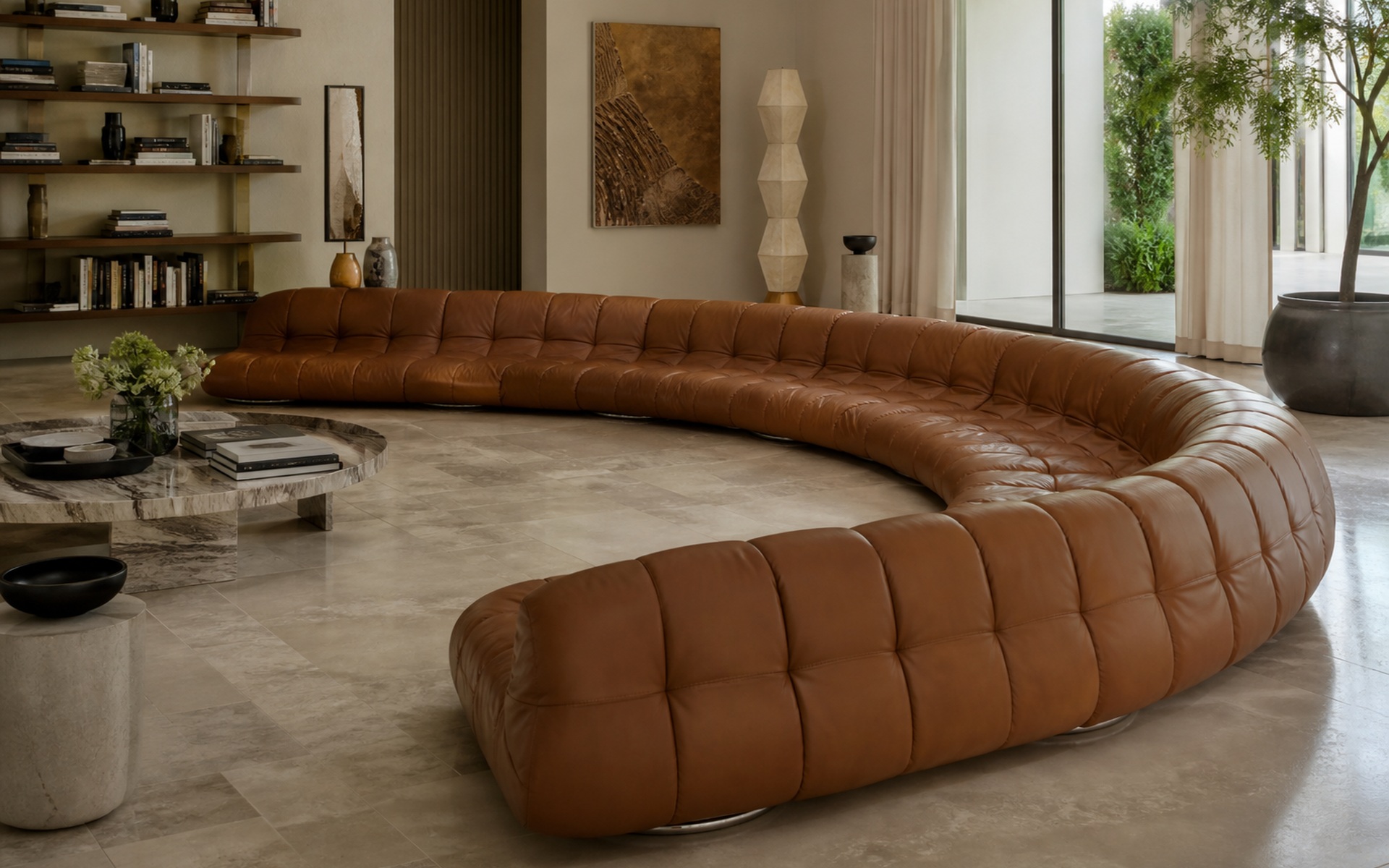
Sources
- DS-600, 1972, four-designer credit (Berger, Peduzzi-Riva, Ulrich, Vogt), zip-linked segments, de Sede. desede.ch
- The “non-stop sofa” and Tatzelwurm nicknames. Verified in de Sede materials and design press; the folklore etymology is charming and told as such. desede.ch
- Ueli Berger, Swiss artist and designer, co-author of the DS-600. wikipedia.org

