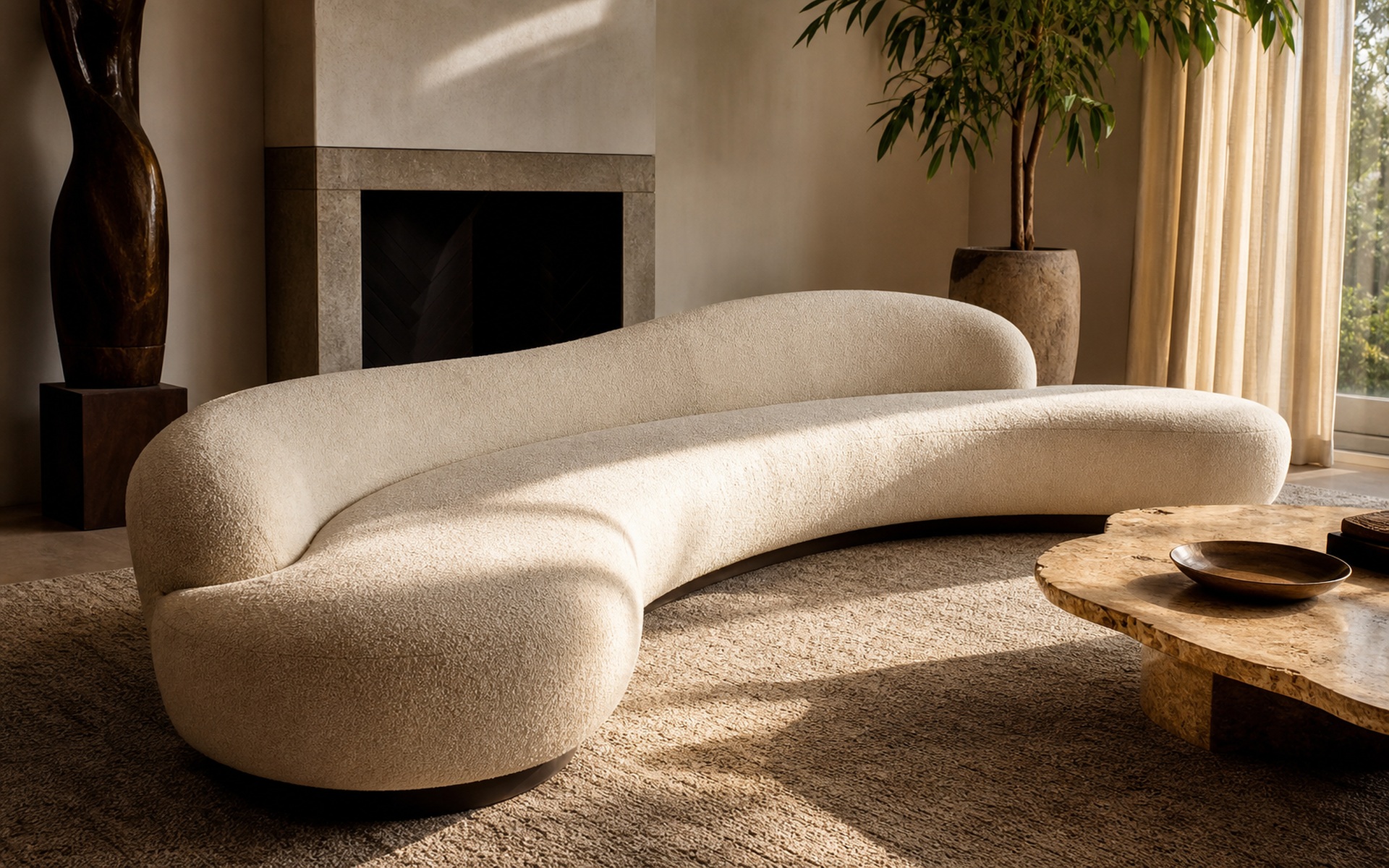
A teenager who fled Nazi Germany grew up to design the sofa that refused to touch a wall, and Manhattan’s living rooms have been curving ever since.
Vladimir Kagan’s first great insight was that the walls of a room are not load-bearing for a conversation.
He came to it young, and by an unlikely road. Born in Worms, Germany in 1927, the son of a Russian master cabinetmaker, Kagan fled with his family from the Nazis in 1938 and landed in New York, where his father opened a woodworking shop. The boy trained in it, studied architecture at Columbia, and by his early twenties had joined the family business and begun designing furniture unlike anything the serious moderns were making: sensual, curving, faintly Hollywood pieces built with old-world joinery. Around 1950 he drew the one that made his name. The Serpentine sofa does exactly what it says: it snakes. Its plan is a long, elegant S-curve, upholstered continuously, often sitting on a low sculpted plinth or short wooden legs, with no proper back or front and, crucially, no straight edge anywhere that a wall could claim.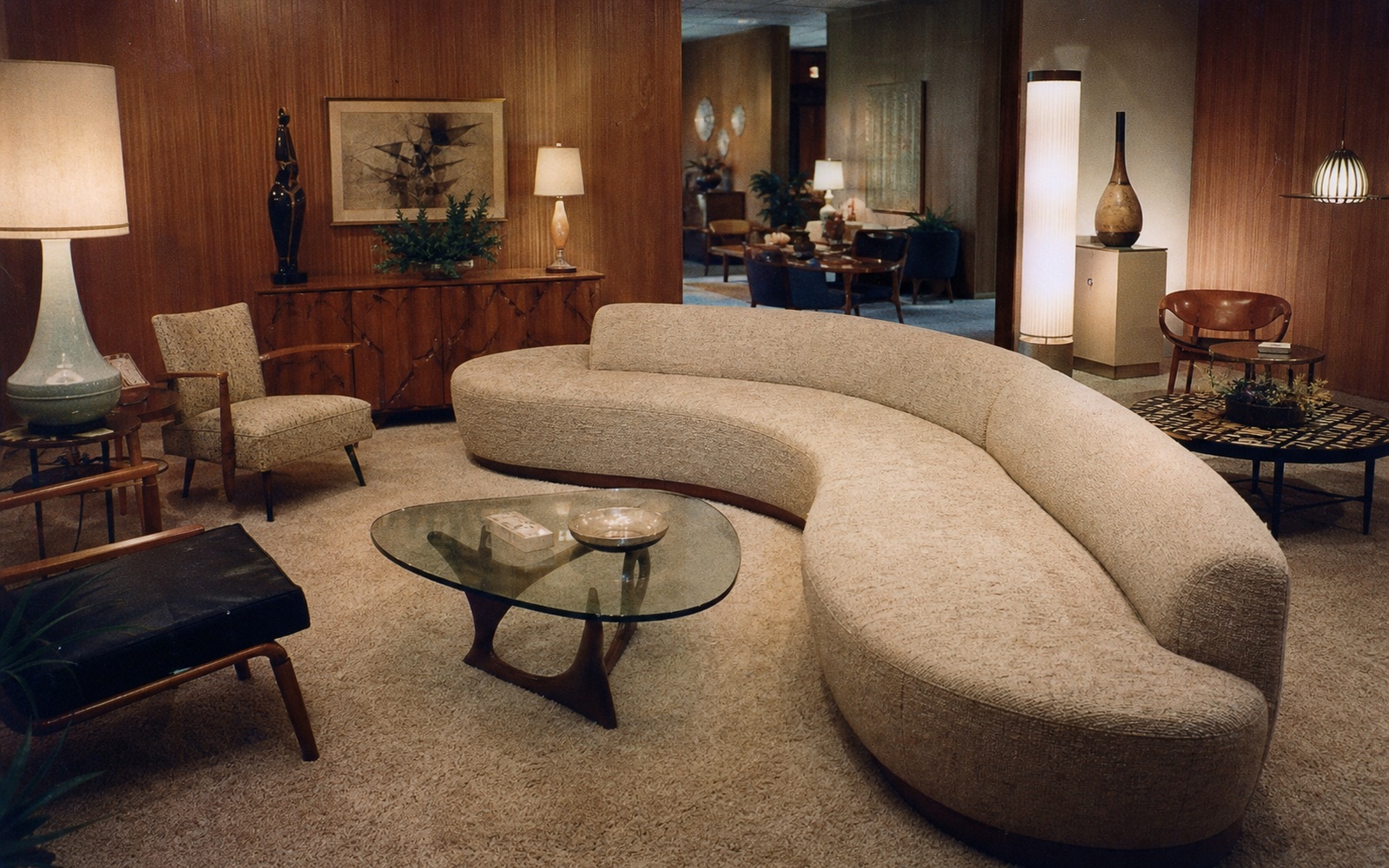
The sofa that fired the wall
To feel how radical that was, remember what a sofa did in 1950. It stood against the wall, faced the television or the fireplace, and lined the room the way parked cars line a street. The Serpentine cannot do that. Push it against a wall and half of it curves away in refusal. It is designed to float in the middle of the room, where its two arcs create two social bays, one on each side of the S, so a single object hosts two conversations facing opposite directions. Kagan had effectively invented seating as landscape twenty years before the radical Europeans got there. When the Italians and Swiss of the 1970s built their conversation pits and modular waves, the Camaleonda among them, they were industrialising an idea the New York cabinetmaker’s son had been hand-building for Manhattan clients for two decades: that a sofa could shape a room instead of obeying one.“Push it against a wall and half of it curves away in refusal.”
How to see it
The honest knock
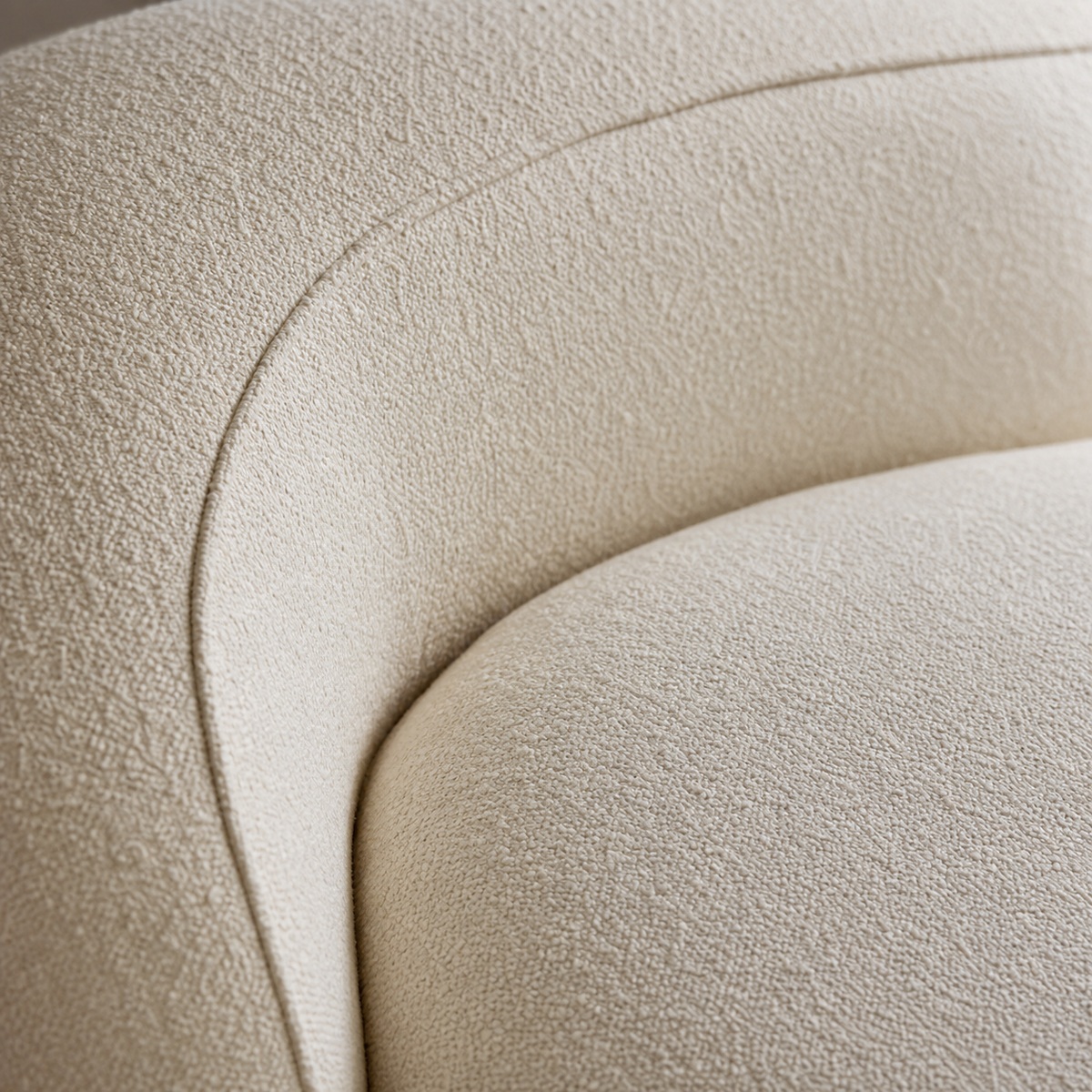
The Serpentine demands square meterage the way a piano does, and in a modest room it does not float, it clogs. Because it must be seen in the round, it has no cheap angle: fabric, tailoring and base must be immaculate from every side, which makes reupholstery costly. The recline is social rather than deep; it is a sofa for holding court, not for disappearing into on a winter Sunday, and buyers wanting surrender should be told so honestly. And provenance in the Kagan market is genuinely tricky: decades of workshops, licences and revivals mean two “Kagan Serpentines” can differ greatly in build and value, and homework is not optional.Copies, and the tell
Fakes and quick homages miss the drawing. Their S-curves are compass arcs, two half-circles glued together, where Kagan’s line changes radius continuously like a living stroke. The backs sit at one uniform height instead of easing down toward the ends. The bases give the game away completely: sculpted walnut is expensive, so copies substitute stubby generic legs or a clumsy boxed plinth, and the sofa stops hovering. A genuine Serpentine looks like a signature written in one motion. A copy looks like someone tracing it slowly, tongue out. Kagan liked to say the curve was simply how people gather. Watch any party drift into loose arcs around whoever is telling the best story and you can see his point. He just built the arc first and let the party find it.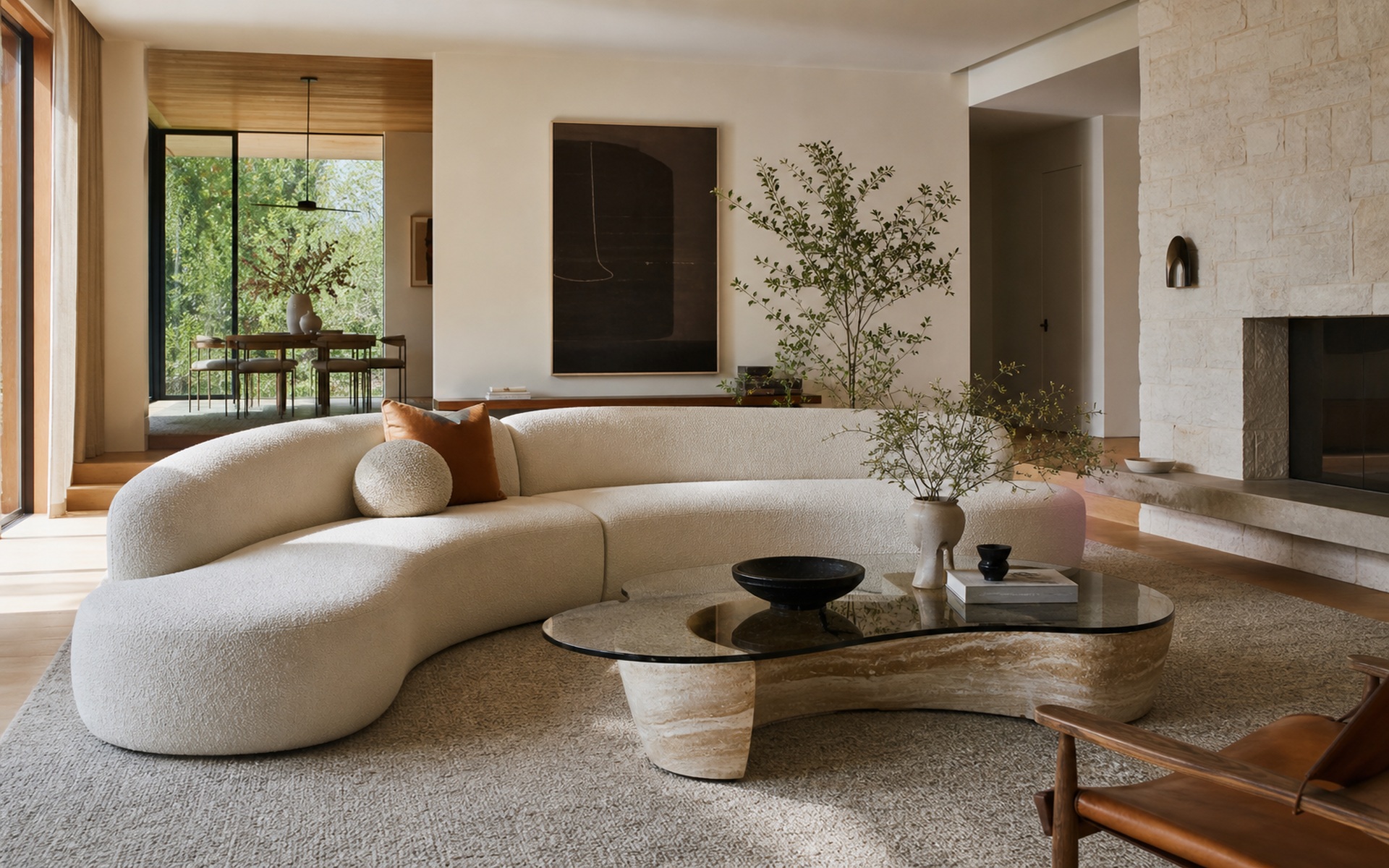
Sources
- Vladimir Kagan, biography, 1938 emigration, family workshop and Columbia studies. wikipedia.org
- Serpentine sofa circa 1950 and Kagan’s design philosophy of floating, curved seating. Verified via the Kagan design house. vladimirkagan.com
- Celebrity clientele from Monroe and Cooper onward. Reported in the linked source; widely reported in obituaries and profiles. wikipedia.org
- Late-career revival and licensed reissues before his death in 2016. vladimirkagan.com

