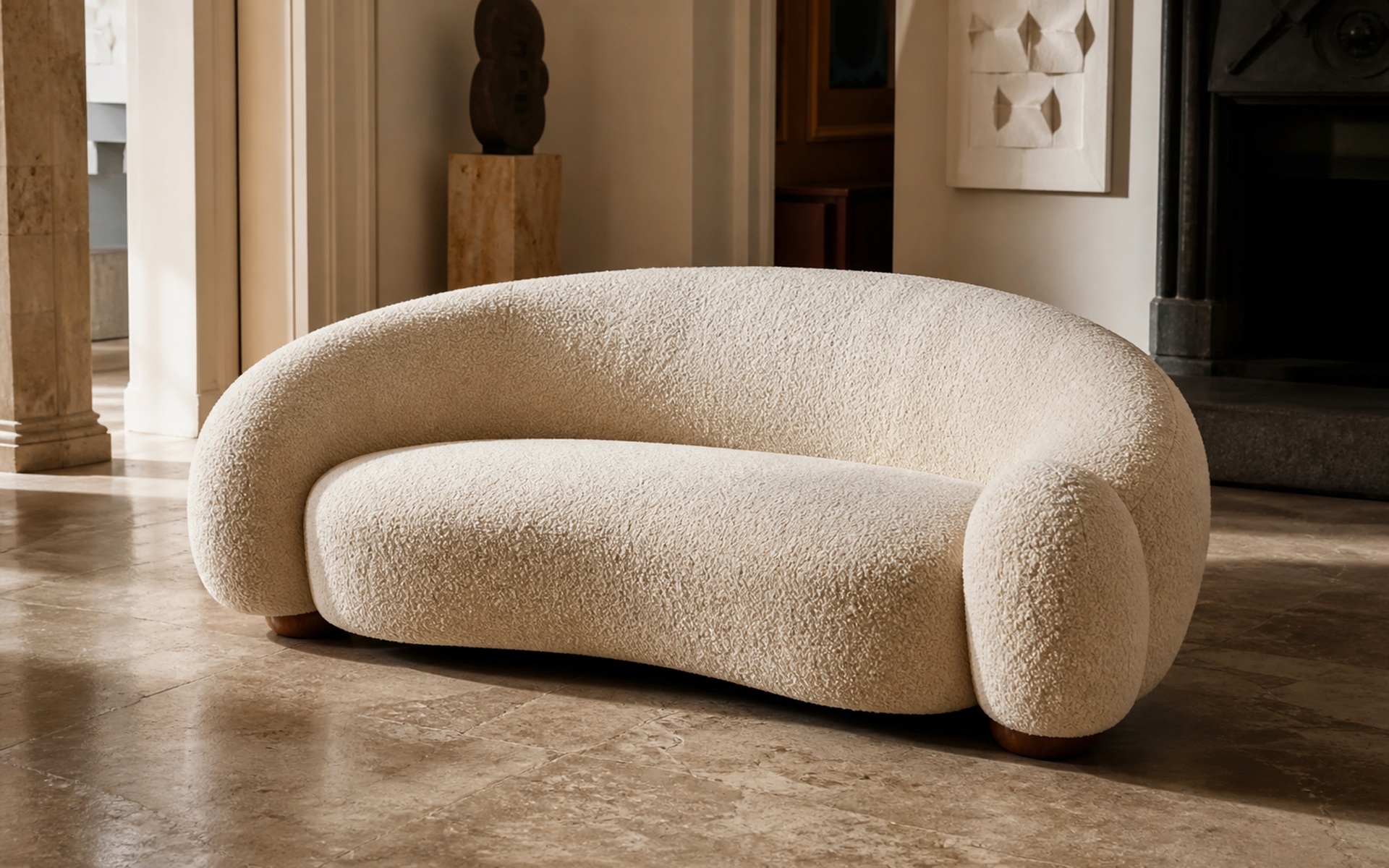
While modernism was welding cages of steel, a self-taught Parisian upholstered a cloud. Decades later, his sofa quietly became some of the most expensive seating on earth.
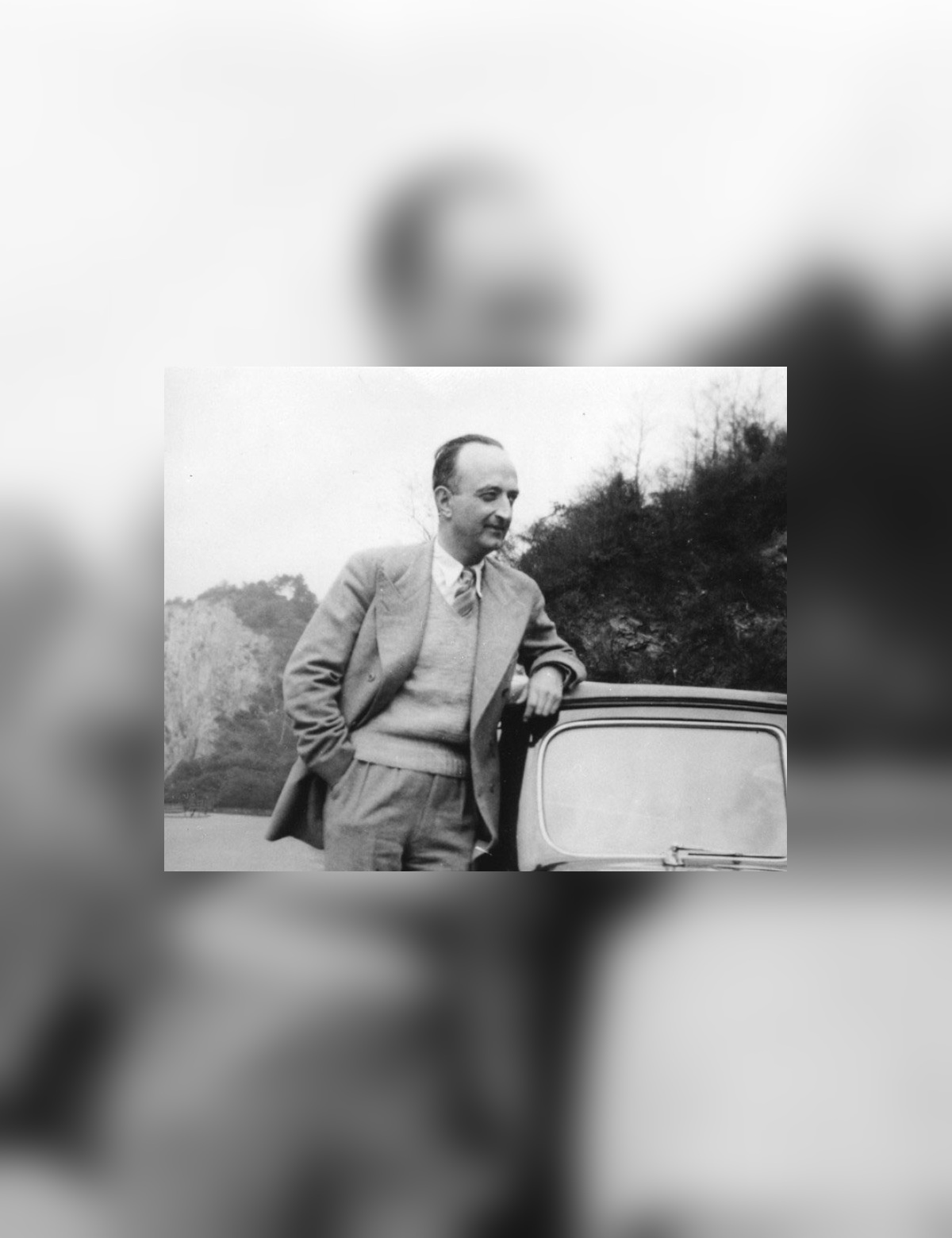
Jean Royère came to design the way people come to second marriages: late, sure of himself, and done taking advice.
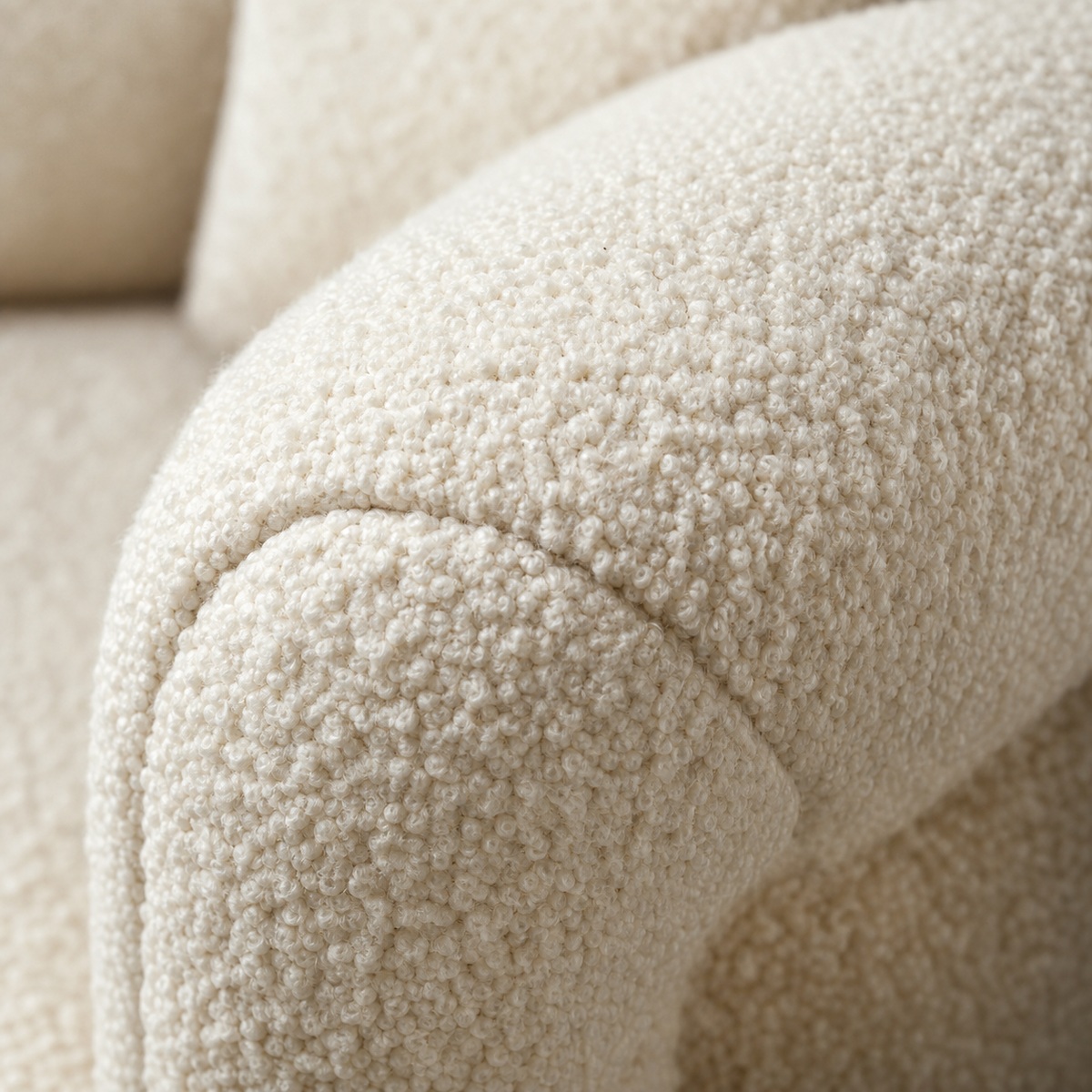
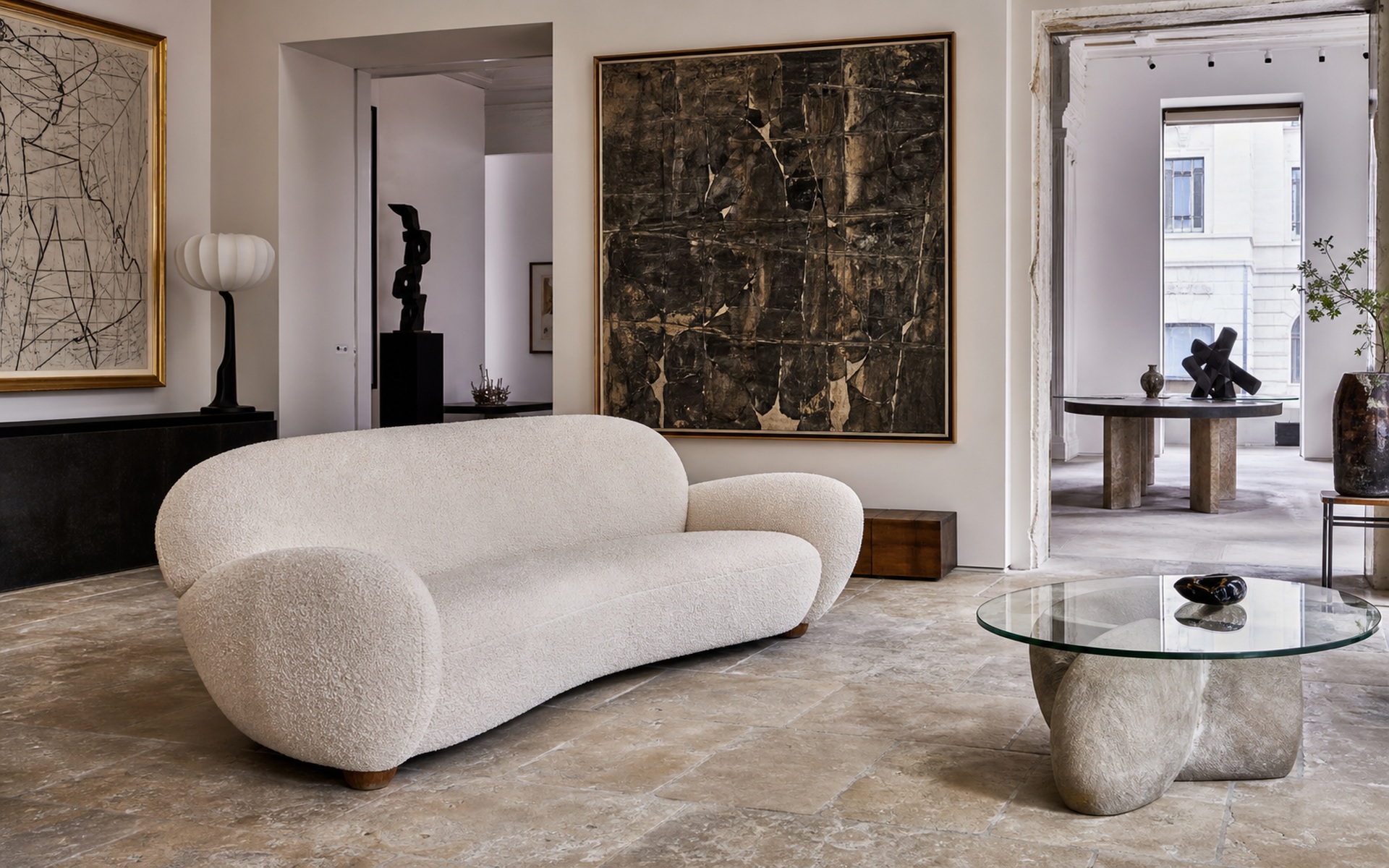
He was nearly thirty, working a respectable job in the import trade, when he quit in 1931 to apprentice in a furniture workshop in the Faubourg Saint-Antoine, the old cabinet-making quarter of Paris. He had no formal training and never acquired any, which turned out to be his superpower. The great debates of the era, ornament versus function, steel versus wood, passed him by entirely. Royère simply drew what delighted him: sinuous lines, plump volumes, colours from a child’s paintbox, lamps like sprigs of mistletoe. Around 1947, in the grey, rationed years after the war, he produced his masterpiece and named it with a shrug: the Ours Polaire, the polar bear. A sofa with no visible legs, no visible frame, no straight lines anywhere, just one continuous curl of dense upholstery, arms flowing into back like a wave closing, originally dressed in thick wool the colour of nothing in nature except, perhaps, a polar bear.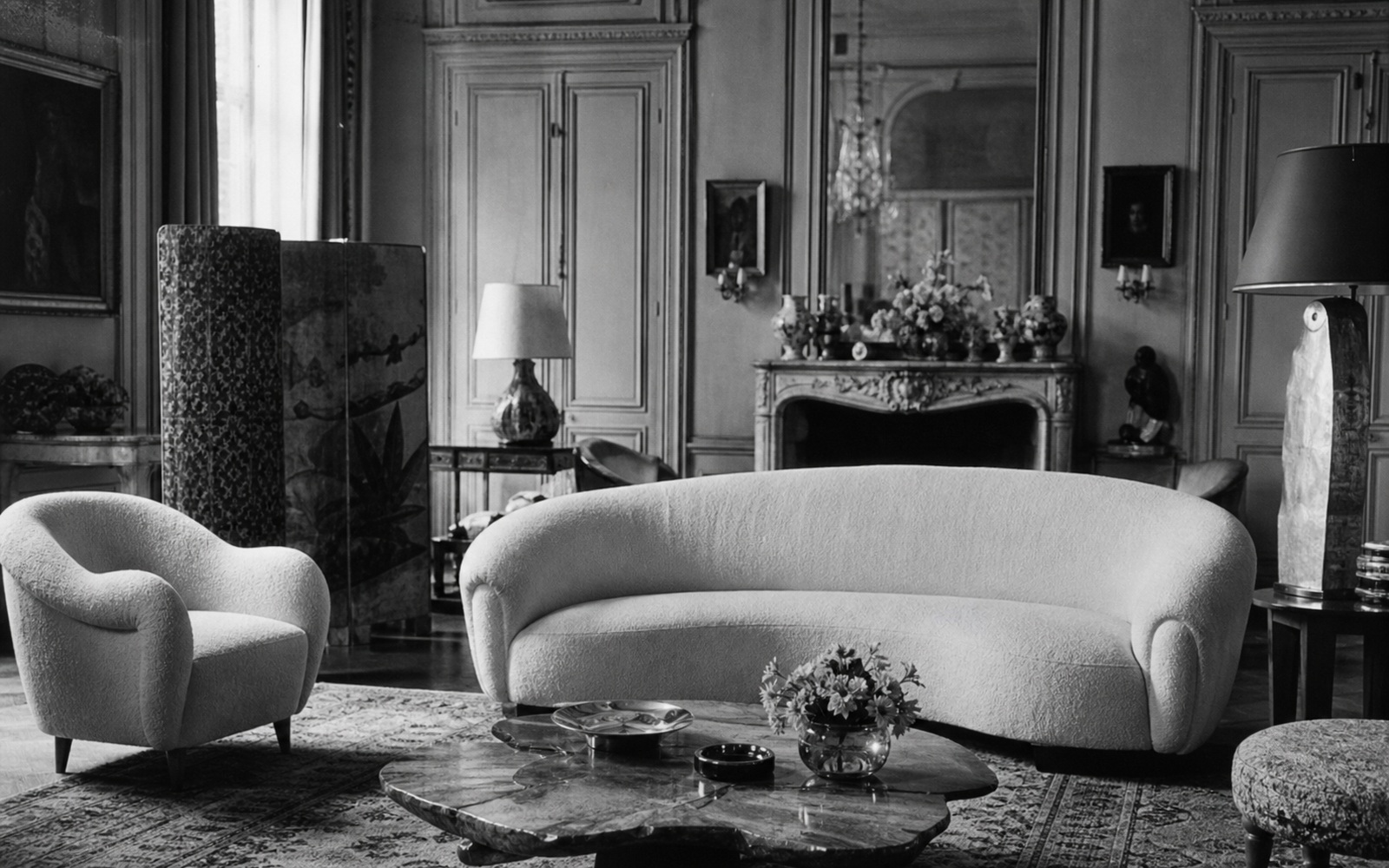
The anti-modernist masterpiece
Put the Polar Bear beside its contemporaries and it looks like a visitor from another argument. In 1947 the fashionable future was the machine-age steel of the prewar avant-garde, revived and heading for mass production. Royère’s sofa hides its engineering completely, and it is considerable engineering, a hardwood skeleton and painstaking traditional upholstery, beneath what reads as a single soft body. Where the modernists made structure the show, Royère made structure disappear. The shape is doing something precise, though, and it is worth seeing past the plushness to catch it. The Polar Bear is a fragment of a circle. Its plan curves, its section curves, its arms rake outward like a bowl’s rim, and the whole thing gathers the sitters toward its centre. It is geometry in the service of intimacy: two people on a Polar Bear are always slightly turned toward each other whether they intended it or not.“Where the modernists made structure the show, Royère made structure disappear.”
Salons, sultans and a long nap
Royère’s career was glamorous and global. From the 1940s to the 1960s he decorated for the Shah of Iran, King Farouk of Egypt and King Hussein of Jordan, ran offices from Cairo to Sao Paulo, and filled Parisian salons with mistletoe lamps and egg-shaped chairs. Then taste moved on. He closed his practice in 1972, retired to Pennsylvania, and died in 1981 with his name known mainly to specialists. The furniture went to sleep in apartments and archives. The reawakening has been extraordinary. From the 2000s, Paris galleries began reassembling his work, collectors followed, and original Ours Polaire suites now trade at auction for sums in the millions of dollars, placing a wool sofa from 1947 among the most valuable seating ever sold. Royère left no licensed production behind him, so there is no authorised new Polar Bear; there are only originals, gallery-restored, and a global sea of imitations.The honest knock
Honesty first about the object: the Polar Bear is enormous, and its curved plan is tyrannical about placement, refusing corners and eating floor space that rectilinear sofas use politely. Traditional upholstery this dense is heavy, costly to restore and unforgiving of amateur repair. And the market around Royère deserves its own knock: prices have become so theatrical that the sofa risks being discussed as an asset class rather than a place to sit, which would have baffled its maker, who designed it for conversation, not for vaults.Copies, and the tell
Sources
- Jean Royère, biography, self-taught start in 1931, international offices and retirement. wikipedia.org
- Ours Polaire sofa, circa 1947, description and market history, Sotheby’s. sothebys.com
- Multi-million-dollar auction results for original Ours Polaire suites. Probable; individual results vary, order of magnitude widely reported by major houses. christies.com
- Royal clients including the Shah of Iran, King Farouk and King Hussein. Reported in the linked source; cited across gallery and auction literature. wikipedia.org

