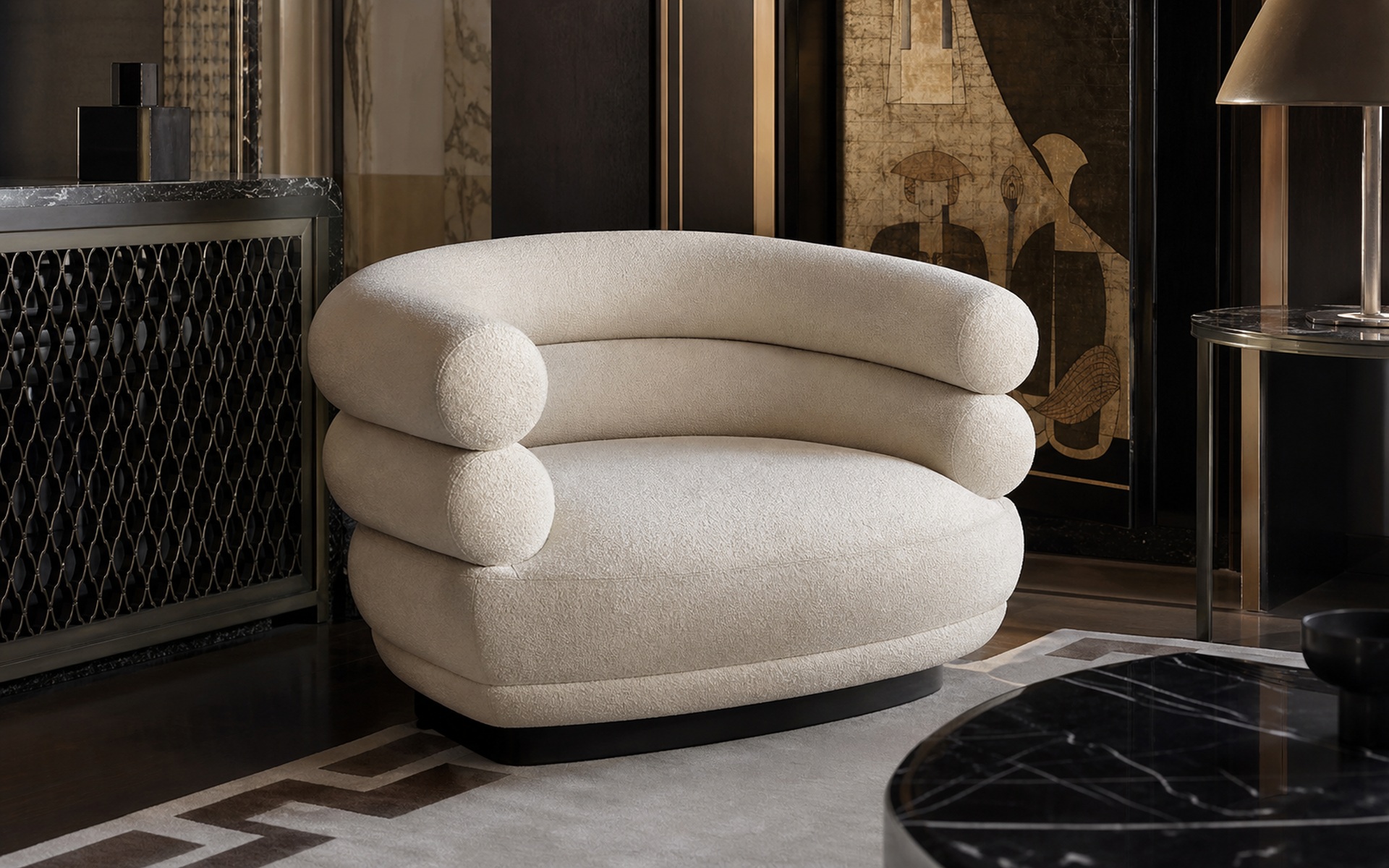
While the men of modernism were building cages of steel, Eileen Gray inflated three fat rings of leather, named the result after the Michelin Man, and waited fifty years for the world to catch up.
Eileen Gray spent most of the twentieth century being forgotten by it, which is one of design history’s more embarrassing confessions.
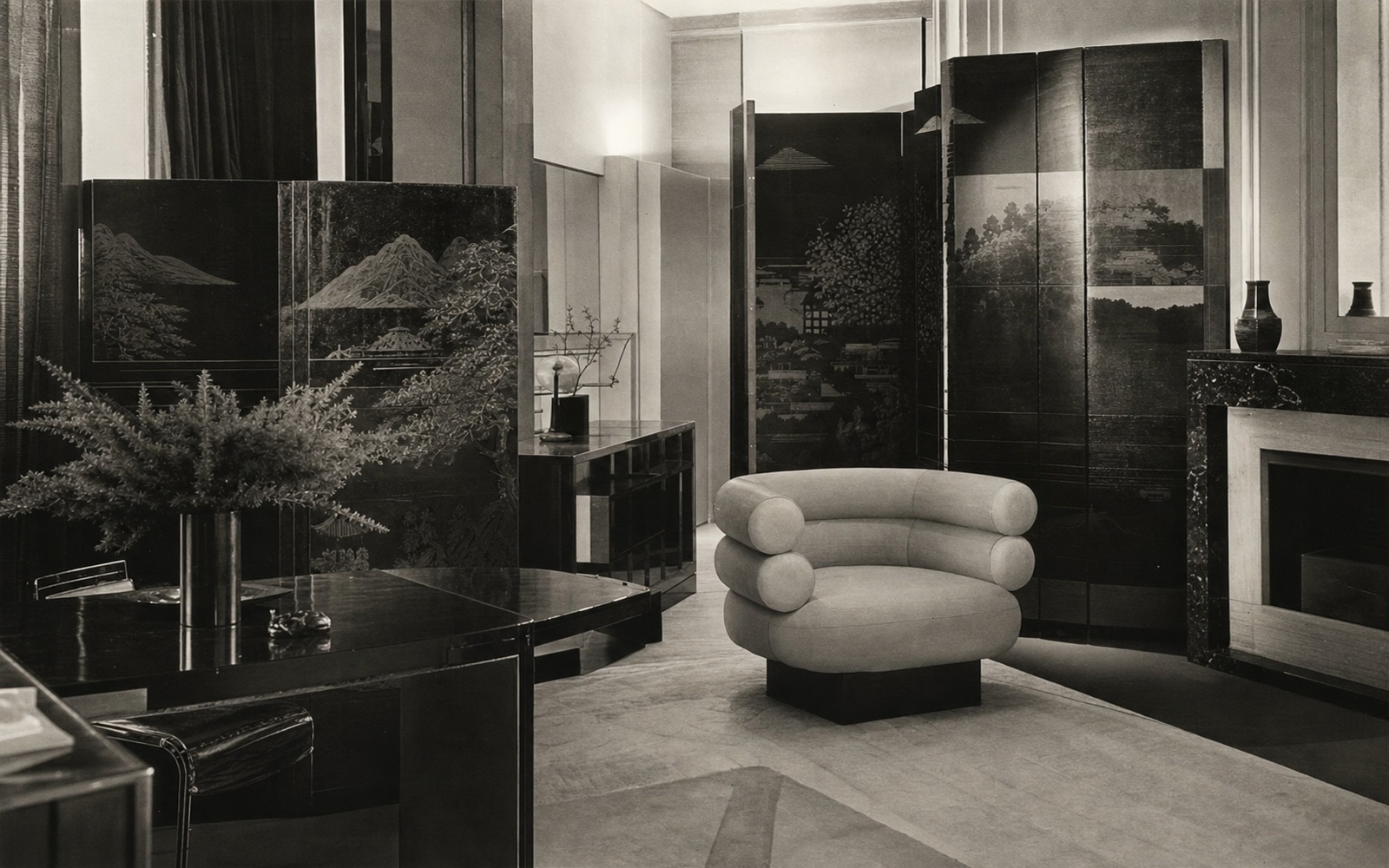
Born in Ireland in 1878, she moved to Paris at the turn of the century and mastered, of all things, Japanese lacquer, apprenticed to the master Seizo Sugawara, ruining her hands with the raw sap because the technique demanded it. By the 1920s she was one of the most fashionable decorators in Paris, selling screens, lamps and furniture through her own shop, Jean Desert, on the rue du Faubourg Saint-Honore, under a made-up man’s name because a woman’s shop was harder to take seriously. Her greatest client was the milliner Suzanne Talbot, whose apartment on the rue de Lota Gray transformed into one of the legendary interiors of the age, all lacquer, silver leaf and animal skins. And it is in Gray’s work of this period, as she pivoted from sumptuous Art Deco toward modernism, that the Bibendum chair appears: two, sometimes three, plump inflated rings of leather stacked in a half circle on a slim chromed steel base, a chair that looks like it has been blown up with a pump. She named it after Bibendum, the Michelin tyre man, who is made of exactly such stacked rings. Consider what that means for one moment. In the same few years that Breuer was stretching leather drum-tight over the B3 and the Paris studio of Le Corbusier, Jeanneret and Perriand was caging cushions in steel for the LC collection, Gray took modernism’s sacred materials, chrome and leather, and made them chubby, comic and sensual. It is a machine-age chair with a sense of humour, and there was nothing else like it in the decade.“It is a machine-age chair with a sense of humour, and there was nothing else like it in the decade.”
The villa, the argument, the long silence
Gray’s modernism went further than a chair. Between 1926 and 1929, with the architect Jean Badovici, she designed and built E-1027, a white villa on the rocks at Roquebrune-Cap-Martin above the Mediterranean, furnishing it entirely with her own designs. The house is a masterpiece of humane modernism, designed around how bodies actually live, nap, dress and drink tea, and it has been restored and is open to visitors today. Then came the long silence. Her shop closed in 1930. Wars intervened. The men were canonised; Gray was not. She lived quietly in Paris for decades while the movement she helped invent wrote its history without her. The rediscovery came absurdly late: a 1968 magazine article revived her name, a 1972 Paris auction saw her lacquer screen fetch a record price, and in 1973 the London firm Aram Designs, founded by Zeev Aram, acquired the worldwide licence to put her furniture into production, the Bibendum included. She was ninety-five. She had waited essentially her whole life to be believed.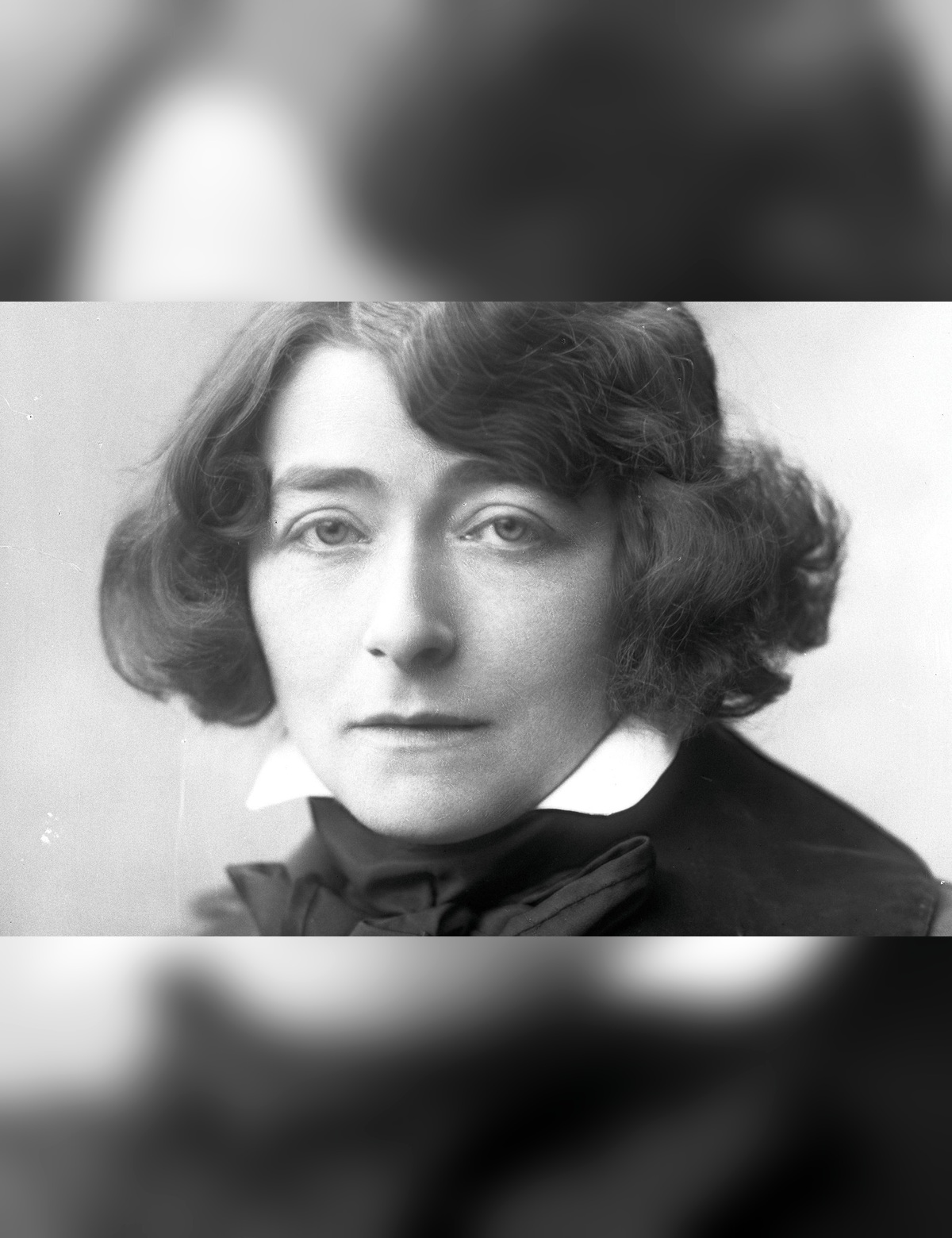
How to see it
The honest knock
Fairness requires admitting what the Bibendum is not. It is not compact: its footprint is closer to a small armchair and a half, and in an ordinary living room it can dominate like a parked car. It is heavy to move, expensive to upholster properly because those round sections devour hide, and its posture is one relaxed, slightly reclined attitude rather than a range. And a piece of its history is simply melancholy: the design needed half a century, a magazine article and an auction record before it was taken seriously, which says more about the century than about the chair.Copies, and the tell
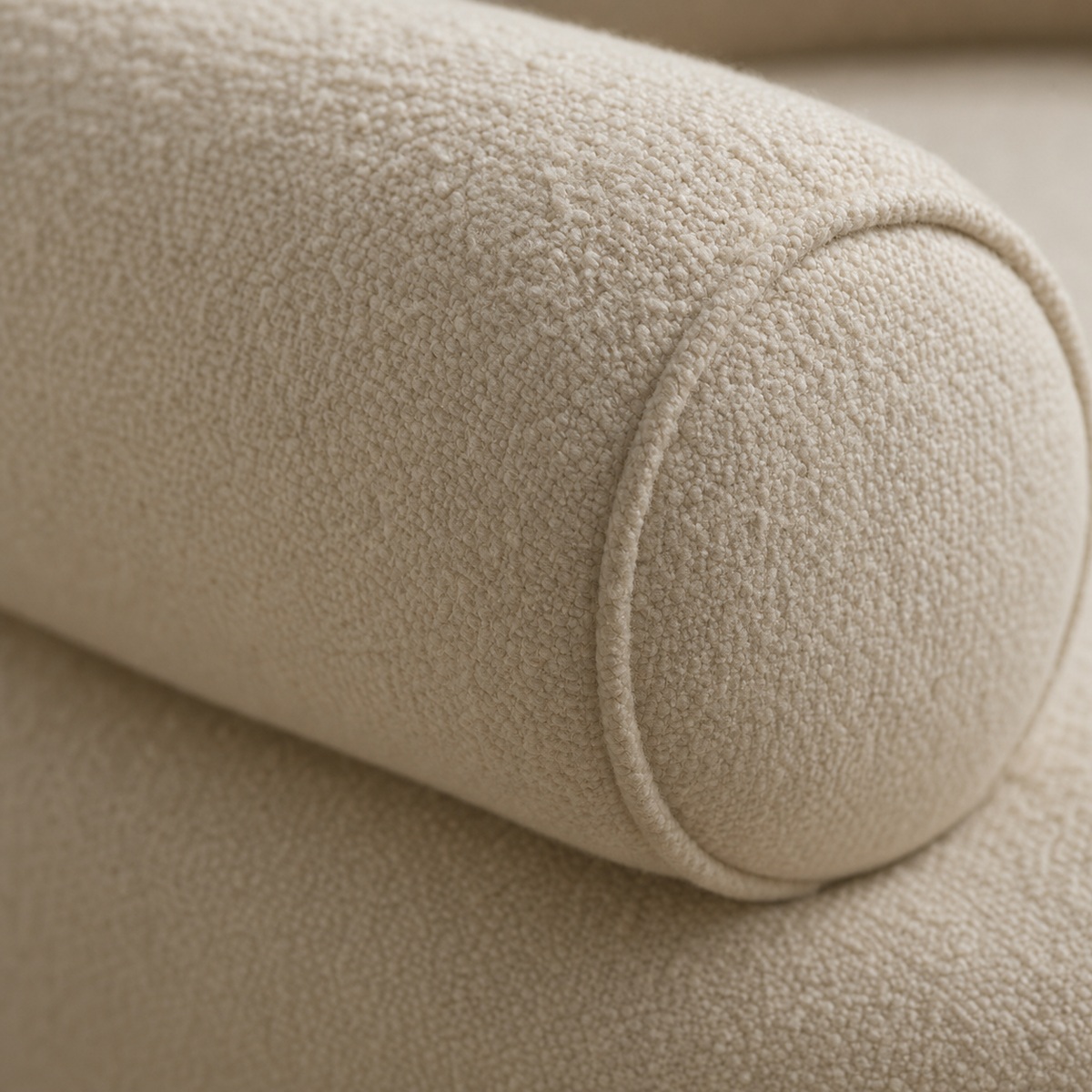
Copies of the Bibendum fail in a predictable place: the rings. In the authentic chair the tubes are firm, fully round and consistent along their whole curve, and the seams sit exactly on the ring’s equator. Copies under-stuff them, so the crescents flatten and wrinkle within a year, or cut costs on leather so the panels pucker at the seams. Base geometry drifts too, thicker tube, clumsier stance, and the hovering illusion dies. The original is a piece of inflation held permanently at its perfect moment. The copy is a chair slowly exhaling. The best way to understand Eileen Gray is to remember that she named a luxury chair after a tyre mascot while the movement around her was writing manifestos. The manifestos dated. The joke, somehow, has not.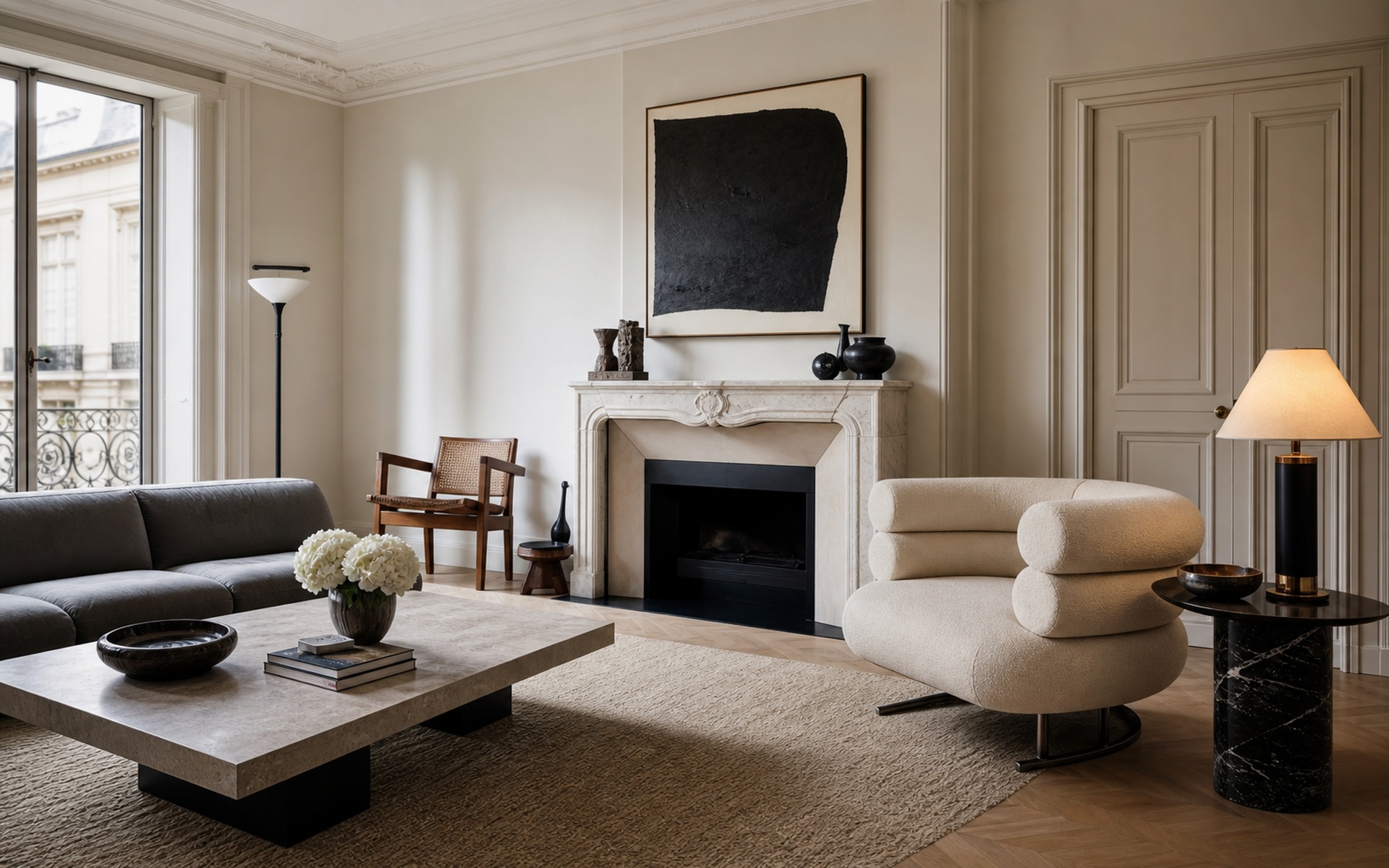
Sources
- Eileen Gray biography, Jean Desert shop, Sugawara lacquer apprenticeship, rue de Lota commission and late rediscovery, Design Museum, London. designmuseum.org
- Bibendum chair circa 1926, named for the Michelin Man; Aram Designs worldwide licence from 1973. aram.co.uk
- E-1027 villa, 1926-1929, with Jean Badovici; restored and open to visitors. wikipedia.org
- 1972 auction record for the “Le Destin” screen and the 1968 rediscovery article. wikipedia.org

