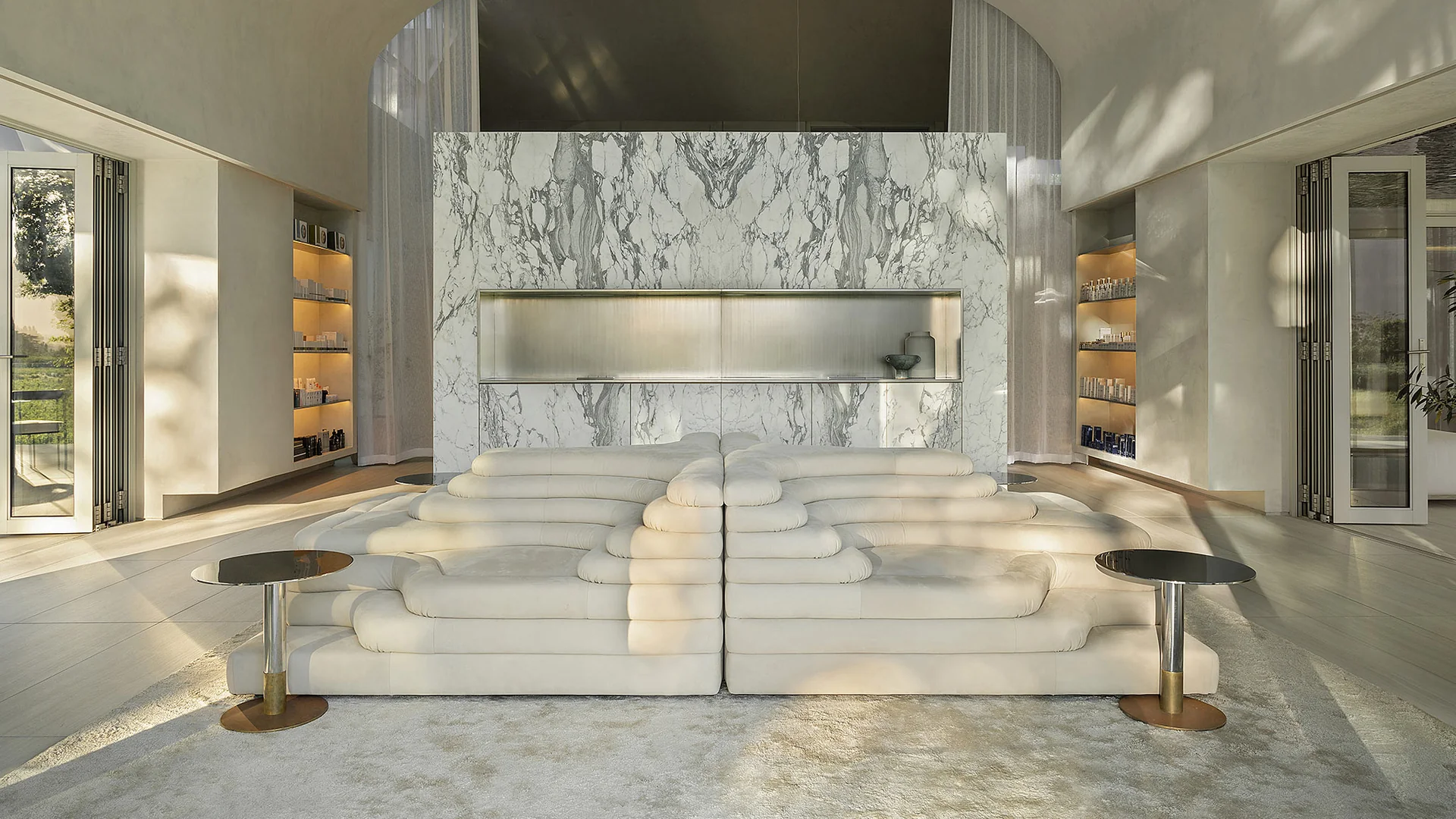
A Swiss designer looked at his country’s rice-terrace postcards and mountain slopes and asked a strange question: what if a sofa were not an object in the landscape, but the landscape itself?
Most sofas have a front. The Terrazza has a summit.
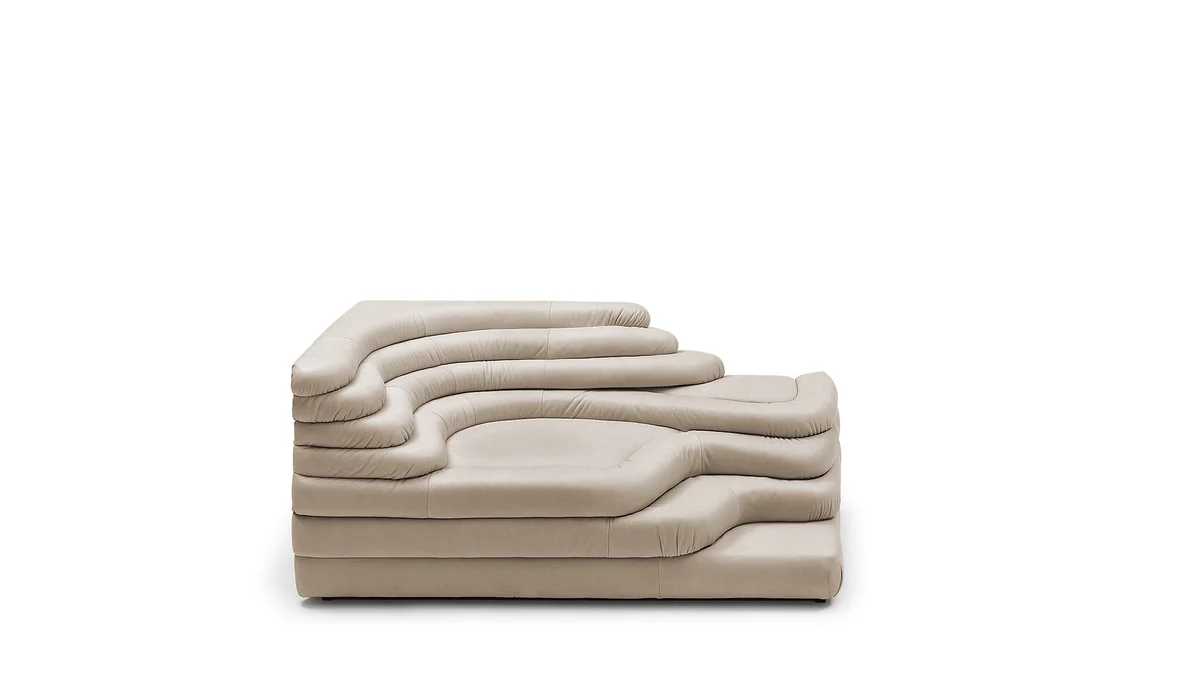
Ubald Klug’s DS-1025, designed for the Swiss leather house de Sede in 1973, abandons almost everything the word sofa usually implies. There is no back, no arms, no seat in the singular. Instead, broad leather platforms step upward and backward like terraced fields cut into a hillside, each level wide enough to hold a person, a book, a sleeping dog or a conversation. You do not sit on a Terrazza so much as settle somewhere on its slopes, and different guests choose different altitudes. Klug was a Swiss designer who spent much of his career in Paris, a student of the great interior architect who shaped him toward thinking in space rather than in objects, and the Terrazza is spatial thinking in its purest upholstered form. He called the family of pieces landscapes, and he meant it literally: pushed together in multiples, the units form ranges, valleys and plateaus that can fill a room the way geography fills a map.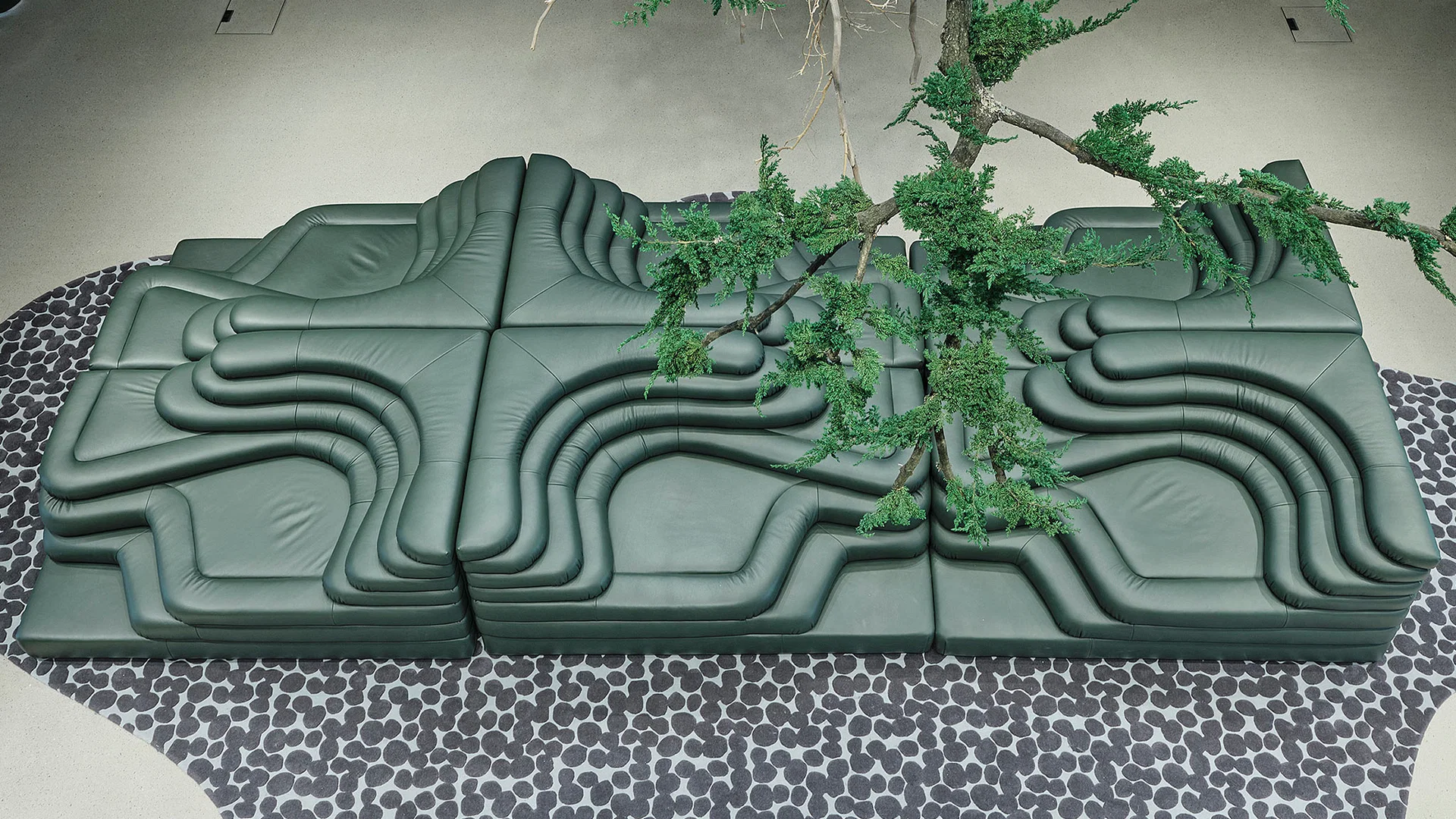
Furniture as topography
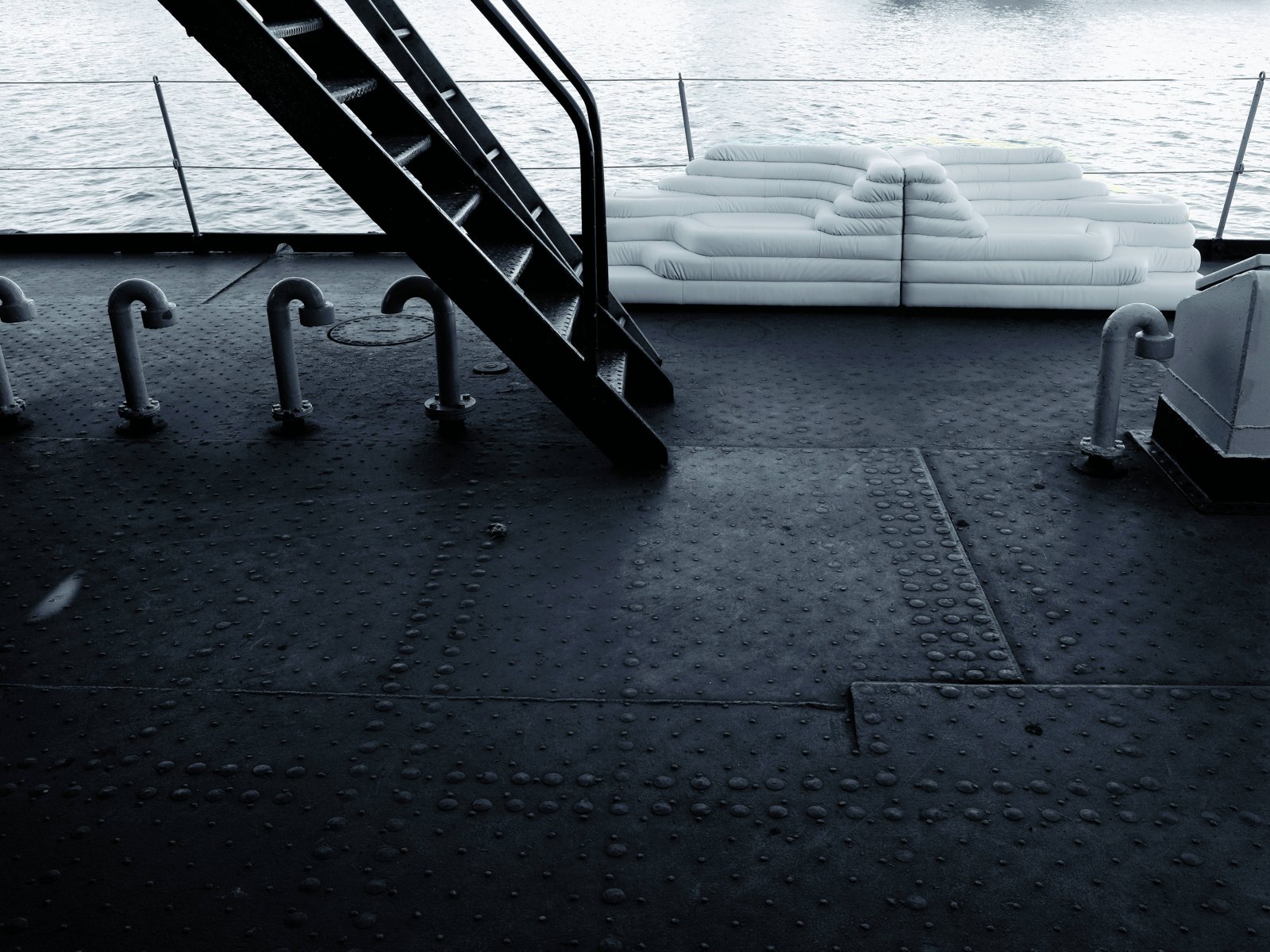
The Terrazza belongs to the early 1970s the way a fossil belongs to its stratum. Across Europe the sofa was collapsing as a formal object: France had dropped it to the floor with the Togo, Italy had shattered it into movable blocks with the Camaleonda, and the conversation pit was treating whole floors as seating. Klug’s contribution to the revolution was the most sculptural of all: he kept the sofa off the floor but turned it into terrain, so the radical lounging of the era acquired a Swiss discipline, layered, ordered, immaculately stitched. And it had to be stitched immaculately, because de Sede’s entire identity is leather craft of the saddlery grade. Each step of the Terrazza is a clean, taut ledge of hide, and the piece’s drama depends on those horizontal lines staying knife-straight while bodies clamber over them for decades. It is a landscape, but a Swiss one: even the mountains are punctual.“You do not sit on a Terrazza so much as settle somewhere on its slopes.”
How to see it
The honest knock
The knocks are real. The Terrazza is heavy in every sense, a monolith of leather and foam that dominates rooms and removal vans equally. It offers no back support in the conventional sense, and guests who want a proper armchair posture will drift off its slopes toward something with a spine. Full-grain leather across that much stepped surface area makes it seriously expensive, and the low ledges collect sitting dust like actual terraces collect rain. It is also, frankly, a piece that demands an audience; in a small quiet room it can feel like a stage with no play scheduled.Copies, and the tell
Imitations fail at the geology. In an authentic DS-1025 each terrace is a firm, distinct stratum with a crisp rolled edge, and the steps hold their line under weight; copies soften the internal build, so ledges slump into one another and the terraced profile melts into a lumpy wedge within a year. Stitch-work betrays them too: de Sede’s long straight seams stay parallel across metres of hide, a saddlery discipline that costs real money, while knock-off seams wander and pucker at the corners where the terraces turn. The original is landscape architecture in leather. The copy is a staircase wearing a tracksuit. Half a century on, Klug’s strange question still has no better answer. Most furniture sits in the room. The Terrazza is the room, contour lines and all, and everyone who enters instinctively picks their altitude.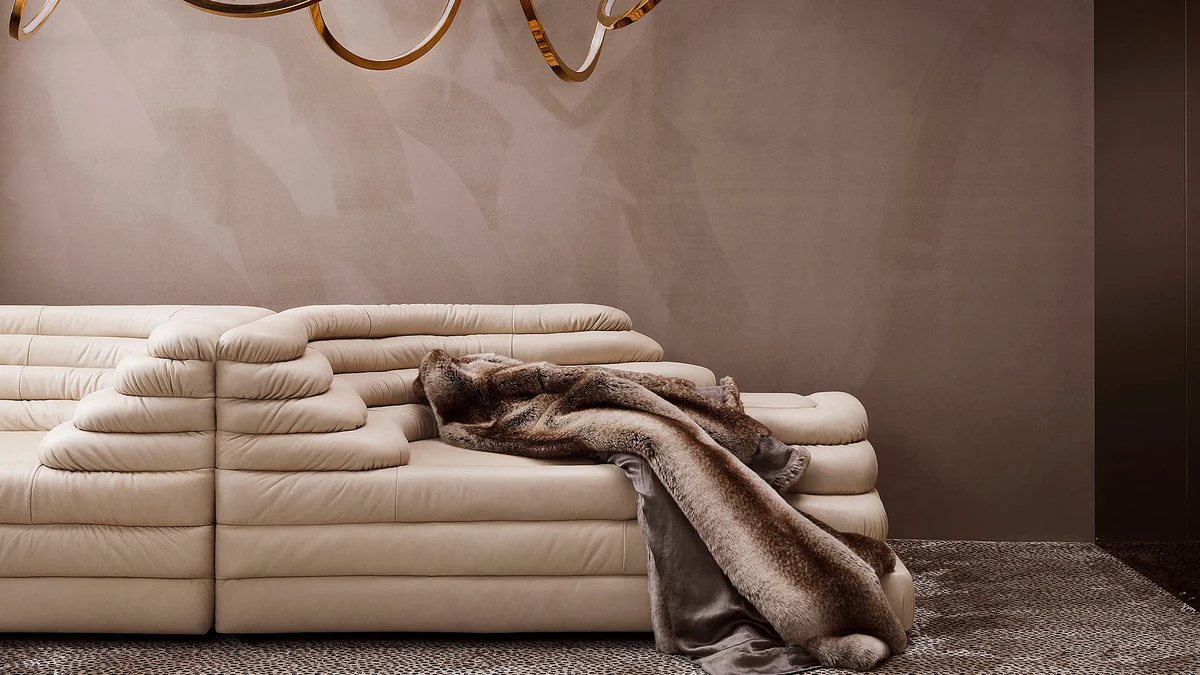
Sources
- DS-1025 Terrazza, Ubald Klug, 1973, design and production, de Sede. desede.ch
- Ubald Klug, Swiss designer based in Paris, landscape furniture concept. Verified against design literature and de Sede materials. wikipedia.org
- de Sede, Swiss leather furniture manufacturer, craft heritage. desede.ch

