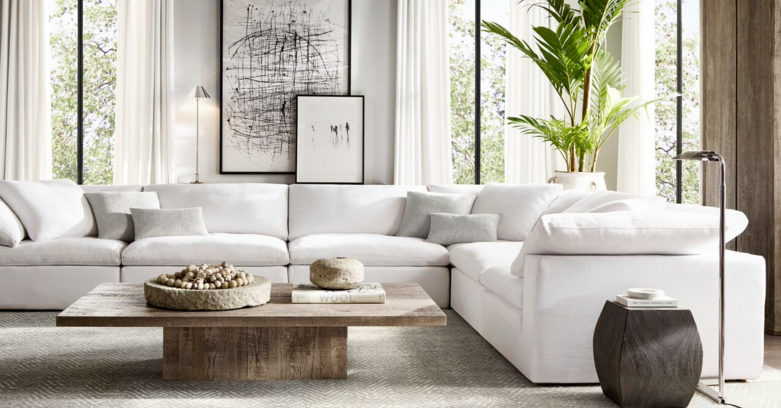
A loose cushion, a low outline, a room that seems to have exhaled. Timothy Oulton’s Cloud makes softness visible before anyone sits down.
The Cloud looks as though somebody has just got up from it. The cushions have kept a little of the disturbance. The outline is loose, the seat generous, the whole arrangement apparently relieved of the obligation to stand smartly for a photograph.
Of course, it makes a very good photograph. That is the part I find interesting.
The work behind looking effortless
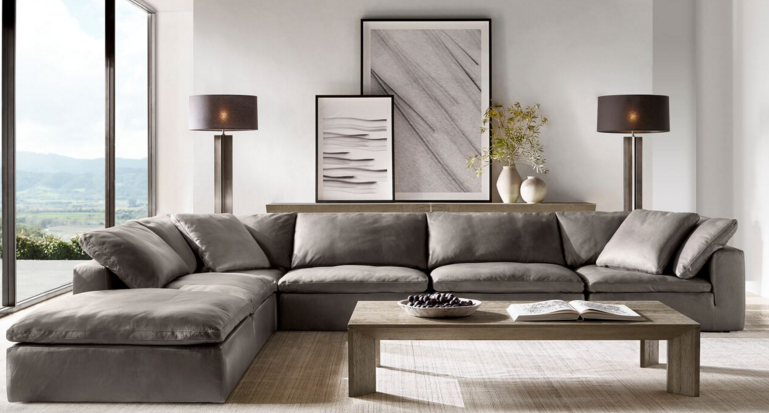
Timothy Oulton designed the Cloud for RH. In a 2017 interview with Business of Home, he described experimenting with fillings and repeatedly revising the proportions. His account connects the sofa to traditional materials and craftsmanship, developed into a more relaxed contemporary form.
The resulting silhouette offers an unusually immediate idea of softness. The eye reads the loose cushions before it notices the boundaries of the modules. You can understand the invitation without knowing anything about their construction.
It is built to look like it has already been sat in. That is the design, not a flaw in it.
I like that visual looseness. In a room full of hard edges, it can soften the composition without asking for an elaborate shape. But looking relaxed is its own kind of discipline. Change the depth, the amount of filling or the height of the back and the apparent ease can become something much less convincing.
A familiar room, seen through glass
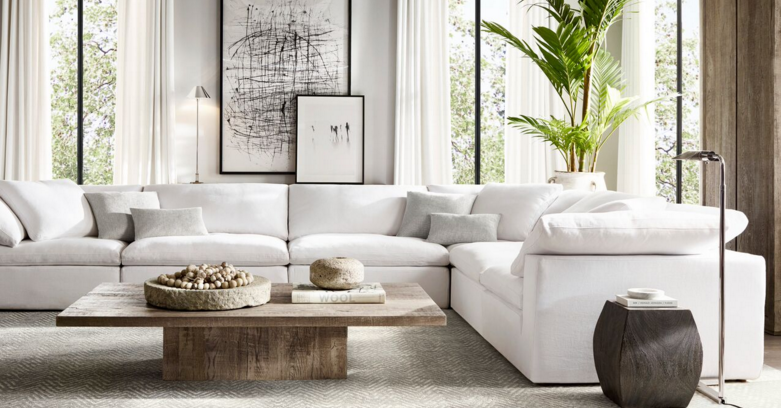
The door opens on another living room. The curtains have changed, the floor is lighter, the photographs on the walls belong to people we do not know. At the centre sits the same low promise: here, at last, you can stop holding yourself together.
That is what the image sells to me. The proportions suggest room to stretch out; the cushions suggest yielding. The Cloud gives a room an attitude before anybody enters it.
An image has limits, though. Two sofas can share a loose, pale outline while using different suspension, cushion cores and fillings. The photograph gives us the surface; the specification and the actual seat provide the rest.
The photograph can begin the attraction. It cannot finish the decision.
The cushions still need an owner
Oulton’s interview describes feather and down as central to his exploration. That account belongs to the sofa discussed then. Current models and cushion options deserve their own specifications rather than inheriting every detail from an older description.
Loose fillings can also bring a care routine. Plumping and redistributing a cushion are ordinary parts of owning some kinds of upholstery. The useful question is how the particular option behaves and what its care instructions ask of you.
I see a small tension here between the image of effortlessness and the work of keeping that appearance. It does not spoil the sofa. It simply makes the picture more interesting. A room can look beautifully unarranged after quite a lot of arranging.
Why it belongs here
The Cloud earns its place in the archive because it makes recognition worth examining. A sofa can become familiar as a shape before its designer or construction becomes familiar. The image travels first; the explanation follows.
The Togo offers another low, apparently relaxed silhouette, although its quilted foam construction is a different proposition. Looking at the two together, I am struck by how many ways furniture can suggest that the formal part of the day is over.
I would keep the Cloud for that question, rather than appoint it the winner of a comfort contest. A loose cushion can make a persuasive promise. Living with it is where the promise acquires detail.
Continue through the archive: Togo and Camaleonda.
A Loom & Hide design archive story. We write about these pieces for the love of the ideas; we do not make replicas or copies of protected original designs.

