After a sports day, I wanted a nap. My friend’s parents had a Récamier. The afternoon became a long negotiation between the two.
My friend’s parents had a Récamier in their musty lounge. There was a tug of war in that room between the modern setting and the inherited old furniture. After a sports day, when I went looking for somewhere to have a quick nap, the Récamier was what remained for me.
I remember trying what felt like a million positions. None seemed to be the one the sofa had in mind. Eventually I was praying for my mother to fetch me so I could go home to my soft bed.
As introductions to a furniture type go, it was persuasive. I have never quite separated the elegance of a Récamier from the memory of wanting to get off one.
Another room, another body
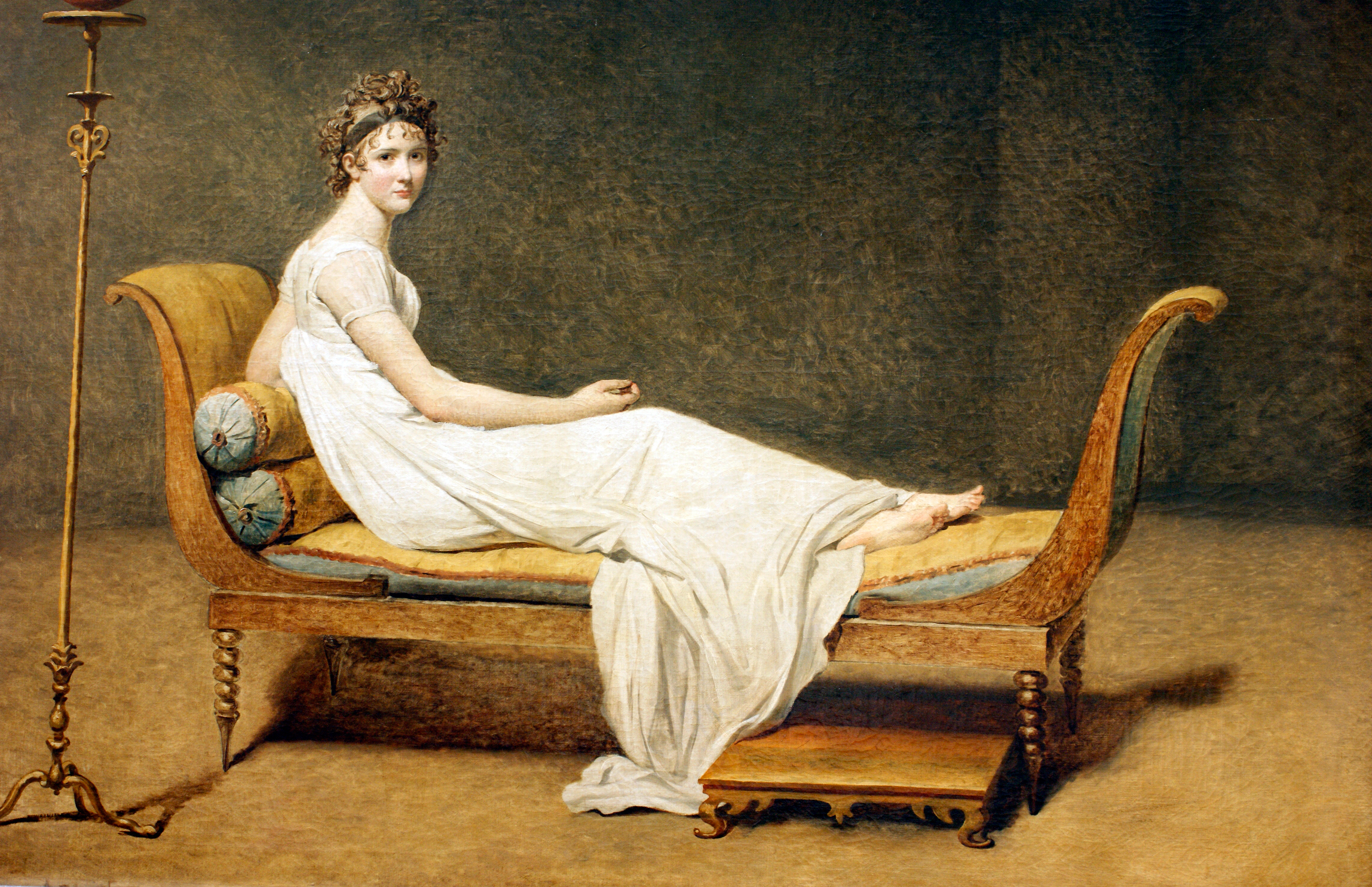
The musty lounge recedes. The room empties. A white dress falls towards the floor, and the woman on the couch turns to look at us. She has been holding the afternoon together for more than two centuries. I could barely get through mine.
Jacques-Louis David began his portrait of Juliette Récamier in 1800. The unfinished painting is in the Louvre. The couch is open along its side, its ends curling upwards, with the sitter’s body supplying the line between them. Almost everything around her has been stripped away. The furniture has nowhere to hide.
That is part of the painting’s appeal to me. You can follow the long horizontal shape, the rising end and the turn of her shoulders without much else interrupting. It is a remarkably composed image of reclining.
The Louvre describes the portrait as left unfinished after a falling-out with the sitter. The furniture needs no more elaborate account of an artist’s temper to be interesting. There is already enough tension between the poised image and the abandoned work.
A name that outlived the room
Récamier became a name for the daybed form associated with that portrait. It describes a family of couches, not one product with a single maker and an unchanging cushion specification. The piece in my friend’s lounge belonged to that afterlife: an old form occupying a much later room.
I find those rooms more interesting than interiors where everything belongs to the same decade. Inherited furniture does not always agree with what arrives around it. It brings its own scale, its own posture, somebody else’s idea of what a lounge should contain.
Sometimes the disagreement is the best thing in the room. Sometimes you are tired after sport and would happily exchange the entire conversation between past and present for an ordinary bed.
She has been holding the afternoon together for more than two centuries. I could barely get through mine.
The body gets a vote
My complaint is with the Récamier I tried to sleep on. Its maker, filling and condition are not things I remember, and another example might have treated me much better. But I do remember the restless search for a position. That is a perfectly useful thing to remember about furniture.
An open-sided couch asks the body to supply some of the arrangement. There is less of the enclosing back that makes a conventional sofa feel forgiving. For a photograph, the exposed posture can be beautiful. For an exhausted visitor, beauty may be beside the point.
I can admire the line of the piece and still distrust its promise of an effortless nap. In fact, that disagreement is why I want it in the archive. A design history made entirely of admiration would have very little to say about living with the objects.
David’s room remains quiet. The white dress has not moved. In my friend’s lounge I am trying another position, already thinking about the bed waiting at home.
Continue through the archive: Togo and Camaleonda.
A Loom & Hide design-archive story.
Find your place to sit.
Explore Loom & Hide’s sofas, handcrafted in Woodstock, Cape Town.

