It began as a dare between two friends: design me a chair I can curl up in, said Florence Knoll. Eero Saarinen took the brief literally and named the result after the safest room anyone ever occupied.

The Womb chair exists because Florence Knoll was tired of chairs that made her sit like a lady.
She and Eero Saarinen were old friends, students together at Cranbrook Academy, the Michigan school where half of American midcentury design learned its trade. By 1946 she was building Knoll into the most sophisticated furniture company in America, and she gave Saarinen a brief that was really a complaint: she wanted “a chair that was like a basket full of pillows,” something she could genuinely curl up in, sideways, legs tucked, the way people actually sit when nobody is watching. Understand what that brief was attacking. Formal seating had spent centuries enforcing posture, and even modernism, for all its talk of the body, mostly held that body in one correct position. The great modernist seats of the 1920s, the LC collection, the Barcelona, the Wassily, each offered a single dignified attitude. Florence Knoll wanted permission to slouch.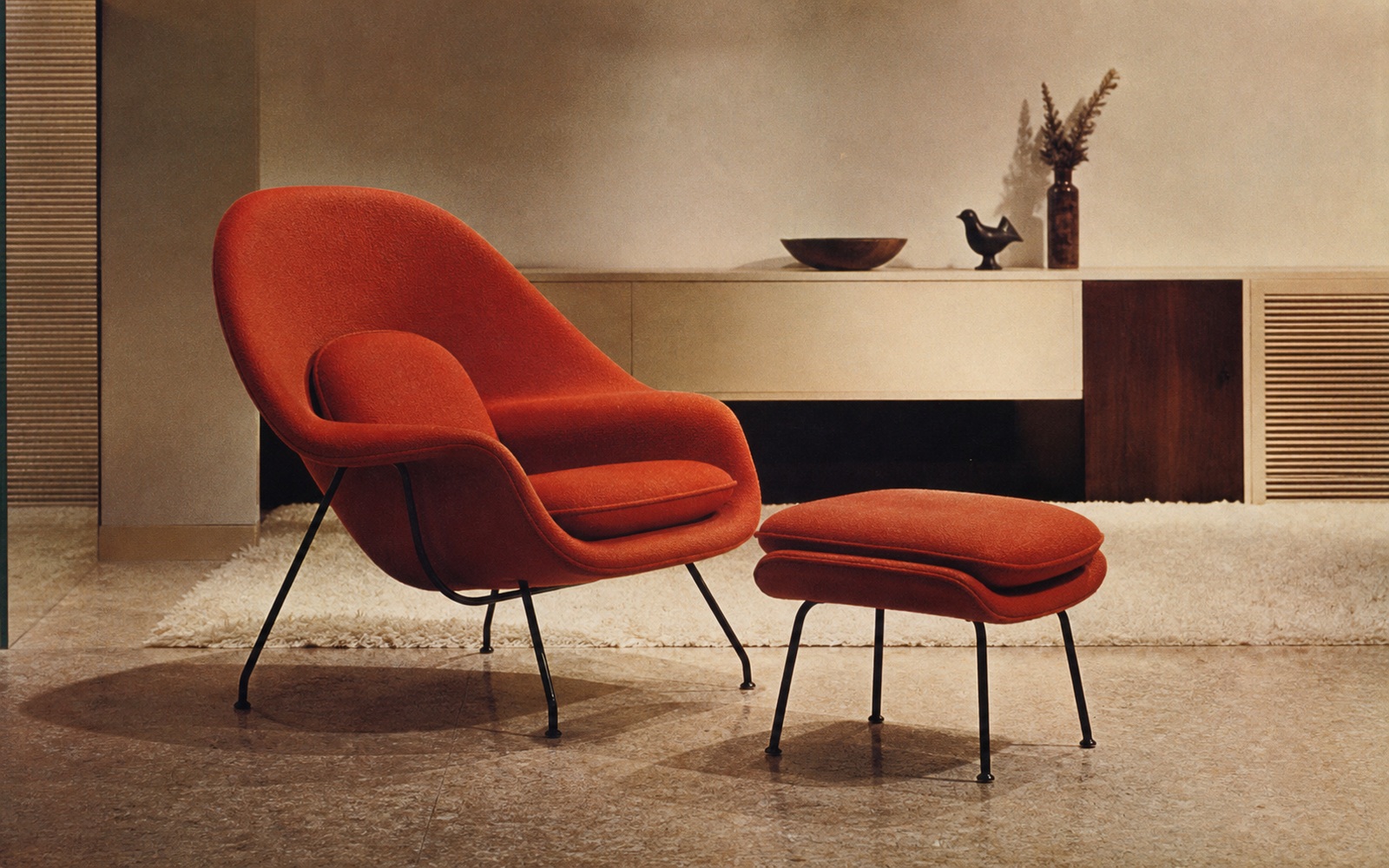
A basket full of pillows, engineered
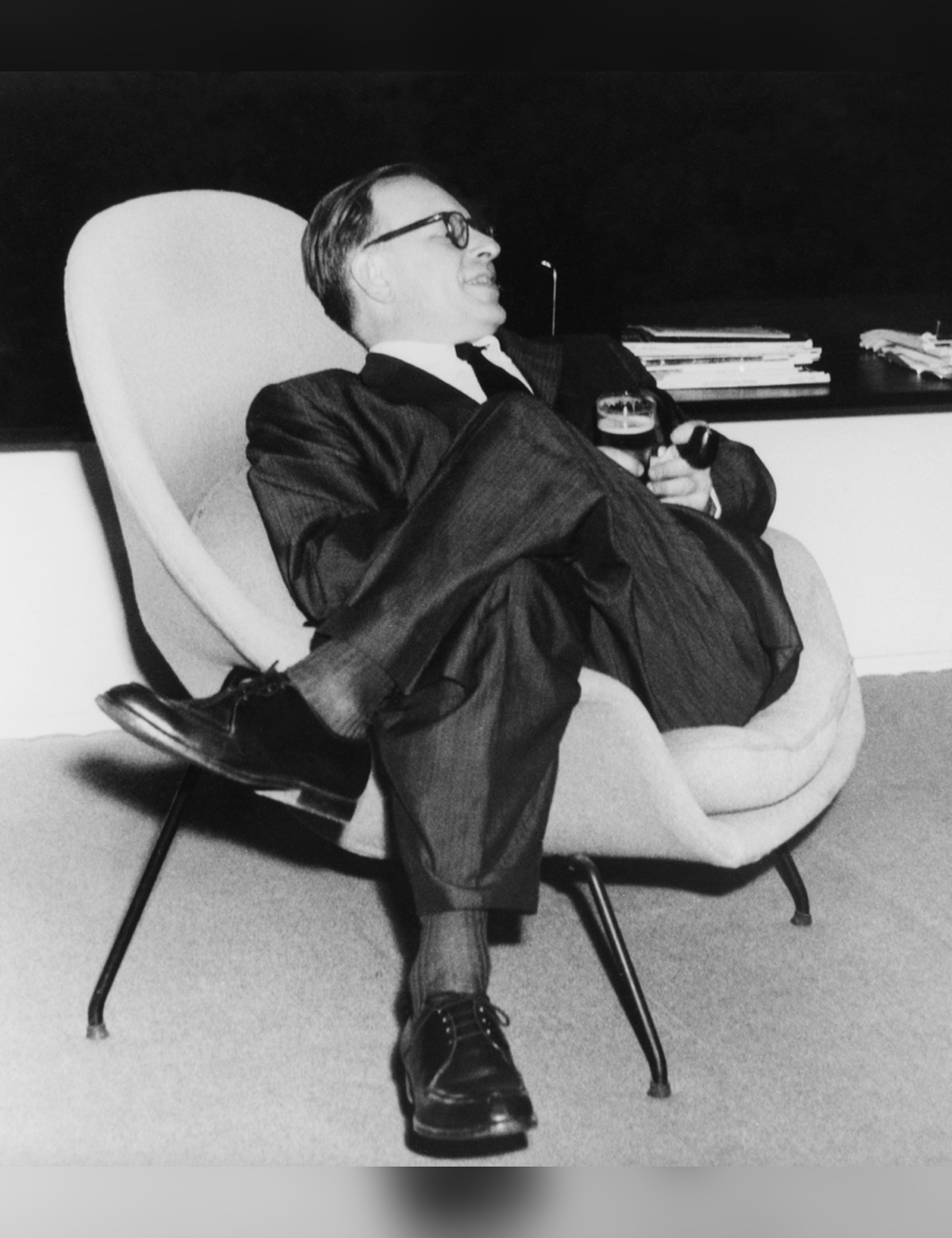
Saarinen, the son of a Finnish architect and himself about to become one of America’s great ones, approached the slouch structurally. He took a technology fresh out of the boatyards, fibreglass-reinforced plastic, and moulded a single continuous shell wide enough to hold a whole folded human. Thin foam upholstery over the shell, three loose cushions, slim tubular legs, and a matching ottoman completed it. Released by Knoll in 1948, it was among the first chairs to use a moulded fibreglass shell at domestic scale, and it remains one of the few chairs in history designed explicitly for sitting incorrectly. Saarinen was disarmingly plain about the psychology. People, he observed, had been made comfortable by great overstuffed chairs, but those chairs achieved comfort with bulk. He wanted the same reassurance from a modern shell, a chair that, in his words, would give a person the sense of security of the womb. The name, which horrified precisely the right people, told the truth. This was furniture as shelter.“One of the few chairs in history designed explicitly for sitting incorrectly.”
How to see it
The honest knock
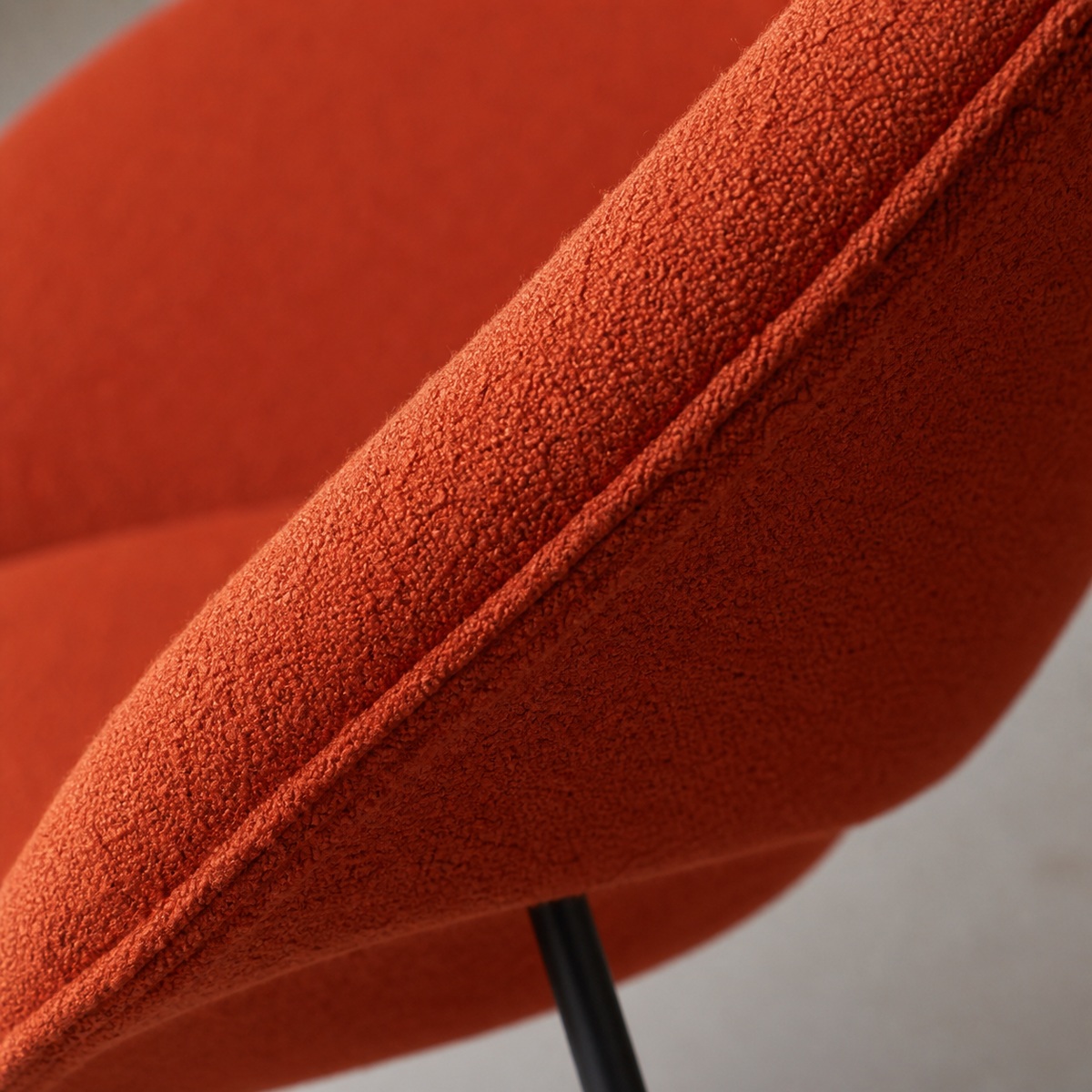
Fairly stated: the Womb chair is a one-person building, and it needs a room that can afford it. Without its ottoman it is a beautiful promise half kept, and the ottoman is sold separately, a detail buyers have grumbled about for decades. The early fibreglass shells could creak, upholstering the compound curves is expensive skilled work, and the chair is so committed to relaxation that working in one is hopeless; laptops slide, spines melt, afternoons vanish. It is a chair with an agenda, and the agenda is surrender.Copies, and the tell
Copies fail at the shell. The original is one moulded piece with compound curves in constant tension, and the upholstery is cut and fitted so the fabric follows those curves without a wrinkle. Knock-offs assemble the shape from foam blocks on a crude frame, so the wave-curl line breaks into segments, the arms thicken, the shell edge loses its thin, sharp reveal, and within a year the fabric puckers at every bend. Leg geometry drifts too, and the hover dies. The original is a single sentence said in one breath. The copy is the same sentence read syllable by syllable. Florence Knoll got her basket of pillows, and the rest of us got the twentieth century’s most persuasive argument that comfort deserved serious engineering. Somewhere in every well-designed living room since, there is a person sitting sideways with their legs tucked up, entirely unaware they are quoting a dare from 1946.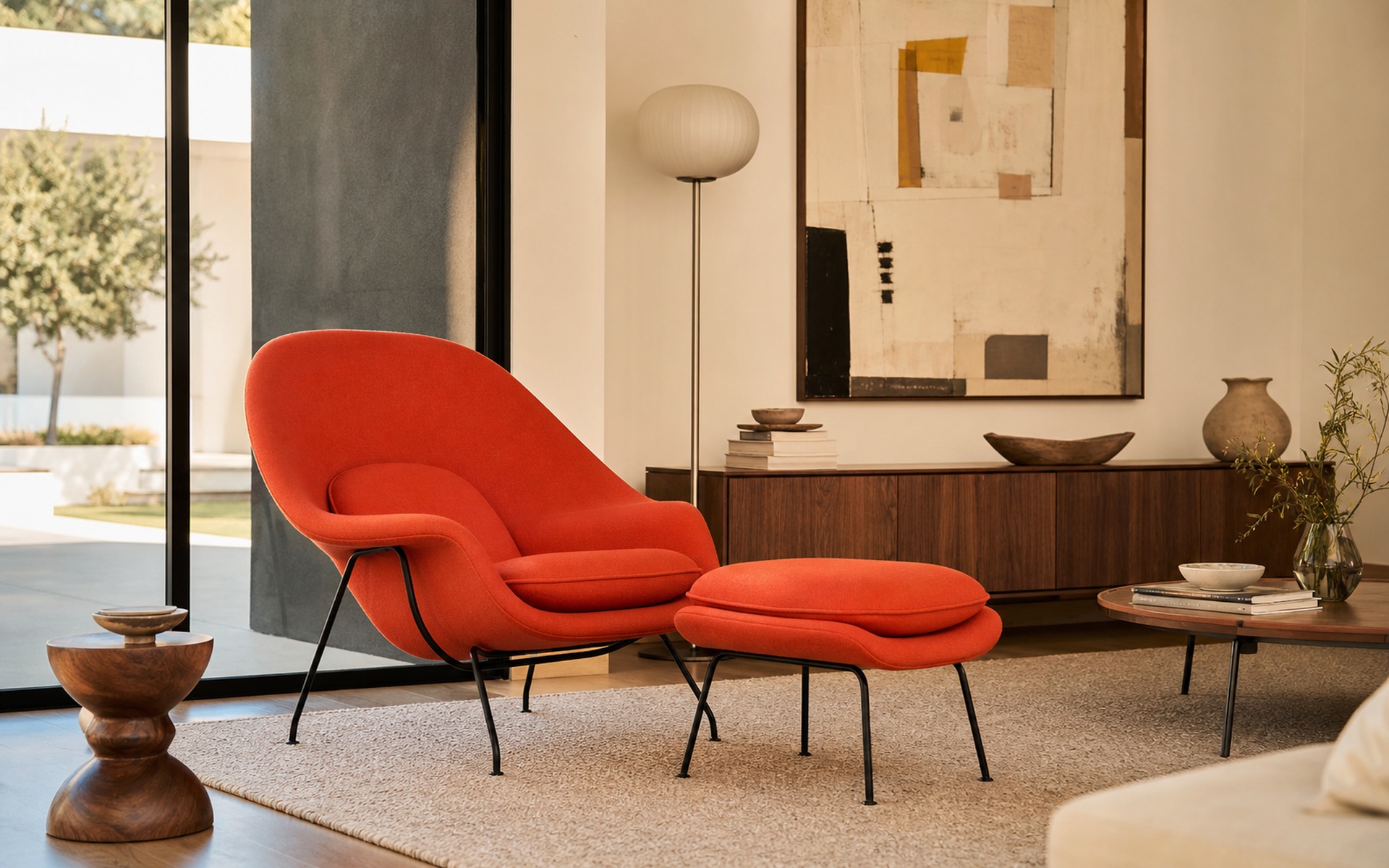
Sources
- Womb chair, 1948, Florence Knoll’s “basket full of pillows” brief and design history, Knoll. knoll.com
- Eero Saarinen biography and Cranbrook connection. wikipedia.org
- Early use of moulded fibreglass-reinforced shell and Saarinen’s comfort/security rationale. Verified against published Knoll and museum accounts. knoll.com
- Florence Knoll, career and role at Knoll. wikipedia.org

