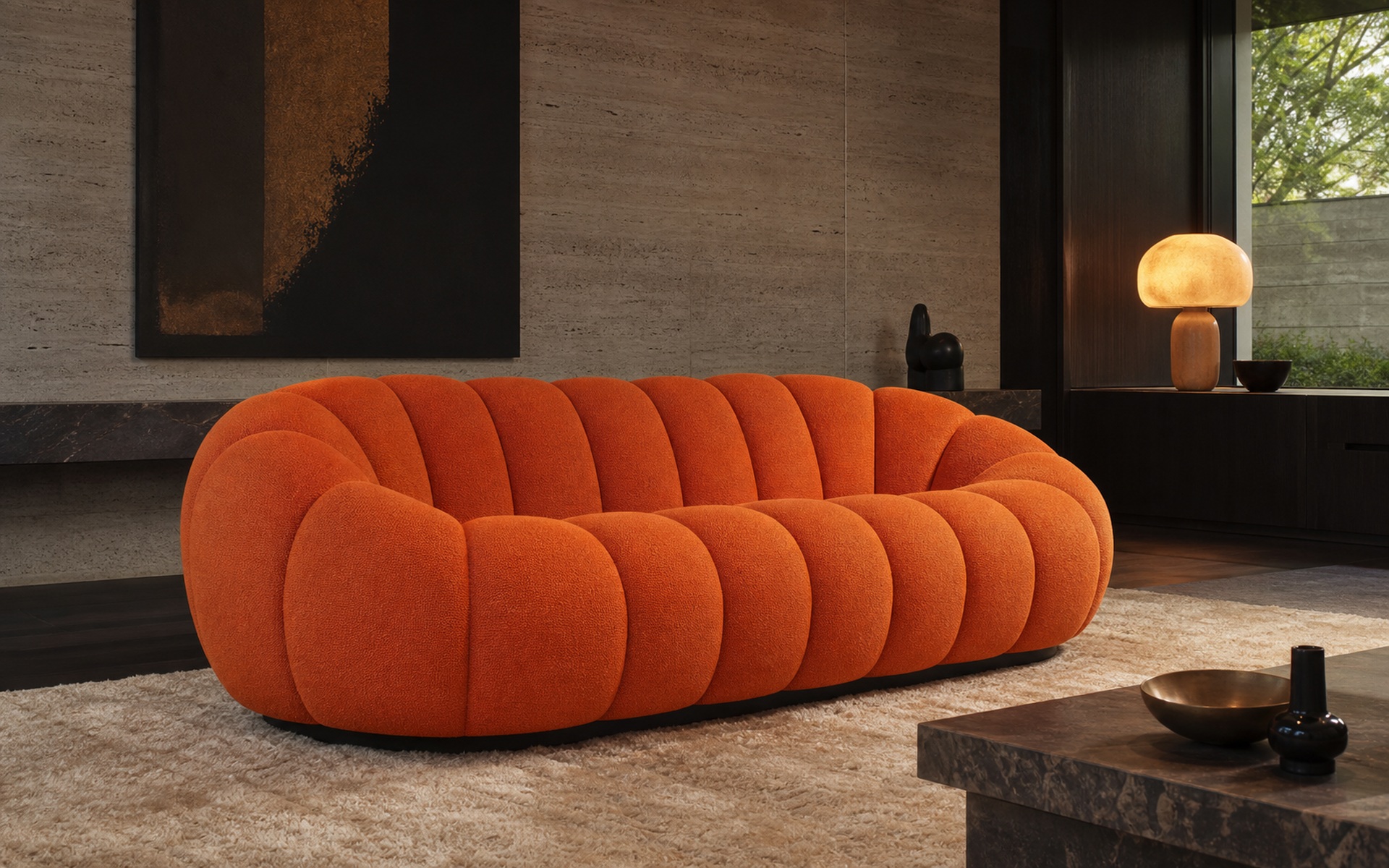
In 1971 the President of France asked for new furniture. What he got was a pumpkin, and one of the most quietly subversive commissions in the history of state decoration.
The Pumpkin chair was born in the most conservative address in France: the Élysée Palace.
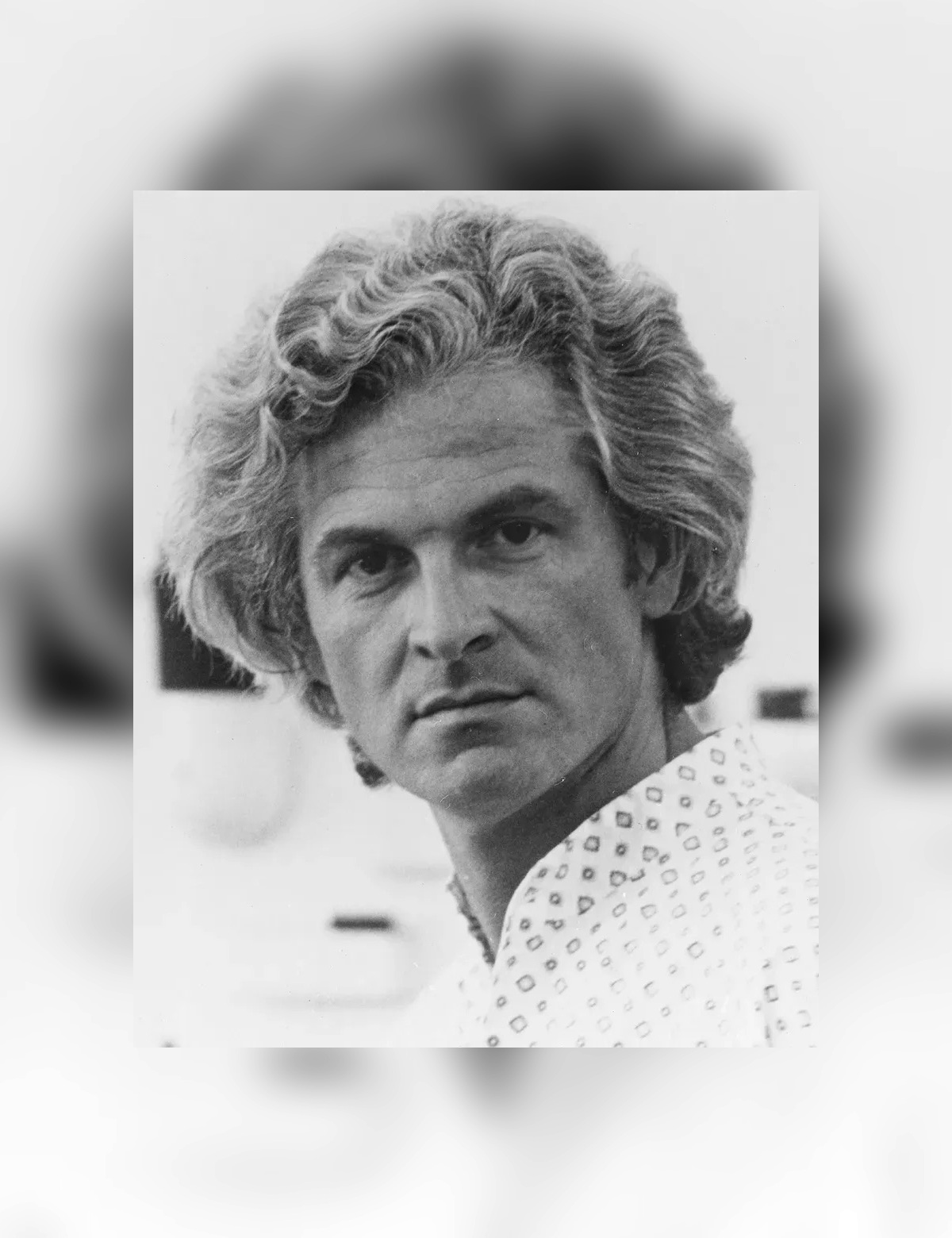
In 1971 Georges Pompidou, President of the Republic, and his wife Claude, a genuine and fearless champion of contemporary art, decided the private apartments of the presidential palace should stop pretending the twentieth century had not happened. Through the Mobilier National, the state body that has furnished French power since Louis XIV, they commissioned Pierre Paulin to redo the family’s private rooms. Think about the collision. The Élysée: gilt, boiserie, tapestries, protocol. Paulin: the man who had spent the 1960s stretching jersey fabric over foam and tube to make chairs shaped like tongues, ribbons and mushrooms, furniture that looked like it had grown rather than been built. He wrapped the salon’s period walls in curved padded panels until the room resembled the inside of a cloud, and for sitting he designed a family of low, swollen armchairs and sofas whose form gave the project its nickname: the Pumpkin. Segmented, plump, radially curved, a fruit for sitting in, in the middle of a palace.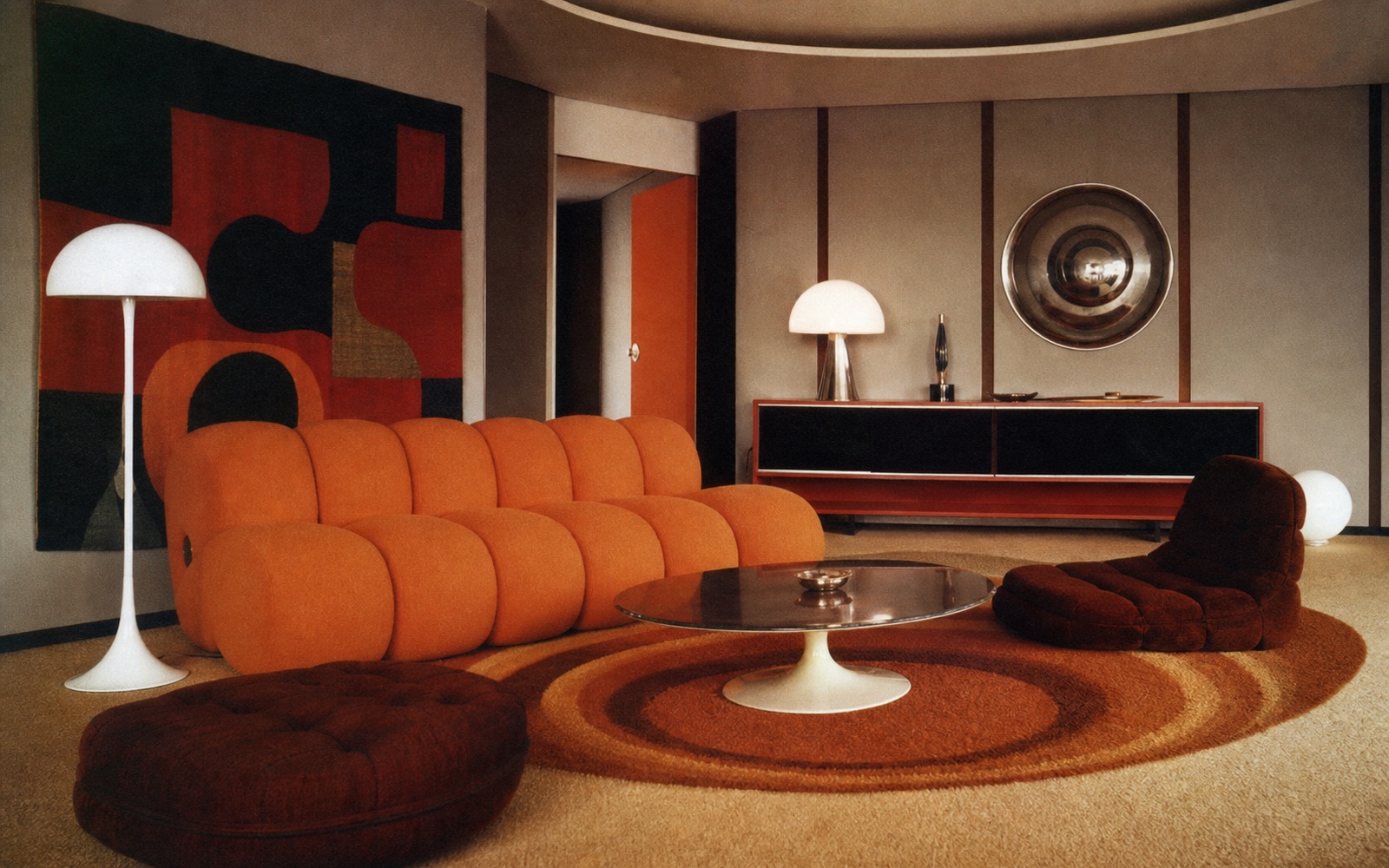
Sitting inside the seventies
The Pumpkin is a perfect specimen of its moment, the same few years that produced the low, frameless revolution we have covered elsewhere in this archive, from the Togo, another Frenchman’s foam manifesto, to Italy’s modular experiments. Furniture in those years was dropping toward the floor, shedding visible structure, and treating the body as something to be cupped rather than propped. Paulin was the most elegant of the droppers. Where radical Italian foam could be deliberately crude, Paulin’s curves are couture: the Pumpkin’s segments meet in taut seams that run like meridians on a globe, and its low bucket holds the sitter in a posture that is relaxed without ever being sloppy. He had trained ambitions as a sculptor before an injury redirected him, and it shows; the chair is one continuous carved thought.“A fruit for sitting in, in the middle of a palace.”
The strangeness of state-sponsored pop
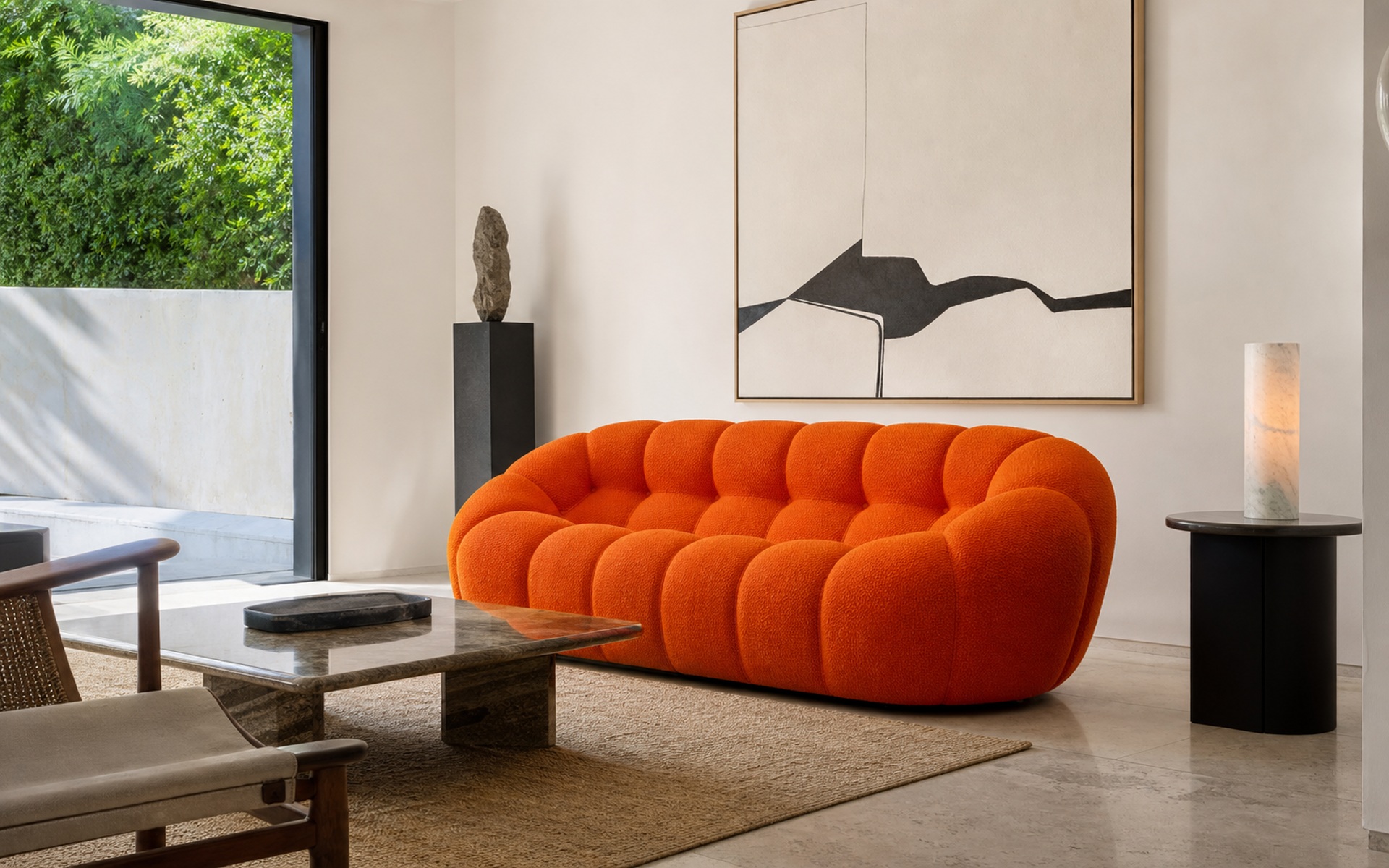
It is worth savouring how unusual the commission was. Other countries put their radical designers in museums; France installed one in the President’s sitting room and paid for it with public money. The Pompidou apartments became the most photographed interiors in France, scandalising traditionalists in exactly the way useful scandals work: within a decade, curved foam and jersey had stopped being avant-garde and started being how the French middle class furnished its television corners. The state had, in effect, prototyped the national living room. Then the arc turned, as it does. Pompidou died in office in 1974; tastes hardened back toward the classical; Paulin’s palace rooms were eventually dismantled and his star dimmed through the 1980s and 1990s. The revival began during Paulin’s lifetime: in 2008 Ligne Roset put the Pumpkin into serial production for the first time, and the chair designed for one family in one palace became available to anyone with a decent sitting room, an irony Paulin, who died in 2009 having just seen his revival begin, reportedly enjoyed.The honest knock
The concessions, plainly made. The Pumpkin sits low, and rising from one is a movement your knees may register after a while. Its posture is single and committed: cupped, reclined, sociable, with none of the adjustability its era’s other icons offered. The tailored seams that make it beautiful make it costly to reupholster properly. And there is a historical knock worth conceding too: state patronage gave Paulin’s work an establishment gloss that the rawer foam radicals never wanted, and some critics have always found the Pumpkin too polite, revolution with a valet. It is a fair jab. It is also why the chair has aged so well.Copies, and the tell

Sources
- Pierre Paulin, 1971 commission for the private apartments of the Élysée Palace under Georges and Claude Pompidou, via the Mobilier National. wikipedia.org
- Pumpkin chair and sofa, Élysée origin and 2008 Ligne Roset serial production. Ligne Roset: Pierre Paulin and the 2008 Pumpkin launch
- Paulin’s sculptural training and 1960s stretch-fabric furniture. wikipedia.org
- Dismantling of the Paulin rooms and later revival. Reported in the linked source; widely reported in design press and retrospectives. wikipedia.org

