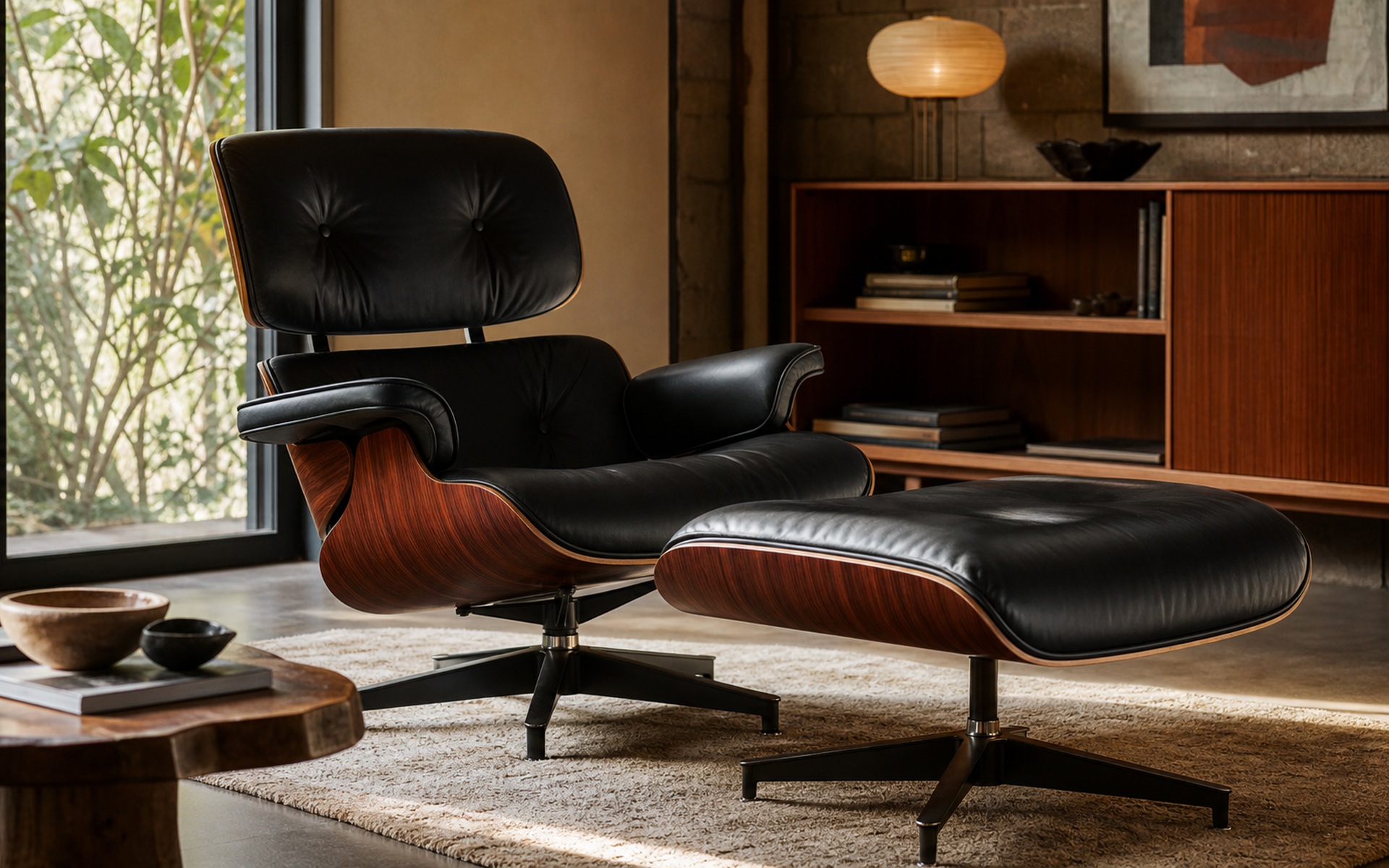
It was unveiled not in a gallery but on daytime television, pitched to housewives between segments, by two designers who believed a recliner could be as American as a baseball glove.
On a March morning in 1956, on NBC’s Home show, the host Arlene Francis turned to the camera and introduced America to a chair.
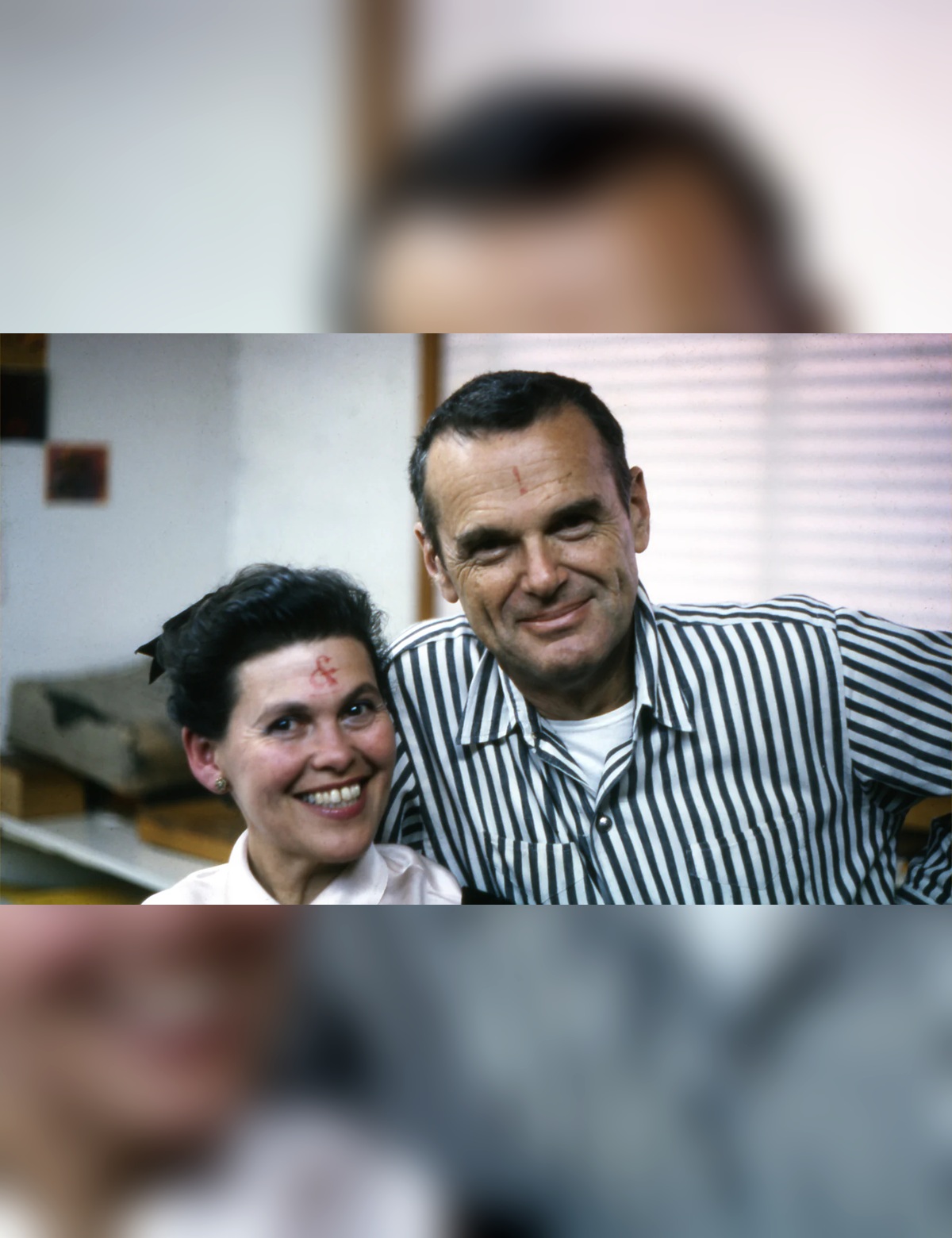
Live television was how you launched things in 1956. Cars, refrigerators, cake mixes. And now, between the household segments, a lounge chair and ottoman in moulded rosewood plywood and black leather, presented by Charles Eames himself while a short film showed the chair being assembled, layer by layer, like a magic trick. Daytime viewers watched furniture history happen between advertisements. Charles and Ray Eames had spent a decade making inexpensive moulded plywood and fibreglass chairs for the mass market, furniture famously designed to get “the most of the best to the greatest number of people for the least.” The lounge chair was their deliberate exception: a warm, unashamedly luxurious machine for one person’s comfort. Charles said he wanted it to have “the warm receptive look of a well-used first baseman’s mitt.” That sentence is the whole design brief, and it might be the best design brief of the century.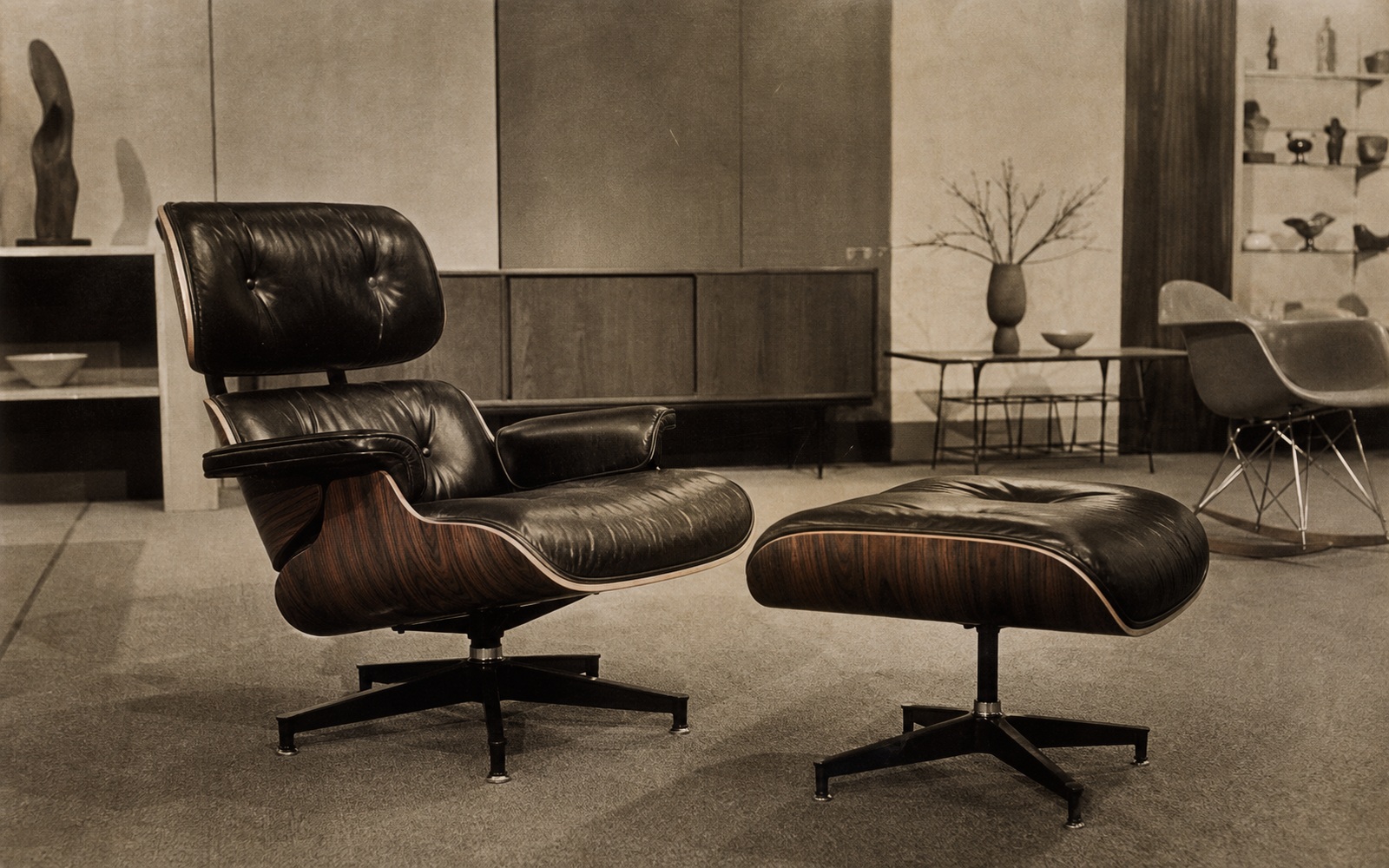
A leather glove built like an aeroplane
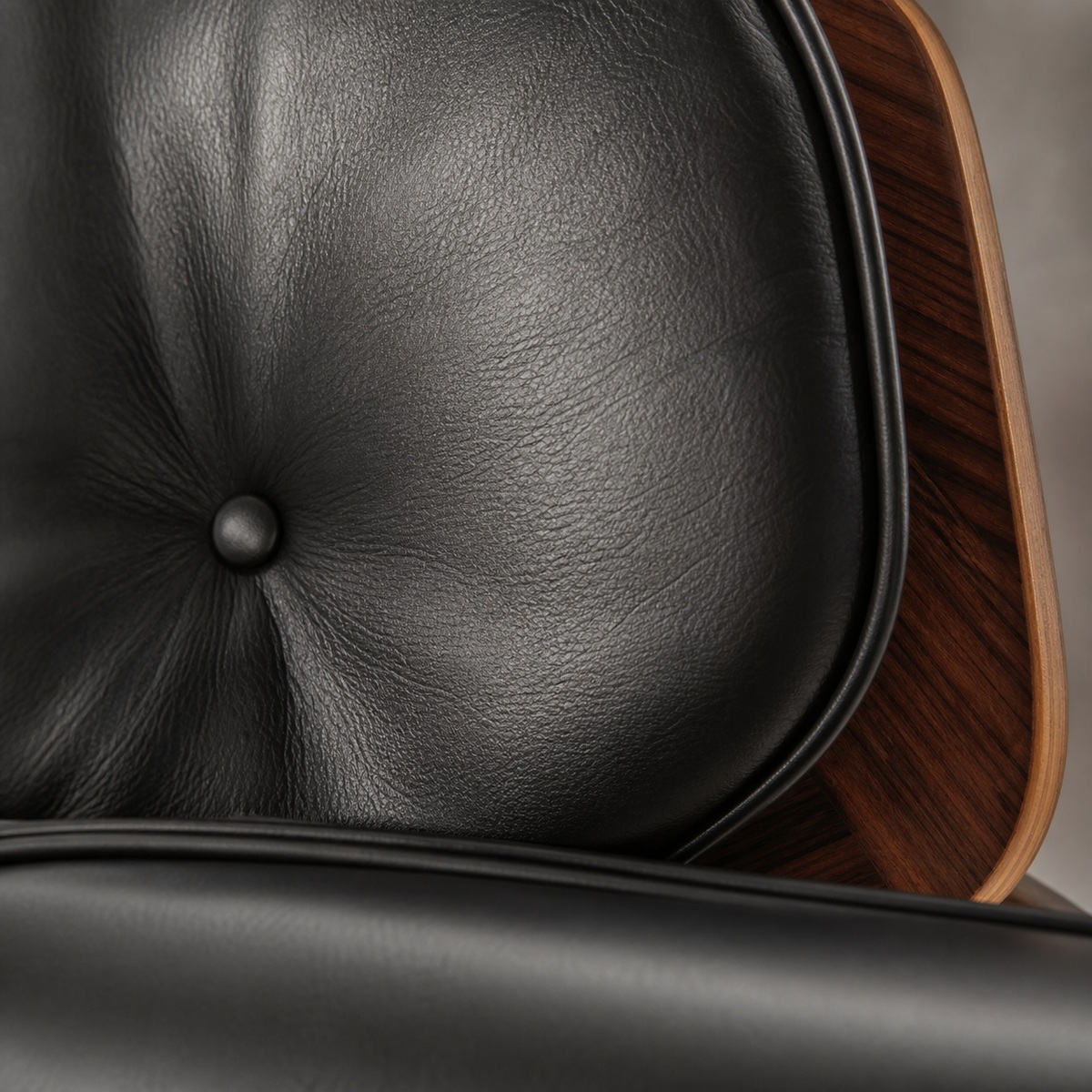
The mitt line is not just charm. It describes the engineering. Three curved shells of laminated plywood, faced in rosewood, form the seat, back and headrest, and the leather cushions sit inside them exactly the way a hand sits inside a glove. The shells float on a die-cast aluminium spine with rubber shock mounts, a technology the Eameses had refined from their wartime work moulding plywood leg splints for the US Navy. Nothing about the chair is traditional upholstery; it is aviation thinking wrapped in club-chair warmth. That double identity is why it never dated. To the eye it promises old-world comfort, the nineteenth-century English club chair its designers openly admired. To the hand and the spine it delivers twentieth-century ergonomics, a fixed recline of about fifteen degrees, a headrest that actually holds a head, an ottoman at the exact height a leg wants. It became the rare object that both a studio apartment and a chairman’s office could justify.“The warm receptive look of a well-used first baseman’s mitt. That sentence is the whole design brief.”
How to see it
The honest knock
Three concessions. The chair is a one-posture machine: that fifteen-degree recline is superb, but you sit how it decides, and people over six foot two ride it like a slightly small saddle. It is jealous of space, demanding its ottoman and a clear metre around itself. And its very success has made it furniture shorthand for “tasteful professional” in every television series of the last thirty years, which can make an original feel like a prop. None of this dents the object; all of it belongs in an honest account.Copies, and the tell
The knock-offs miss the same things every time. The shells go from moulded plywood to cheap bent veneer or plastic, so the curves flatten and the shadow gaps close up. The recline angle wanders, killing the frozen-motion gesture. Cushions get overstuffed and lose the mitt’s broken-in slouch. And the base pivots grind where the original’s shock mounts flex. The original is a piece of aircraft engineering doing an impression of a club chair. The copy is a club chair doing an impression of the impression. Seventy years after Arlene Francis introduced it to daytime America, the chair is still in production at Herman Miller, still assembled by hand, still in MoMA’s collection, and still the piece of furniture most likely to make a grown adult say they would rather sit than stand. The Eameses would have taken that as a five-star review.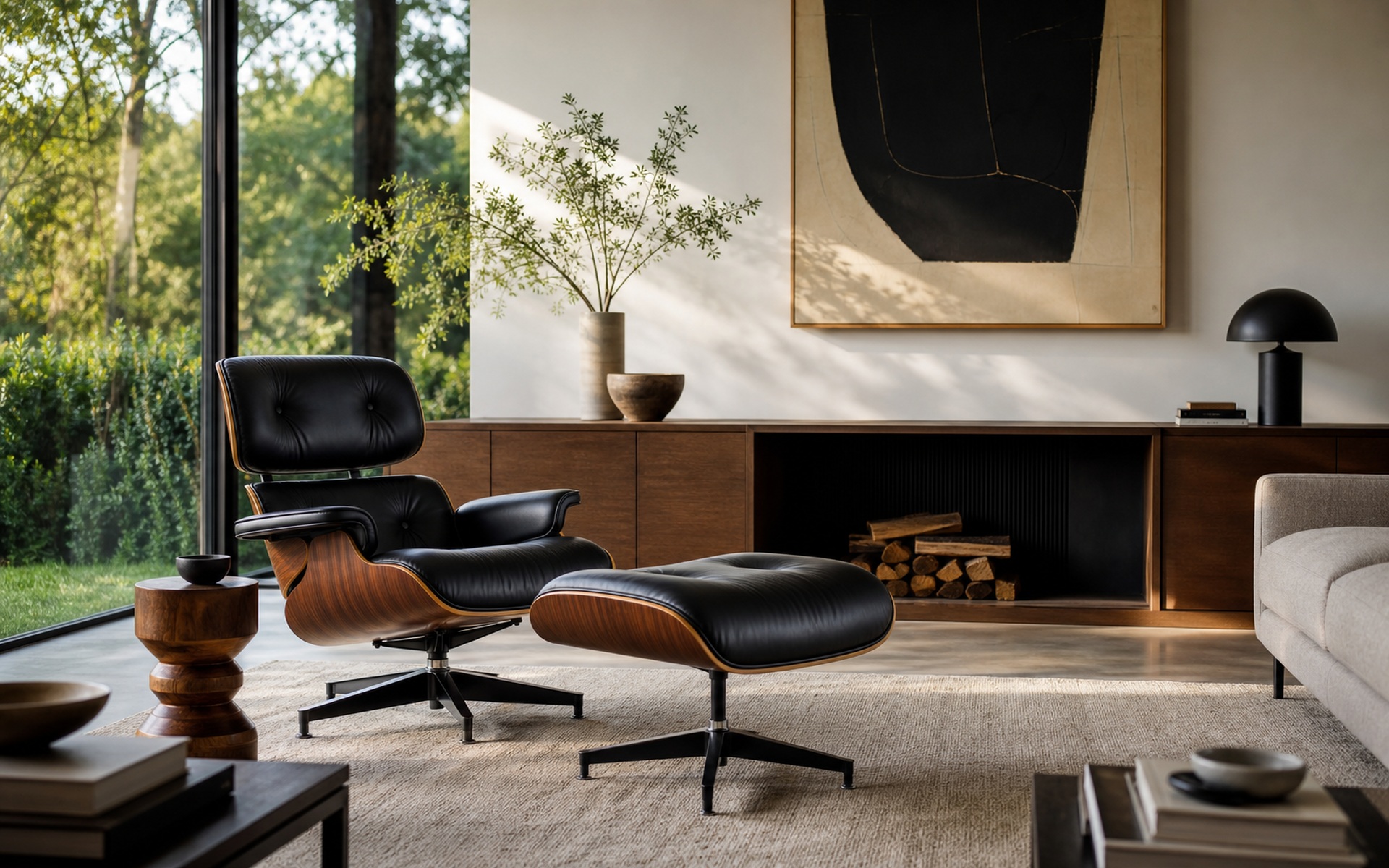
Sources
- Eames Lounge Chair and Ottoman, 1956, design and production history, Herman Miller. hermanmiller.com
- 1956 debut on NBC’s Home show with Arlene Francis; the “first baseman’s mitt” brief, Eames Office. eamesoffice.com
- Wartime moulded plywood leg splints and the Eames plywood technology. wikipedia.org
- Charles and Ray Eames, biography and partnership, Design Museum, London. designmuseum.org

